
We restore and secure foundations for owners who need engineered support for slab properties in Melbourne. Our service answers the need for fast, compliant solutions to subsidence and structural risk.
We are Underpinning Melbourne — Structural Preservation Specialists. With over 20 years of experience we provide engineer‑led assessments, VBA‑compliant methods and clear fixed‑price quotes.
Our team runs the full process on site. We diagnose issues, prepare reports, liaise with council and deliver concrete, resin or screw solutions to stabilise the foundation.
We focus on safety, minimal disruption and honest advice. Call Chris: 1300 970 930 or Email Chris: chris@underpinning-melbourne.com.au to book a free inspection and get a transparent quote.
Key Takeaways
- Engineer‑led process: from diagnosis to certification for peace of mind.
- 20+ years’ experience: proven outcomes across complex projects.
- We stabilise foundations and fix subsidence with council‑compliant techniques.
- Transparent fixed‑price quotes before work starts — no surprises.
- We handle reporting, site work and council communication for you.
- Free, no‑obligation structural assessments — contact us early for options.
Underpinning slab house Melbourne: tailored solutions for reactive clay and subsidence
We take a calm, engineering‑focused approach to soil movement and its effect on foundations. Our team recommends only what your home needs. We coordinate structural reports and ensure VBA‑compliant certification where required.
Common slab foundation issues in Melbourne’s soils
Reactive clay shrinks and swells as moisture changes. This causes differential settlement and visible subsidence.
- Symptoms: widening cracks near openings, uneven or sinking floors, and jammed doors or windows.
- Trees, poor drainage and loose fill increase soil movement and the risk of problems under slab edges.
- We assess site conditions, slab type and access to select a safe, efficient solution.
How targeted underpinning restores levels, closes cracks and protects your home
Targeted repair works transfer loads to firmer strata or improve weak ground. Geopolymer resin can compact soil and re‑level floors quickly.
Traditional mass concrete underpins support footings after excavation and curing. We explain options with clear outcomes.
- Restore level and close cracks before cosmetic work.
- Plan around access and services to limit disruption.
- Coordinate engineers for certification and insurance records.
Clear signs your slab home needs attention
Small changes inside your home can signal bigger foundation problems ahead. Spotting early signs helps you act before repairs become costly.
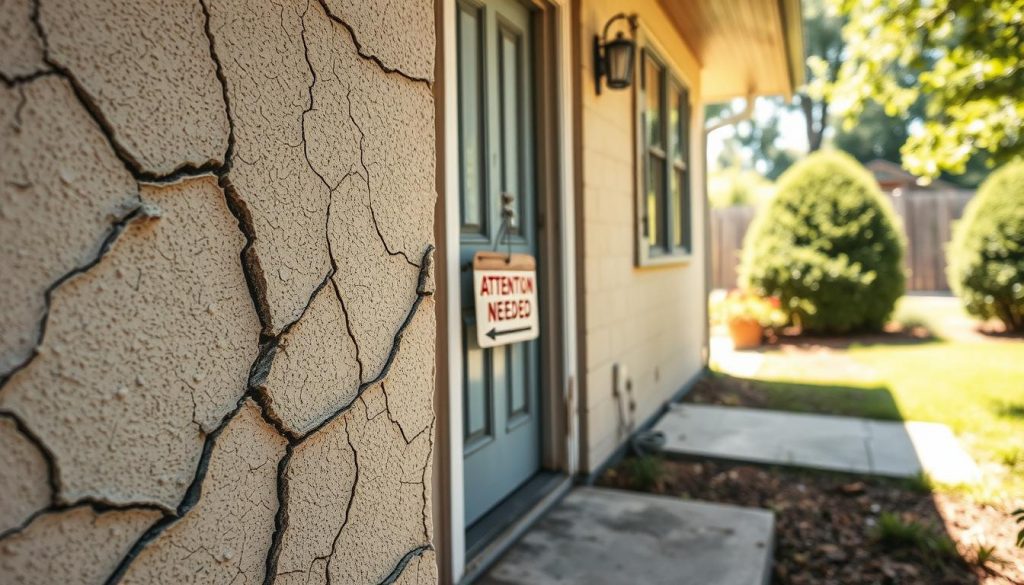
Cracks, stuck doors/windows, uneven floors and gaps around frames
Look for diagonal or step cracks that widen over weeks. Doors and windows that suddenly stick are an early warning of movement.
Gaps around frames, skirtings or benchtops pulling from walls show differential settlement. Uneven floors or dips indicate loss of bearing beneath the slab.
Soil-related causes: moisture change, poor compaction, tree roots and erosion
Changes in soil moisture—especially reactive clay—cause shrink and swell cycles that lead to subsidence.
Tree roots, erosion or poorly compacted fill can remove support under footings. These drivers often create the cracks and gaps you see.
When to engage a structural engineer for assessment and certification
If cracks are growing, doors won’t latch, or you see multiple signs, contact us and an engineer. We arrange reports for VBA‑compliant certification.
- We check whether you need monitored repairs, local drainage fixes or full underpinning.
- Early action reduces repair scope and long‑term costs to your home.
- Our team provides clear advice and coordinates the required structural report.
Concrete underpinning for slab homes
Mass concrete repair is a proven way to restore bearing where deeper, stable ground exists. We use council‑compliant methods to extend foundations into firmer strata. Our approach is engineered, documented and staged to protect the building during work.
Mass concrete underpins: excavate, pour, cure and re‑support
Mass concrete underpins require careful excavation beside footings to reach competent ground. We place formwork where needed, pour concrete and allow adequate cure before re‑supporting the footing in stages.
Concrete curing takes time. A single pin can take days; longer runs need weeks for full strength. We sequence each step to control movement and keep safe access on site.
Underpin & hold versus underpin & lift with hydraulic jacks
Underpin & hold stabilises current levels and stops further movement. Underpin & lift uses hydraulic jacks to re‑level sections before locking off with concrete.
- We design pins to reach firm ground and restore bearing to the foundation.
- Our team manages excavation near services, spoil removal and site protection.
- In reactive clay areas, we assess scope to avoid partial works that cause differential movement.
We document the method, inspection points and results for engineer certification. For a quick estimate, try our underpinning cost calculator.
Modern alternatives: resin injection and screw piling
New ground improvement tools let us stabilise weak subsoils in a single day. We present practical, less‑invasive options that suit tight sites and sensitive building fabric.
Resin injection: minimal excavation, fast curing and re‑levelling
Resin injection uses small holes (typically 6–16 mm) to inject expanding resin. The product compacts weak soil and can re‑level floors with curing in around 30 minutes.
Benefits: clean, quiet, and often finished in a single day. We monitor movement and sequence lifts to control building response.
Risks: resin can interact with faulty pipes and cause damage. We always check services before work to reduce this problem.
Choosing the right option for site access, soil and project constraints
Where deeper, firm ground is needed, steel screw piles transfer loads to competent layers. They suit variable conditions and tight access. Screw piles provide immediate load‑taking support.
Not every job needs concrete. Traditional concrete remains a proven method when deep excavation and staged cure are required.
- Resin improves soil bearing and reduces subsidence risk.
- Resin jobs are quick, with minimal mess and short time on site.
- Screw piles reach deeper ground and suit limited access areas.
- We compare methods to match conditions, budget and council requirements.
| Method | Speed | Best use |
|---|---|---|
| Resin injection | Same day (fast cure) | Improve soil, re‑level floors, low disruption |
| Screw piles | 1–3 days (installation) | Transfer loads to deeper ground, tight access sites |
| Traditional concrete | Weeks (pour & cure) | Long runs requiring staged support and permanence |
We recommend the least invasive method that meets safety and compliance. We never upsell. Call Chris: 1300 970 930 or Email Chris: chris@underpinning-melbourne.com.au for a free site assessment and clear advice on the right methods for your project.
Our proven process, from free assessment to VBA‑compliant completion
We begin with a free on‑site inspection to map soil behaviour and check foundation performance. This lets us identify subsidence drivers and set a clear, safe plan.
Site inspection, diagnostics and engineer coordination
Our team conducts level surveys, moisture checks and drainage reviews. We record results and share them with a structural engineer when certification is needed.
Fixed‑price, transparent quote and council‑compliant methodology
We issue a fixed‑price quote that lists methods, sequence and safety measures. The scope explains whether resin injection, screw piles or concrete underpins suit your project.
Execution with minimal disruption, certification and aftercare
Work is scheduled to limit neighbour and household impact. Our crew uses QA checks and documents level changes so you see the improvement during the job.
- Documentation: levels, reports and compliance certificates provided on completion.
- Aftercare: advice on drainage, trees and routine checks to protect the structure.
- We remain available to answer questions and support future monitoring.
| Stage | What we do | Outcome |
|---|---|---|
| Inspection | Survey, moisture and drainage checks | Clear diagnosis of soil and foundation drivers |
| Design & Quote | Engineer coordination and fixed‑price scope | Council‑compliant plan and transparent cost |
| Execution | Resin, screw piles or concrete work with QA | Stabilised foundation and measurable level gain |
| Completion | Certification and aftercare guidance | VBA‑compliant sign‑off and ongoing support |
Costs, timeframes and what to expect on site
We give transparent pricing and honest schedules to remove uncertainty from your project. Below we outline typical cost ranges, program time and the main factors that affect the final quote.

Indicative ranges for common methods
Mass concrete commonly ranges from $1,000–$3,000 per metre. Resin jobs typically sit between $4,000–$15,000. Mini‑piled or screw pile options can cost $10,000–$20,000 per pile, depending on depth.
Program duration from same‑day work to staged concrete
Resin injection can often finish in a single day. Traditional concrete underpins are staged and may take days for one pin and weeks for longer runs. Screw piles usually install within one to three days.
What drives price and how we minimise disruption
- Soil reactivity, access and extent of settlement change scope and cost.
- Tight access or nearby structures adds labour and risk mitigation costs.
- We protect floors, paths and landscaping and monitor levels as we work.
- Your fixed‑price quote lists labour, materials, engineering and permits.
| Method | Indicative cost | Typical time |
|---|---|---|
| Mass concrete | $1,000–$3,000/m | Days–weeks |
| Resin injection | $4,000–$15,000 | Same day |
| Screw piles | $10k–$20k per pile | 1–3 days |
We aim for the best value and least disruption while securing the foundation and preventing further damage. Your quote explains inclusions, exclusions and contingencies so there are no surprises.
Why choose Underpinning Melbourne — Structural Preservation Specialists
You deserve firm answers and honest advice when foundations are at risk. We combine engineering oversight with practical site experience to deliver safe, lasting repairs. Our team works across Melbourne‑wide projects and across all property types.
20+ years’ experience, fully VBA registered and insured
Over 20 years’ experience stabilising foundations and resolving subsidence. We are VBA registered and carry full insurance for every job. That gives you certified outcomes and peace of mind.
Engineering‑focused, honest assessments — no unnecessary upselling
We use engineer‑led diagnostics to pick the right method for long‑term stability. Resin systems are non‑invasive and fast curing. Traditional concrete work needs excavation, spoil removal and cure time. We never recommend extra work you do not need.
Melbourne‑wide projects, council‑compliant methods and minimal disruption
We follow council expectations and engineering best practice. Our crew protects your site, repairs walls and coordinates finishing trades once the structure is secured. We respect your time and privacy while completing the work efficiently.
- Specialist team focused on structural preservation and long‑term performance.
- Transparent quotes, certified results and ongoing aftercare advice.
- Practical method selection to avoid differential movement in reactive clays.
| Feature | Benefit | Typical outcome |
|---|---|---|
| Experience & registration | VBA registered, insured team with 20+ years | Certified, compliant repairs |
| Method choice | Resin (fast) or concrete (permanent) | Matched to soil, access and structure |
| Site care | Minimal disruption and coordinated trades | Clean completion and documented results |
Book your free structural assessment and fixed‑price quote
Arrange a free visit and get a fixed‑price quote that lists the exact work and timelines. We assess foundation condition, explain options and provide a clear plan you can trust.
Send site photos of visible cracks, stuck doors or uneven floors to fast‑track advice and scheduling. Email images when you contact us so our team arrives prepared.
Call Chris on 1300 970 930 or Email Chris
Call for fast assistance and we will confirm whether you need underpinning now, drainage fixes or monitoring. You get a written quote that outlines the method, duration and inclusions for the job.
What to expect when you book
- Free, no‑obligation structural assessment to understand site conditions and risks.
- Send photos of cracks, doors that stick and floor levels to help our team prepare.
- We issue a fixed‑price quote and schedule promptly with minimal disruption to your house.
- Ask any questions about access, safety and clean‑up; we provide straightforward answers.
- We can coordinate a structural engineer if certification is needed for council or lender requirements.
Start today to stop small issues becoming costly repairs. For a quick contact form and location details, visit our contact page.
Conclusion
A sound foundation stops small cracks becoming costly structural repairs.
We restore safety and peace of mind with engineered underpinning and clear, compliant methods. Concrete underpinning, when built correctly, can last more than 50 years. Resin offers rapid, low‑impact results for same‑day re‑levelling.
Our team matches the method to your soil, access and structure. We protect floors, close gaps and reduce further subsidence damage. Partial works in reactive clay risk differential movement if not scoped correctly.
Book a free assessment now. Call Chris: 1300 970 930 or Email Chris: chris@underpinning-melbourne.com.au. Learn about options with our restumping vs underpinning tool.