
We explain typical timeframes clearly so you know what to expect from day one. On average, traditional projects run for about four to six weeks, though older houses or site constraints can extend that period.
We are Underpinning Melbourne, Structural Preservation Specialists. Our aim is to save Melbourne homes from foundation failure with a calm, engineering‑focused approach.
Work begins with a free inspection and an engineered plan. We coordinate permits, fixed‑price quotes and VBA‑compliant certification to keep the process predictable.
Methods vary: concrete underpinning, screw piling, resin injection or restumping. Each method changes the schedule and affects the overall time. We factor in utility relocations, access limits and unexpected snags.
Email Chris: chris@underpinning-melbourne.com.au for a free, no‑obligation inspection and a clear fixed quote. With 20+ years’ experience we prioritise safety, compliance and lasting results.
Key takeaways
- Typical underpinning projects most often finish in four to six weeks.
- Scope, method and site constraints will extend the schedule.
- We provide a free inspection, fixed quote and engineered certification.
- Resin injection is less invasive; concrete methods need excavation.
- Unexpected utility work or access issues can add time.
- We offer clear next steps and staged programmes when safer for your property.
What influences underpinning time in Melbourne homes
Soil type, moisture and nearby services set realistic timelines for works. We start by assessing soil and surface conditions, then plan a programme that suits your site and structure.
Soil reactivity, moisture and subsidence across suburbs
Reactive clay swells in wet weather and shrinks when dry. This cycle can cause subsidence and uneven settlement of a foundation.
Poor drainage, leaking pipes or erosion remove fine particles. Voids form and bearing capacity falls. These factors shape method choice and monitoring needs.
Extent of damage, crack patterns and structural load paths
Cracks and visible damage show where loads have moved. The pattern and extent of cracking guide pit sizes, injection grids or pile locations.
We map load paths to protect key bearing points during works. That reduces risk and helps set realistic stage durations.
Access, services and council/VBA requirements
Tight access, heritage constraints or service congestion slow mobilisation and sequencing. Service scans and council permits add lead time.
Our engineering reports meet VBA requirements and aim for minimal disturbance. We design an underpinning programme that matches your building, site and compliance needs.
Typical duration: from initial inspection to certified sign‑off
You’ll get a transparent schedule that maps inspection, work and certification.
Average windows for traditional work run about four to six weeks. This reflects staged excavation, mass concrete pours and necessary curing. We provide fixed‑price quotes and realistic timeframes so you can plan occupancy and access.
Why resin can be faster than mass concrete
Resin injection avoids large excavations. Technicians drill small holes and inject expanding resin to lift and stabilise a foundation. That means less disruption and a quicker return to use for your house.
Certification and final QA follow when the structure is stabilised and monitored. We coordinate the engineering sign‑off and include full records in your handover pack.
- Initial inspection and engineering: usually in the first one to two weeks.
- Traditional works: commonly four to six weeks for staged pits and curing.
- Resin injection: shorter programmes by avoiding mass excavation.
- Certification and monitoring: final stage after stabilisation.
- Older houses or service relocations: may extend the programme.
| Stage | Typical timing | Notes |
|---|---|---|
| Inspection & Engineering | 1–2 weeks | Fixed quote and planned milestones provided |
| Traditional Concrete Works | 4–6 weeks | Excavation, staged pours, curing and monitoring |
| Resin Injection | 1–3 weeks | Minimal excavation, rapid return to use |
| Certification & Handover | Final week | Engineering sign‑off and repair records supplied |
How the underpinning process unfolds, step by step
Our team guides you from first inspection to certified handover. We coordinate engineering, permits and compliance to keep the programme calm and predictable.
Assessment and structural engineering report coordination
We begin with a condition inspection and an engineering assessment. The report sets safety controls, milestones and VBA‑compliant documentation.
Permits, Dial Before You Dig and service location
We obtain council permits and complete Dial Before You Dig checks. Ground‑penetrating radar confirms clearances to protect underground services.
Staged excavation or injection, lift, cure and monitoring
We choose the safest solution for your foundation: staged pit excavation with formwork and reinforcement or controlled resin injection.
Resin systems commonly use 16 mm holes about 1.5 m deep and survey kit tracks lift. Concrete bays follow excavation, pour and cure before moving on.
Certification, clean‑up and post‑works settling period
All work finishes with QA, reinstatement and engineering sign‑off. We provide a care guide and schedule a post‑works check to confirm settling and performance.
- Free assessment and a clear scope.
- Permits, scans and safety controls arranged.
- Staged excavation or injection with survey monitoring.
- Curing or stabilisation periods observed.
- Final QA, reinstatement and certification handed over.
Method-by-method timelines: concrete underpinning, resin injection, screw piling
Each foundation project uses a specific method that sets the schedule and site needs. We deliver Concrete Underpinning, Resin Injection and Screw Piling in-house. We recommend the safest underpinning method without upselling.
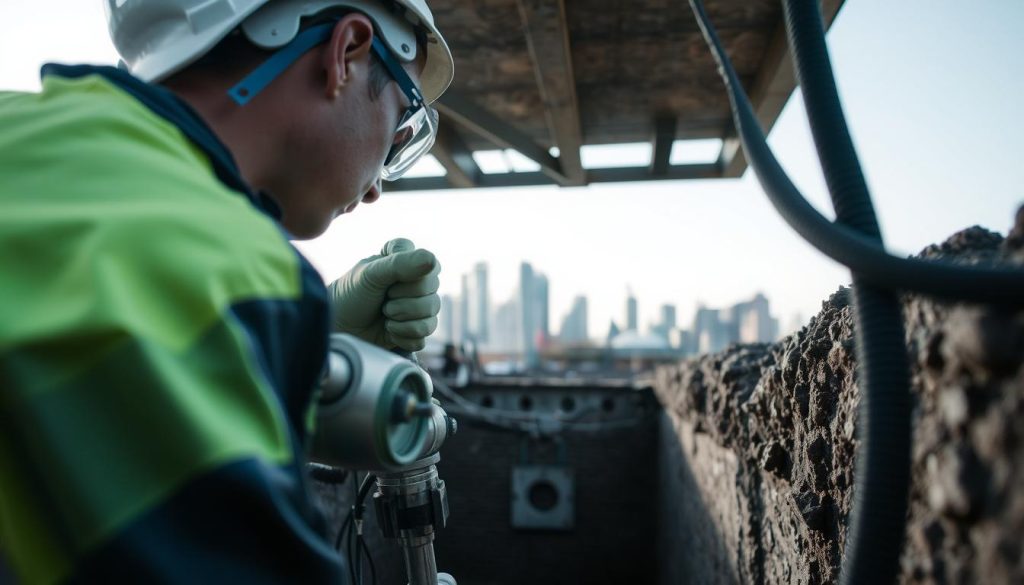
Mass concrete underpinning: staged pits, pours and curing times
Mass concrete programs use staged pits and reinforcement. Teams sequence bays to keep the structure supported at all times.
Staged pours need curing windows. These cure periods extend the programme but give robust, permanent support for the foundation and load paths.
Resin injection: drilling, injection, lift and rapid return to use
Resin injection drills small holes (≈16 mm) and injects expanding resin to lift and fill voids. The minimal excavation speeds stabilisation.
Resin often shortens the programme. It reduces surface disruption and lets you return to use sooner compared with mass concrete work.
Screw piling: mobilisation, installation rates and tie‑ins
Screw piles install with controlled torque to reach competent ground. Installation is fast and predictable.
Piles are tied into the footing to transfer loads. This method suits tight access and deeper support needs.
- Mass concrete: pit sequencing and mandatory curing.
- Resin injection: minimal excavation, rapid stabilisation.
- Screw piling: quick install and reliable load transfer to ground.
- We compare installation rates, cure windows and tie‑in details for your site.
- You receive a clear schedule tailored to your chosen method and access constraints.
Restumping and reblocking: how long it takes to relevel a timber house
Relevelling a timber house needs a staged plan that protects finishes and frames.
Restumping and reblocking are core services. We stabilise timber structure, relevel floors and adjust frames with clear certification.
Floor lifting sequences and bearer adjustments
We assess stump condition, floor levels and bearer/joist health before any work. That lets us plan jacking sequences to protect plaster and joinery.
Jacks lift in stages. We then adjust bearers and joists and rehang or trim doors. Minor plaster gaps and cracks are repaired once levels settle.
- We explain what to move and when rooms are usable.
- Programme length depends on access, number of stumps and found decay.
- Our team has years of experience with heritage and post‑war houses.
| Task | Typical timing | Notes |
|---|---|---|
| Inspection & plan | 1–3 days | Stump survey and scope of repairs |
| Staged jacking & relevel | 2–7 days | Depends on stumps and access |
| Bearers, joists & doors | 1–3 days | Trim or rehang after lift |
| Finishes & certification | 1–5 days | Plaster repairs, final sign‑off |
For a direct comparison of restumping and other foundation methods, see our restumping vs underpinning guide.
Week-by-week schedule for a typical Melbourne underpinning project
A staged timetable helps protect your home and speeds return to normal use. We provide a clear plan so you know what will happen each week. Our team coordinates engineering and keeps you informed.

Pre-start: free site assessment, quote and engineering
Pre-start includes a free site assessment and an engineered brief. We supply a fixed-price quote and a compliance plan.
We arrange permits, scans and a safety plan before work begins.
Week one: service scans, set-out and first stage works
Week one covers service location, site set-out and initial excavation or drill set-up. We complete an inspection and isolate services for safety.
We secure the area and start the first stage works with survey monitoring.
Weeks two to four: subsequent stages, curing or incremental lifts
During weeks two to four we progress through bays or injection grids. Curing or monitored lifts occur where the foundation needs time to stabilise.
We maintain clear communication and adjust the programme to suit site conditions.
Final week: QA checks, certifications and reinstatement
The final week focuses on QA, reinstatement and engineering certification. We tidy the site and advise on repainting, caulking and minor make-good timing.
Your handover includes a full record of the process and outcomes. We plan around your schedule to reduce disruption.
- Pre‑start: free site assessment, engineering brief and fixed‑price quote.
- Week one: service scans, set‑out and first stage work.
- Weeks two–four: subsequent bays or injection grids and any curing.
- We keep weekly updates and secure areas for safety.
- Final week: QA, reinstatement and engineering certification.
Minimising disruption: occupancy, noise and site restoration
We plan site work to protect your daily routine and keep disruption to a minimum. Our aim is to let you stay in your home where safe and sensible.
Many homes can stay occupied, especially with non‑invasive resin injection. That method uses small drill points and causes little noise or dust.
When partial vacate is advised
Traditional excavation can need short‑term area closures. We advise partial vacate if works affect living spaces or access routes.
We schedule noisy tasks in agreed windows so you can plan around louder activities. Our team protects landscaping and pathways and reinstates them at completion.
- Many homes remain occupied with resin injection methods.
- Noisy tasks are planned into agreed windows to reduce impact.
- We protect gardens, pathways and restore the site after works.
- Where excavation is needed, we set temporary access and safety barriers.
- We advise if a short partial vacate is sensible for safety or comfort.
- Daily waste removal keeps the building tidy during the process.
- Final clean‑up and a clear plan for touch‑ups are included.
- We confirm when foundations are ready for further internal repairs.
| Item | Effect on occupancy | Our approach |
|---|---|---|
| Resin injection | Low impact; usually stay in home | Drill, inject, clean; minimal disruption |
| Mass excavation | May require partial vacate or area closures | Staged access, safety barriers, scheduled noisy windows |
| Site restoration | Post‑works reinstatement | Protect and reinstate landscaping; final tidy and touch‑ups |
We never upsell unnecessary work. We give clear advice based on site conditions and the building’s needs. Email Chris: chris@underpinning-melbourne.com.au for a no‑obligation assessment.
Why choose Underpinning Melbourne for time‑reliable foundation repairs
Our team delivers reliable schedules and clear outcomes for every foundation repair. We are VBA registered and fully insured. That means council‑compliant methods, certified engineering and honest scopes for your building.

We offer free, no‑obligation assessments and fixed‑price quotes so you know costs and milestones before we start work. Faster, less invasive resin options often reduce programme time, while concrete underpinning remains the best method for certain site conditions.
We investigate foundation issues and cracks carefully. Then we recommend a solution—resin, piles, screw piling or mass concrete—based on evidence and safety.
- Certified engineering and VBA‑compliant reports.
- Free inspection and a fixed‑price quote before works.
- Concrete underpinning, screw piling and resin solutions available.
- We manage the site, keep you updated and limit disruption to your home.
- Support for property owners and building managers with compliance needs.
Email chris@underpinning-melbourne.com.au to book a site inspection or send photos for a fast assessment and a clear quote.
Conclusion
We restore safe, stable foundations with engineered solutions tailored to each site. Our programme protects your home and property by addressing foundation issues early. Typical projects with mass concrete run about four to six weeks, while resin injection can shorten the schedule where ground and site conditions suit.
We provide a free inspection, fixed‑price quotes and VBA‑compliant certification. The process covers investigation, service checks, staged work and a controlled handover with engineering sign‑off.
For a precise project timeline and a clear solution, schedule a site review or Email Chris: chris@underpinning-melbourne.com.au · chris@underpinning-melbourne.com.au.