
We explain the legal and practical steps you need before any underpinning starts. Our goal is to protect your home and property value with safe, VBA‑compliant methods. We offer free structural assessments and fixed‑price quotes to make the process clear.
First engage a registered engineer. They assess the foundation and outline a scoped project. Next, a VBA‑registered contractor carries out the work to maintain stability and structural integrity.
Typical Melbourne costs vary widely—from small repairs to major repairs. Resin injection rates are often quoted per linear metre of footing. We coordinate engineering reports and certifications so you have one contact and one guarantee of compliance.
chris@underpinning-melbourne.com.au to book a site inspection or email photos today.
Key Takeaways
- Start with an engineer to define scope and safety.
- Know typical costs and resin injection rates early.
- We provide VBA‑compliant certification at completion.
- Clear project steps reduce stress and speed approval.
- Call or email Chris for a free, no‑obligation assessment.
Why permits matter when stabilising your Melbourne home’s foundation
An approved plan ensures the repair restores long‑term foundation stability.
Visible issues such as hairline cracks, uneven floors and doors or windows that stick often signal movement in the original foundation.
Reactive clay soil, load changes or ageing footings commonly cause these issues. We prioritise safety, compliance and permanent repairs.
Permits protect your property and confirm the proposed method meets local conditions and the building code.
- Councils and surveyors check the design will regain stability and protect the structure.
- A structural engineer defines the repair so the work restores the foundation correctly.
- Inspections during the work reduce the risk of costly rectification later.
| Concern | Why approval matters | Benefit |
|---|---|---|
| Cracks or sagging floors | Shows instability of the foundation | Ensures the repair method restores level and strength |
| Reactive soil | Needs site‑specific method selection | Reduces repeat movement and future costs |
| Insurance & sale disclosures | Unapproved work can void cover and complicate sale | Approved work keeps cover and market value |
We act as your guide through the process and advocate for timely approvals so the repair is done right the first time. Email Chris: chris@underpinning-melbourne.com.au.
Do you need a building permit for underpinning in Victoria?
When repair works affect the existing foundation or increase structural loads, official approval is typically required. We explain the common triggers so you can act early and avoid costly mistakes.
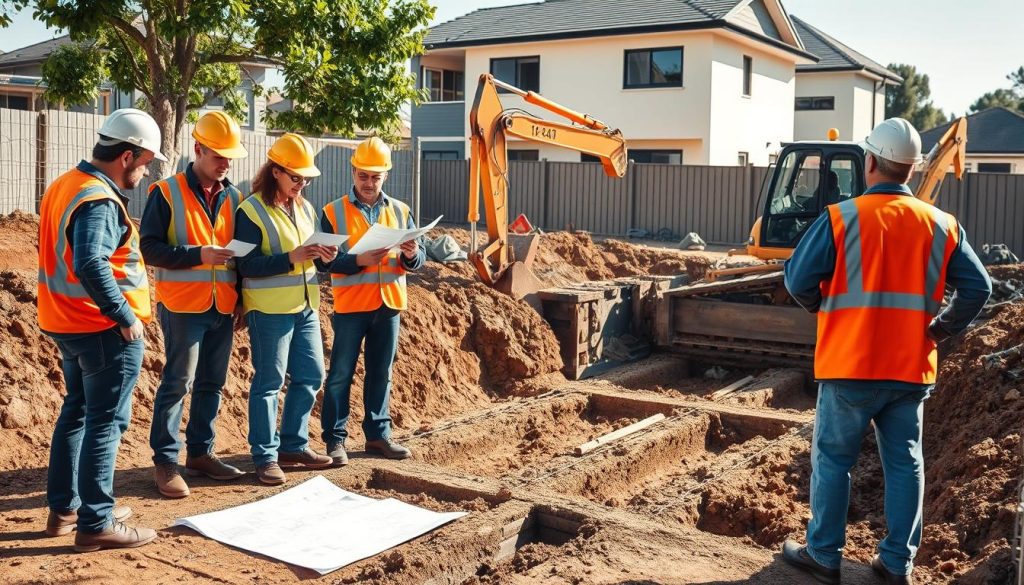
What triggers a permit: structural changes, foundation stabilisation and increased loads
You need formal consent when you change or stabilise the original foundation. Triggers include second‑storey additions, reactive soil movement and any works that raise loads on footings.
Works typically requiring a permit
- Concrete underpinning and mass concrete underpinning to extend or deepen footings.
- Restumping/reblocking and full sub‑floor rebuilding in older houses.
- Screw piling and resin injection where engineered support affects the footing system.
Edge cases and additions
Levelling often accompanies underpinning to correct uneven floors. Verandah supports and other minor works can still trigger approval when they tie into the main structure.
Signs that your house requires underpinning include cracks, stuck doors and uneven windows. The type and extent of the damage, plus the soil and house design, determine the correct underpinning method.
We manage the process. We coordinate the structural engineer, prepare the scope and supply a fixed‑price quote. For a quick estimate use our underpinning cost calculator.
Email Chris: chris@underpinning-melbourne.com.au.
Building permits underpinning victoria: who issues them and what you must submit
A certified structural report and clear scope form the backbone of a successful permit application.
Required documents
Submit a structural engineer’s report with certified design and calculations. Include soil data and site testing that explains local conditions.
Attach detailed plans, a defined scope of works and a transparent fixed‑price quote. Our quote covers soil reports, inspections and final certification.
Roles in the approval process
The permit authority is a registered building surveyor, either council or a private surveyor. The surveyor issues the permit and arranges mandatory inspections.
The VBA registers engineers and contractors and sets competency standards. We are VBA registered and insured, and we liaise with council or your private surveyor.
- We coordinate the engineer, documentation and contractor submissions.
- Surveyors verify works match the approved project and note any conditions.
- We act quickly on RFIs to keep approval on track.
| Document | Who provides it | Purpose |
|---|---|---|
| Engineer’s report & design | Registered structural engineer | Proves the works will restore foundation integrity |
| Soil report | Geotechnical tester | Defines soil conditions and method suitability |
| Plans & fixed quote | Contractor / we coordinate | Clarifies scope, cost and inspection schedule |
| Inspection records | Building surveyor | Confirms compliance with the approved project |
We manage the process from assessment to certification so you have one contact and one guarantee of compliance.
How to get your underpinning permit approved fast
We make the process straightforward and fast. A quick, clear assessment keeps delays to a minimum. We start with a free site visit and coordinate the rest.
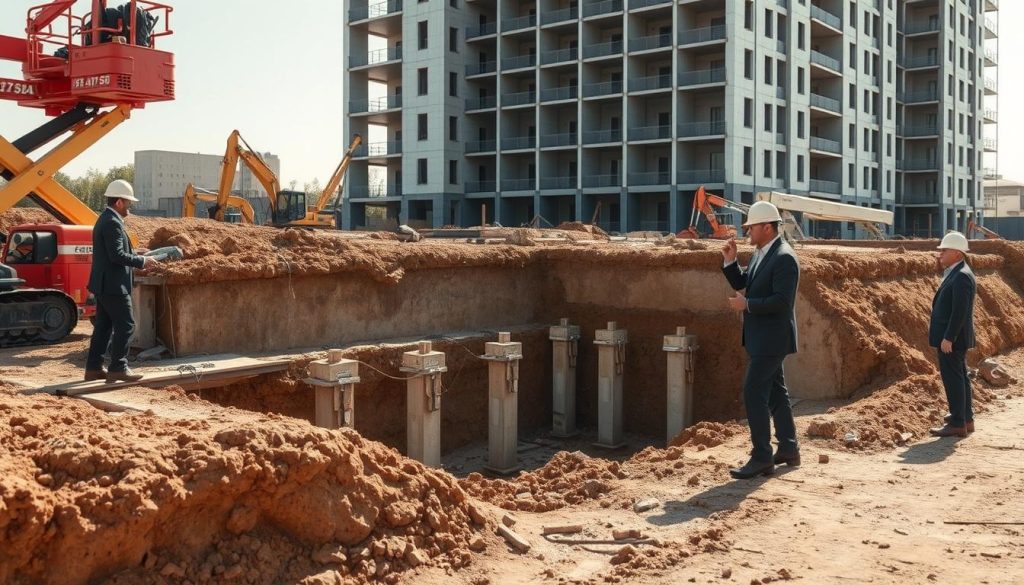
Start with a structural assessment by a registered structural engineer
Get a prompt site inspection from a registered structural engineer. The engineer confirms the underpinning process and selects the safest method for your soil and foundation.
Design and method selection
The engineer will choose between mass concrete, screw piles or resin injection. Each option suits different soil types and load needs. We review the design so the work matches the report.
Compile and lodge the application with compliance evidence
We prepare a complete, fixed‑price application pack. It includes plans, soil data, scoped works and the engineer’s design. This reduces requests for additional information.
Respond to RFIs and obtain stamped approval
Answer any RFI quickly to keep the process moving. Do not begin work until you have the surveyor’s stamped approval. Starting early risks compliance issues.
Post‑approval: inspections, certification and completion
The project proceeds in stages. Builders dig beneath the footing, install the designed solution and backfill with concrete where required.
Mandatory inspections occur at key stages. Expect around four weeks of onsite work depending on the foundation extent. We close out with certification and final documentation for your records.
Quick checklist
- Begin with a registered structural engineer’s site assessment.
- Choose the right method for your soil and foundation.
- We compile plans, soil data, scope and a fixed quote for lodgement.
- Respond quickly to RFIs and wait for stamped approval before work.
- Staged work with mandatory inspections and final certification.
| Step | Who does it | Expected timing |
|---|---|---|
| Site assessment | Registered structural engineer (we coordinate) | 1–7 days |
| Design & method selection | Engineer; reviewed by contractor | 3–10 days |
| Application lodgement | We prepare and lodge the pack | 2–7 days |
| Onsite works & inspections | Contractor with engineer & surveyor checks | ~4 weeks (varies by extent) |
| Final certification | Surveyor issues certificates | 1–5 days |
We start with a free assessment, then coordinate your engineer and manage RFIs, inspections and certification to minimise disruption.
Email Chris: chris@underpinning-melbourne.com.au
Choosing the right underpinning method for permit compliance and structural integrity
Matching the repair type to local soil and access conditions gives the best chance of a permanent result. We assess soil tests and the house structure, then recommend the most suitable method.
Mass concrete underpinning: when traditional pads suit your soil and structure
Mass concrete suits sites with firm bearing strata and traditional pad footings. It is robust and long‑lasting.
Concrete underpinning requires excavation and staged pours. It is often preferred where permanence matters most.
Screw piling: engineering for reactive clay and limited access sites
Screw piles work well on reactive clay and in tight Melbourne sites. Install is faster than mass concrete and needs less excavation.
Engineered designs anchor into deeper, stable layers to restore structural integrity with minimal disturbance.
Resin injection: faster, less invasive stabilisation with engineer‑designed criteria
Resin injection compacts loose soil and can re‑level foundations quickly. It has small excavation and short onsite time.
All methods are engineer‑designed to meet surveyor conditions and achieve compliance.
- The right choice depends on soil type, structure and site access.
- We explain pros and cons so you understand compliance and outcomes.
- Our aim is a permanent result with the least disruption possible.
| Method | Best for | Impact |
|---|---|---|
| Mass concrete | Stable soil, traditional pads | High permanence, moderate disruption |
| Screw piling | Reactive clay, limited access | Strong anchor, low excavation |
| Resin injection | Loose soil, re‑levelling needs | Fast install, minimal disturbance |
Email Chris: chris@underpinning-melbourne.com.au
Costs, timelines and disruption: setting expectations for your project
A clear budget and realistic schedule remove much of the stress from foundation repair. We give transparent fixed‑price quotes that include soil tests, engineering and inspections so you know the full cost up front.

Typical Melbourne cost ranges and what drives the price
Melbourne projects typically range from about $5,000 to $80,000 depending on the extent and damage. Resin injection often sits between $1,100 and $1,400 per linear metre of footing.
Price drivers include the extent of work, access restrictions, soil type and the chosen method. Larger buildings and reactive soils increase labour and material needs.
Duration, site access and whether you need to move out during works
Most house projects average around four weeks on site. Limited access or heavy excavation may extend that time.
We stage work so you can usually remain in the property. If heavy excavation or prolonged noise is needed, temporary relocation may be advised.
- We provide a fixed‑price quote that includes engineering, soil tests and inspections via our fixed‑price quote.
- Cost depends on the extent of damage, access and the method selected.
- Floors, walls and services are protected and monitored during the work.
- Your contractor manages safety and communicates daily progress.
| Item | Typical range | Impact |
|---|---|---|
| Minor repairs | $5,000–$15,000 | Short duration, low disruption |
| Resin injection | $1,100–$1,400 per lm | Fast, low excavation |
| Major works | $30,000–$80,000 | Longer time, possible relocation |
We aim for minimal disruption and honest assessments. chris@underpinning-melbourne.com.au.
Avoid compliance pitfalls and choose a VBA‑registered contractor
Agreeing a fixed, all‑inclusive price upfront stops surprise expenses and rushed, unsafe work. We recommend you always get a full scope, timeline and total cost that covers engineering, soil testing and inspections.
Do not start an underpinning project without a permit and a certified engineer’s report. DIY or provisional quotes create issues with safety and certification. We act as your single contact to protect your property and the integrity of the foundation.
Common mistakes
- Starting work without a permit or engineer’s report.
- Vague scope or open‑ended pricing that omits soil tests and sign‑off.
- Poor supervision that causes extra repairs to floors, doors and finishes.
What to ask for
- VBA registration, insurance and written confirmation of council‑compliant methods.
- Clear statement of the method used and why it suits your soil and foundation.
- All‑inclusive fixed pricing that covers inspections and final certification.
- Mass concrete, screw piles or resin options must follow the engineer’s certified design.
We are fully VBA Registered and insured. We never upsell. We price repairs to include inspections, documentation and sign‑off. Email Chris: chris@underpinning-melbourne.com.au for a fixed quote.
Conclusion
A clear, engineered repair plan protects your home and its long‑term value. Underpinning and levelling form a two‑part solution: stabilise the foundation and correct uneven floors.
We use a registered structural engineer, staged inspections and VBA‑compliant certification to restore stability and integrity. This approach addresses damage at the existing foundation and the original foundation.
Benefits include: a stable structure, improved floors, resolved cracks and sticky doors windows, and full certification for insurance or sale.
Book your free assessment and get a transparent fixed‑price quote. Email Chris: chris@underpinning-melbourne.com.au.