
We explain how reactive clay Melbourne foundations affect your home so you can act early and protect value.
Large parts of western and northern suburbs sit on highly reactive soils that swell and shrink with the seasons. This movement causes cracking, uneven floors and gradual foundation distress.
We are Underpinning Melbourne, Structural Preservation Specialists. With 20+ years’ experience, VBA registration and full insurance, we offer calm, engineering-first advice. Safety, compliance and honest assessments guide every step.
Our approach uses council-compliant methods and minimal disruption. We coordinate geotechnical testing, engineering reports and VBA certification so you get a certified, long-term fix.
Email Chris: chris@underpinning-melbourne.com.au. Book a free structural assessment or email photos today.
Key Takeaways
- Reactive soils cause common, long-term foundation movement across Melbourne suburbs.
- Early detection and moisture control reduce repair scope and cost.
- We provide VBA-compliant solutions and fixed-price quotes with no upsell.
- Geotechnical testing and engineering reports cut risk and guide durable design.
- Contact us for a free assessment and coordinated certified repair process.
Understanding Melbourne’s reactive clay and why foundations move
Homes in several local areas experience ground heave and settlement when moisture levels vary through the year. This is most evident where reactive clay under a site expands when wet and contracts when dry.
That cyclic change shifts the ground beneath a build, causing uneven movement and differential settlement. One corner may lift while another sinks, which bends walls and cracks slabs.
Different soil types need different responses. Sandy zones often need deeper piles. Basalt layers can require drilled piers. Low-lying, waterlogged locations need improved drainage to keep bearing capacity stable.
- Assess: get a site classification under AS 2870 to know the expected movement.
- Control moisture: limit variation near edges and under the slab.
- Design: match footing type to the local soil behaviour and conditions.
| Soil type | Typical behaviour | Common design response |
|---|---|---|
| Clay / clay soils | Swells when wet; shrinks when dry | Moisture control, stiffened slabs, pile options |
| Sand | Drains quickly; less volume change | Deeper footings, compaction or piles |
| Basalt / rock layers | Variable depth; restricts shallow footings | Drilled piers to competent strata |
| Waterlogged | Reduced bearing; increased swell risk | Drainage upgrades and soil treatment |
reactive clay melbourne foundations: how to spot early warning signs at home
Early signs of ground movement often appear as small but telling changes inside your home. We teach you how to monitor calmly and know what needs urgent attention. Follow simple checks and keep a short log to track changes after wet and dry cycles.

Typical cracking patterns in walls, brickwork and slabs
Stepped cracks that follow mortar lines are classic signs of differential movement. Diagonal cracks from window or door corners also point to tension around openings.
Doors, windows and floors: movement indicators you can monitor
Sticky doors and misaligned windows often follow seasonal soil change. Sloping floors or gaps at skirtings show ongoing settlement. Use a level or a ball test and take dated photos.
When crack width and geometry suggest foundation issues
Measure cracks. Cracks wider than 5 mm need inspection by a structural specialist. If cracks start at openings or grow over weeks, book an assessment.
- Note stepped mortar cracks and diagonal splits.
- Measure and log width, location and date after rain and dry spells.
- Watch slab edges for lifting or dropping and persistent floor slopes.
- Photograph changes and compare over time.
- If unsure, use our underpinning cost calculator or book a free assessment.
We provide clear diagnosis and VBA-compliant next steps. Email Chris: chris@underpinning-melbourne.com.au.
Moisture control and drainage: first steps to stabilise reactive clay
Small changes to how your property manages water deliver big gains for long‑term stability. We prioritise low‑disruption steps you can act on now to reduce seasonal moisture swings at the perimeter of your building.
Site drainage, downpipes and soakwells to manage water
Keep roof water away from the footing line. Extend downpipes into soakwells or to legal discharge points to stop pooling near the slab.
Grade soil away from the house. Aim for a gentle fall of about 1:100 over the first few metres.
Garden, trees and irrigation practices that reduce soil movement
Use consistent irrigation across the block. Avoid soaking one side of the home while leaving the other dry.
Mulch garden beds to stabilise evaporation. Manage trees and large shrubs near footings, as roots change local soil moisture.
- Maintain gutters: clean regularly to prevent overflow at edges.
- Install surface drains where water ponds and consider agi drains with filters for persistent subsoil wetness.
- Monitor seasonally: adjust irrigation in wet or dry spells to keep moisture even.
These practical methods are low cost and often slow crack progression. For certified help and further underpinning advice, visit underpinning advice or Email Chris: chris@underpinning-melbourne.com.au.
Designing for reactivity: AS 2870, NCC and slab reinforcement choices
Understanding the standards that govern slab work keeps your build compliant and durable. We explain AS 2870 and the NCC in plain language so you can see why site classification matters.

Soil classes and what they mean for your slab
AS 2870 divides soil into classes S, M, H, E and P. Each class shows expected ground change under a home.
Higher classes such as H and E need stronger responses. Engineers may specify stiffened edge beams, deeper footings or pile systems to protect the slab.
Stiffened slabs, deep footings and pile systems
Construction choices match the site class. Stiffened slabs reduce deflection. Deep footings or piles transfer load below active soil.
Control joints, slab thickness and reinforcement
Typical residential concrete slab thickness runs 100–125 mm with reinforcement. Cut control joints within 36 hours and space around 2.5–3 m.
Reinforcement distributes tensile stresses from soil change. Steel mesh is proven but may corrode at exposed edges. GFRP is non‑corrosive and high strength.
- Site classification informs slab design and expected soil movement.
- Higher reactivity demands stiffened slabs or deep footing systems.
- Control joints guide shrinkage and reduce random cracking.
- Follow NCC and AS 2870 for excavation, compaction, reinforcement placement and curing.
| Soil class | Typical response | Common design |
|---|---|---|
| S / M | Low to moderate movement | Standard slab with mesh |
| H / E | High movement | Stiffened slab, deep beams, piles |
| P | Problem soils | Engineered systems and specialist treatment |
We design to compliance and long‑term performance so your building copes with seasonal movement. Email Chris: chris@underpinning-melbourne.com.au.
How to choose the right repair method for your foundation
Not every fix suits every house — the correct method depends on site class, structure and visible damage. We start with diagnosis and a clear plan that matches the repair to the cause of movement.
Concrete underpinning to re-support and re-level
Concrete underpinning adds permanent support beneath footings. It re-levels footings and reduces further settlement when designed to the site.
Restumping and reblocking for timber subfloors
We replace degraded stumps or blocks to restore floor height and load paths. This solution suits timber subfloors with rot or local movement.
Resin injection: targeted lifting and void filling
Resin injection lifts settled slabs and fills voids with minimal excavation. It is a fast, low‑disruption process for localised settlement.
Screw piling to transfer loads to stable strata
Screw piles reach deeper, competent layers and bypass the active zone. They are effective where surface soils cause repeated movement.
Wall crack repairs and when to pair with structural fixes
We always pair cosmetic crack repairs with structural work when needed. Addressing water and drainage improves long‑term outcomes.
- We stage a clean installation process and keep you updated.
- We coordinate engineering sign-off for VBA‑compliant certification.
- You receive a clear plan, fixed price and a schedule that respects your home.
Our core services include Concrete Underpinning, Restumping & Reblocking, Resin Injection, Screw Piling, Wall Crack Repairs and Structural Engineering Reports. We are VBA Registered and insured. Free assessment and fixed‑price quote available. Email Chris.
Geotechnical testing and structural reporting: getting the facts first
Accurate site testing removes guesswork and guides the right repair strategy for each block. We arrange geotechnical testing and engineering reports so you see the true risks before work begins.
Site classification and investigation to quantify soil movement
We commission boreholes and lab tests to classify the site under AS 2870. Results show soil layers, stiffness and moisture sensitivity.
Investigations identify groundwater, perched water and any hard or soft zones across areas of the block.
Engineering reports and VBA‑compliant certification
Engineers translate test data into clear design recommendations for slab or underpinning work. Drawings and specifications arrive with compliance notes.
We coordinate certification so your project meets VBA and council requirements and you receive ISO‑standard reporting you can trust.
- Site classification sets the baseline for risk and design.
- Boreholes and lab testing reveal soil behaviour and moisture sensitivity.
- Testing flags drainage and groundwater issues that need control.
- Reports quantify expected heave or settlement to guide costs and options.
| Investigation | What it reveals | Design response |
|---|---|---|
| Boreholes & lab tests | Soil layers, stiffness, moisture | Slab type, pile depth, treatment |
| Groundwater survey | Perched water, seasonal levels | Drainage upgrade, soakwells |
| Site classification (AS 2870) | Reactivity rating for site | Engineering design basis and risk |
With clear facts, you choose repairs that last. We provide calm, evidence‑based advice and coordinate the reports and certification so work proceeds with safety and integrity.
Underpinning Melbourne: calm, certified solutions for reactive clay problems
A clear, staged plan gives you certainty when soil behaviour puts pressure on walls and slabs.
Our mission is structural preservation. We are VBA Registered and insured with 20+ years in Melbourne. We deliver council‑compliant methods, minimal disruption and honest assessments.
Our credentials and what to expect on site
We manage the full process from assessment to certified completion. You meet a structural preservation specialist onsite who listens and inspects calmly.
We explain likely soil behaviour and how it affects your home and foundations. You receive a recommended system—underpinning, piles, resin or restumping—and a clear schedule for installation.
- Site setup, safety measures and expected installation time.
- Materials and reinforcement choices that suit local ground and concrete design.
- We coordinate engineers for certification and as‑built records.
- Free assessment and fixed‑price quote available.
| Stage | What we do | Benefit |
|---|---|---|
| Assessment | Site inspection & engineer review | Accurate diagnosis and tailored design |
| Design | Certified solutions and reinforcement details | Durable, compliant repairs |
| Installation | Certified crews and safe methods | Minimal disruption; lasting stability |
Email Chris: chris@underpinning-melbourne.com.au. For quick enquiries, contact us.
Take action today: free assessment, fixed quotes and fast coordination
A quick site check can save you time and money by identifying simple fixes before construction stalls. We offer free, no‑obligation structural assessments and clear next steps.
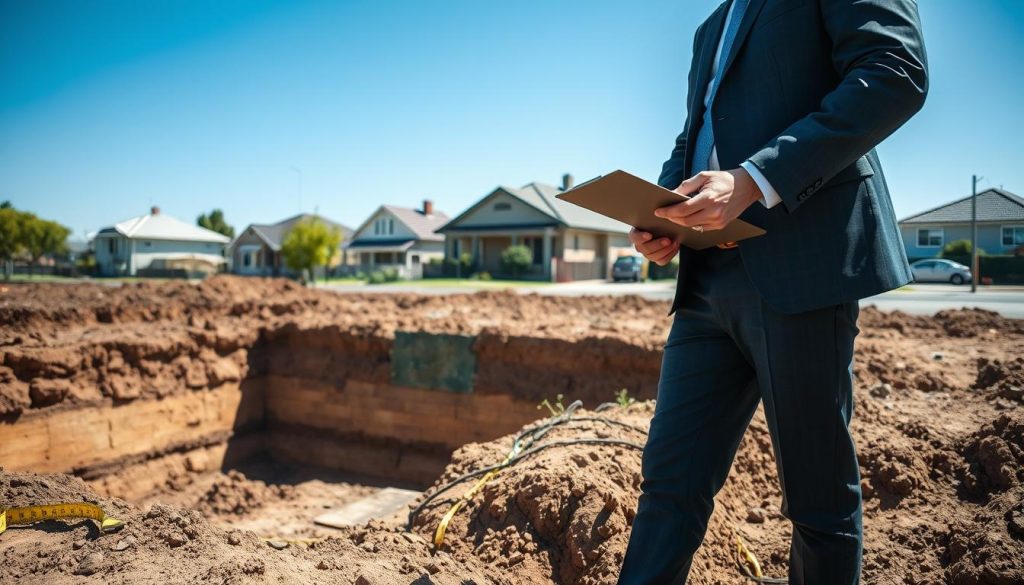
Book a site inspection or email photos — chris@underpinning-melbourne.com.au
Three-step coordination keeps projects moving without soil surprises. Our process reduces downtime and helps you budget with confidence.
- Initial enquiry and short description of the issues you see. This saves time and sets clear expectations.
- Scheduled site assessment. We inspect the site and explain options in plain language.
- Tailored plan with a fixed‑price quote. We coordinate geotechnical and engineering reports as required.
What you get: a transparent scope, council‑compliant documentation and minimal disruption scheduling. We handle approvals and keep communication clear at every stage.
| Stage | What we do | Client benefit |
|---|---|---|
| Enquiry | Photos, description, quick response | Fast triage; saves time |
| Inspection | Site visit, measurements, report | Clear diagnosis of building issues |
| Delivery | Fixed quote, engineering coordination | Compliance and on‑time construction |
Book a free assessment now. Email Chris. We respond fast and schedule to suit your areas and timeline.
Conclusion
Conclusion
Small variations in ground moisture can cause gradual movement that affects slab, walls and concrete work. With the right plan you can control soil moisture and reduce cracking and settlement.
We use AS 2870 site classification, correct slab jointing, suitable reinforcement and drainage upgrades to limit future movement. When damage exists, underpinning, piles and resin deliver durable, engineered repairs.
We tailor every solution to soil type, site constraints and your home’s needs. You get certified documentation, safety compliance and a permanent outcome that protects value.
Start with a free assessment and fixed quote. Email Chris: chris@underpinning-melbourne.com.au.