
We explain how ground near the Yarra affects home stability and what practical steps you can take today.
Melbourne’s river corridor has soft, silty deposits in places. These ground conditions can cause movement in timber and masonry structures. Our team blends calm, engineering-led advice with clear, VBA‑compliant methods.
We outline simple on‑site checks you can do and when professional testing is essential. You will learn the risks in soft silts and reactive clays and how those risks show up inside homes.
Underpinning Melbourne offers free no‑obligation structural assessments, fixed‑price quotes and certified reports. Email Chris: chris@underpinning-melbourne.com.au. For a fast estimate, try our underpinning cost calculator.
Key Takeaways
- River corridor ground can behave differently and needs specific management.
- Simple checks reveal warning signs, but testing confirms the issue.
- Options include underpinning, restumping, resin injection and screw piling.
- Water control near tidal reaches is essential for long‑term stability.
- We provide VBA‑compliant reports, fixed quotes and minimal disruption.
Understanding the Yarra’s alluvial plains and why they matter for foundations
Where the river once spread fine sediments, bearing capacity can vary greatly beneath a house. This formation of plains happens as transported sediments settle in low‑energy flow zones.
The lower reaches are tidal and carry most flow in winter and spring. That seasonal water change raises groundwater and softens near‑surface layers. In coastal areas near Port Phillip Bay, soft silty soils and historic delta flats create compressible ground that demands careful design.
- Variable bearing capacity from silts and sands means shallow footings can be risky.
- Tidal influence and winter flows change pore pressures and moisture over time.
- Where rock is deep, deep piers or piles transfer loads to strong strata.
| Ground type | Typical depth | Impact | Common solution |
|---|---|---|---|
| Soft silt/sand | 0–6 m | Low bearing, compressible | Deep piling or resin densification |
| Reactive basaltic clay | 0–4 m | Shrink‑swell movement | Stiffened footings, restumping |
| Delta/peaty layers | Variable | High settlement risk | Remove or bypass with piles |
We assess local conditions and align foundation choices with hydrology and soil behaviour to control settlement.
How to recognise alluvial soils on your site
Look for signs in the yard and trenches that tell you the local ground may be weak or variable. Walk low parts of your block and note damp hollows, soft patches and fine dark laminations in exposed walls.

Typical locations along river corridors
Expect deposit-rich areas on low flats near bends, confluences and backswamps. Historic wetlands around West Melbourne, South Melbourne (Albert Park Lake) and Bulleen often show these profiles.
Key characteristics to check
- Look for darker, laminated layers with organic fragments or shell lenses.
- Hand test: sand runs through fingers; loam crumbles; clay forms a ribbon.
- Soft silts feel smooth and floury when moist and lose strength fast when saturated.
- Photograph trench faces during landscaping — these images help our engineers.
| Feature | What to look for | Implication for site |
|---|---|---|
| Low-lying flats | Damp, dark layers; organics | Variable bearing; need testing |
| Tidal reaches | Seepage lines; raised water table | Seasonal moisture swings |
| Service trenches | Exposed silt lenses and shell fragments | Record photos for engineers |
We guide you through simple recognition steps before formal testing. Email Chris: chris@underpinning-melbourne.com.au for a site assessment.
Risks to structures: alluvial soils yarra foundations
Soft deposits and reactive clays create clear risk pathways from the ground up into your home.
Settlement, heave and differential movement start where near‑surface layers change volume or compress. Reactive basaltic clay in western suburbs swells after rain and shrinks in dry spells. Soft silty ground by riverbanks loses strength when groundwater rises in winter and spring.
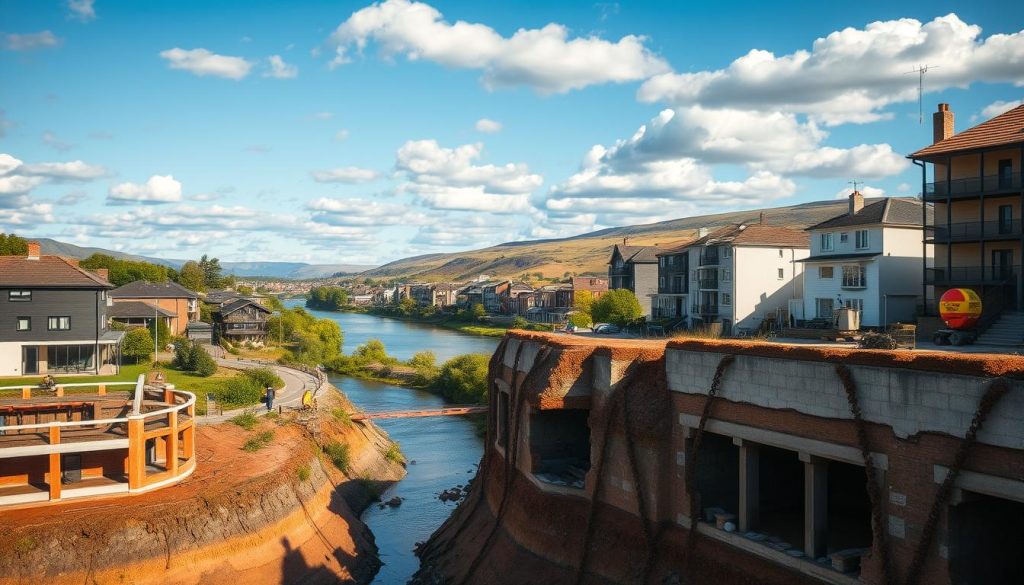
Settlement, heave and differential movement
Soft silts can compress under load, causing ongoing settlement and cracking. Clay layers move with moisture, which drives local heave and subsidence.
Differential movement often forms where additions meet old work. Service trenches and bay windows are common trouble spots. We transfer loads to deeper, stable strata to stop further movement.
Warning signs in buildings
Watch for diagonal wall cracks, step cracking near openings and sloping floors. Sticking doors and windows are a frequent early sign.
- Slab edges may drop where perimeter moisture varies.
- Plumbing leaks accelerate softening under footings.
- Storm surges and king tides can temporarily reduce bearing strength.
We assess risk paths and apply engineered, VBA‑compliant methods to control movement. Early action limits repair scope and protects property value. For a simple check, use our wall crack diagnosis tool or Email Chris: chris@underpinning-melbourne.com.au. Email: chris@underpinning-melbourne.com.au.
Site investigation essentials before you build or repair
Before work begins, a proper site investigation avoids surprises and costly repairs. Start with simple desktop checks and follow with targeted testing on the block.
Desktop clues to check first
- Review historic wetland mapping, flood overlays and aerial imagery for former delta flats.
- Compare your block to known tidal margins and mapped texture belts in the Melbourne region.
- Note nearby mapped changes: west of Darebin Creek, heavy volcanic layers; south of Burwood Highway, tertiary sands; east, grey loams over clay.
On‑site testing and quick checks
- Perform hand‑feel tests at several points to classify sand, loam or clay.
- Check moisture patterns near downpipes, garden beds and paved edges.
- Commission geotechnical drilling where additions or rectification are planned; lab classification informs design.

When to bring in an engineer
Engage a structural engineer for any structural work or persistent movement. We coordinate geotechnical input and deliver VBA‑compliant reports.
We provide free assessments, fixed‑price quotes and translate test results into practical footing and drainage solutions. Contact us via our contact page to arrange testing and a coordinated report.
| Area | Typical soil note | Action |
|---|---|---|
| West of Darebin Creek | Heavier volcanic material | Assess bearing; consider deep piers |
| South of Burwood Hwy | Tertiary sands | Check compaction; test for liquefaction risk |
| Eastern suburbs | Light grey loams over clay | Lab classification to gauge reactivity |
Engineering‑led solutions to stabilise and preserve your home
We combine geotechnical insight with practical construction systems to secure your home. Our work follows VBA‑compliant processes and limits disruption. We advise on the best method after testing and engineering review.
Concrete underpinning for deeper bearing strata and reduced settlement
Concrete underpinning transfers loads to stronger strata below variable near‑surface layers. We stage pins and control movement to protect masonry and services. This approach reduces future settlement and preserves existing finishes.
Restumping and reblocking on river flats with variable ground
On timber floors, restumping and reblocking re‑establish level where subgrade varies. Our teams use verified pile caps and brackets to tie new supports into existing elements. Designs account for reactive clay and moisture swings.
Resin injection to densify silty layers and close voids
Resin injection densifies loose silt and fills voids with minimal excavation. It suits owners who want a fast, low‑impact fix under slabs. Engineers confirm capacity before we proceed.
Screw piling for soft soil and high water tables near the river
Screw piling suits soft, saturated ground and elevated water tables. Piles install quickly and provide immediate load paths. We pair piling with perimeter drainage and service protection where needed.
- Core services: Concrete Underpinning; Restumping & Reblocking; Resin Injection; Screw Piling; Wall Crack Repairs; Structural Engineering Reports.
- We certify works, schedule to limit disruption and protect gardens and access.
| Solution | Best where | Key benefit |
|---|---|---|
| Concrete underpinning | Deep compressible layers | Permanent load transfer to stronger strata |
| Restumping & reblocking | Variable subgrade under timber floors | Restores level and timber support |
| Resin injection | Loose silts under slabs | Minimal excavation; fills voids |
| Screw piling | Soft, wet ground | Fast install; immediate capacity |
Our engineers verify capacity and certify each job to VBA standards. Email Chris: chris@underpinning-melbourne.com.au.
Managing water and drainage on alluvial ground
Controlling where water flows and soaks into the ground keeps houses stable through wet seasons. We prioritise permanent moisture control with council‑compliant details. Our aim is simple: stop seasonal swings that damage timber and masonry.
Surface drainage systems: falls, spoon drains and stormwater control
Grade surfaces away from the house. Maintain at least a 1:100 fall for the first few metres to move water clear of footings.
Install spoon drains and link downpipes to lawful discharge points. Check outlets after storms and repair blockages promptly.
Garden, irrigation and soil management to limit moisture swings
Keep garden beds and irrigation lines back from slab edges. Soaker hoses must be checked for leaks to avoid softening the subgrade.
Improve heavy clay with gypsum and organic matter to make the soil friable. In sandy belts add humus to retain moisture and reduce edge drying.
- Maintain clear subfloor ventilation and prevent ponding under timber floors.
- Consider agricultural drains with geofabric in reactive or silty areas.
- Monitor during winter‑spring when river and groundwater levels rise near tidal reaches.
- Review and adjust falls and outlets after major storms to keep surface water moving away.
| Issue | Recommended action | Benefit |
|---|---|---|
| Ponding near slab | Re‑grade and add spoon drains | Reduces moisture and settlement risk |
| Leaky irrigation | Relocate lines; inspect hoses | Prevents local subgrade softening |
| Heavy clay patches | Gypsum + organic amendment | Improves infiltration and stability |
| Sandy edges | Add humus; maintain mulch | Improves retention; limits edge drying |
Permanent water management protects your property and reduces repair costs. For a site check, Email Chris: chris@underpinning-melbourne.com.au.
Conclusion
A clear plan to manage moisture, clay and variable ground gives your house lasting protection.
Homes in this area sit on varied land and sediments that change with time and water. Careful recognition of subsoil characteristics helps you choose the right repair pathway and limits settlement.
We provide peace of mind through engineered, VBA‑compliant solutions. Our team coordinates reports, approvals and construction to protect buildings and property value.
For practical guidance and a no‑obligation check, try our restumping vs underpinning tool or Email Chris: chris@underpinning-melbourne.com.au. Email Chris: chris@underpinning-melbourne.com.au.