
We explain how to protect your home and stop subsidence with a clear plan you can act on today.
We are Underpinning Melbourne — Structural Preservation Specialists. With more than 20 years’ experience we focus on safety, VBA‑compliant certification and long‑term results. Our calm, engineering‑led approach gives you real peace of mind.
Reactive clays, dry spells and heavy rain cause soil change. Tree roots and leaking pipes can wash away support under footings. That often shows as wall cracks, sloping floors or sticking doors.
We assess the soil and propose the right solution for your property. Options include resin injection for low‑disruption repairs, screw piling and traditional concrete underpinning where deeper support is needed.
We never upsell unnecessary work. You get a free, no‑obligation assessment, a fixed‑price quote and full engineering reports. Call Chris: 1300 970 930 or Email Chris: chris@underpinning-melbourne.com.au
Key Takeaways
- Melbourne’s reactive clays increase subsidence risk; early assessment saves time and cost.
- We offer engineered, council‑compliant solutions with minimal disruption.
- Resin injection can re‑level floors in a day for many homes.
- We provide transparent fixed‑price quotes and VBA‑compliant certification.
- Call or email for a free, no‑obligation structural assessment today.
Protecting Melbourne homes from drainage-related foundation movement
Moisture swings in local soils drive uneven ground behaviour that risks subsidence at your property.
Reactive clays swell when wet and shrink during dry spells. This cycle causes uneven subsidence beneath footings and affects many houses in our region.
Poor site water control makes these cycles worse. Pooled roof run-off, leaking pipes and flat ground close to walls increase moisture variation. That softens bearing soils and speeds up damage.
We take a preventative, engineering‑led approach. We assess site falls, downpipes and soakage systems. Then we recommend practical upgrades that reduce soil change and protect your home.
- We prioritise fixes that deliver the biggest stability gains first.
- Early intervention lowers repair costs and limits ongoing subsidence.
- Our reports include simple maintenance tips to keep moisture consistent year‑round.
| Issue | Effect on Ground | Preventative Action |
|---|---|---|
| Concentrated roof run‑off | Local swelling and settlement cycles | Extend downpipes, add dispersal pits |
| Leaking underground pipes | Soil softening and washout | Repair lines, reinstate compacted fill |
| Tree root extraction | Clay drying and shrinkage | Root barriers, controlled watering plans |
Recognising early warning signs in your home
Noticing odd cracks or floor slope? These are early clues that need checking. Small defects inside a house often point to uneven support beneath footings. Acting early limits damage and cost.
Cracks in walls, brickwork and around windows
Diagonal cracks near openings can mean differential settlement at walls. Step cracks in brickwork often show footing shift across a façade.
Sloping floors, gaps at skirting, sticking doors
Sloping or bouncy floors point to subfloor support loss. Gaps at skirting and sticky doors happen when frames rack from unequal settling.
Movement in slabs, patios, and driveways
Sinking patios and driveways usually mirror soil loss or softened ground. These external signs often match internal subsidence symptoms.
- We measure floor levels and map crack patterns during inspection.
- You receive clear advice on urgency, safety and the best repair pathway.
- We answer all questions, and you can send photos or book an on‑site inspection.
We provide free no‑obligation structural assessments. Call Chris: 1300 970 930 or Email Chris for next steps.
Common causes of foundation movement linked to drainage
Hidden leaks and thirsty trees frequently start the chain of events that lead to subsidence. We investigate the source, not just the symptom. Our team targets repairs that stop repeat damage.
Here are the main drivers we see on site.
Leaking pipes and moisture softening soils
Burst or slow leaks create soft zones under slabs. Wet soil loses bearing strength and causes local subsidence.
Tree roots extracting water and shrinking clays
Large roots chase moisture. That dries clay near footings and causes shrinkage that shifts the foundation.
Poorly compacted fill and surface flow toward the building
Loose fill settles under load. Surface water that runs to walls adds edge heave risk and weakens the ground.
Extended dry spells followed by heavy rain
Drought then intense rain makes clay swell and shrink rapidly. That cycle often triggers sudden movement.
Our engineering team locates moisture sources with level surveys and targeted testing. We include drainage and landscaping guidance in every scope to prevent recurrence.

| Cause | Effect on ground | Practical remedy |
|---|---|---|
| Leaking pipes | Soil softening and washout | Repair lines, reinstate compacted fill |
| Tree roots | Local clay drying and shrinkage | Root barriers, controlled watering |
| Poor fill & surface flow | Settlement and edge heave | Improve falls, extend downpipes, replace fill |
| Drought then heavy rain | Pronounced swell‑shrink cycles | Consistent moisture control, landscaping changes |
Our engineered solutions to stabilise and re-level your property
We assess each property, then match the best structural technique to the cause and site constraints.
Every job starts with an engineering review. We choose methods that suit the soil, load and access. That keeps disruption low and results permanent.
Concrete underpinning for long-term bearing capacity
Concrete underpinning increases bearing area for heavy, localised loads. It is the classic approach where extra support is needed deep below a footing.
Resin injection to strengthen soils and fill voids
Small holes let us inject expanding resin. The resin fills voids, densifies soil and can lift settled slabs in a single visit.
Screw piling where deeper, stable strata is required
Screw piles transfer load past weak layers into deeper competent strata. They suit sites with poor near-surface soils or restricted access.
Restumping and reblocking for timber floors
We replace or reblock old stumps to restore levels under timber floors. This is a fast way to renew subfloor support and protect finishes.
- We tailor the chosen solutions to your soil, structure and access limits.
- Methods are council‑compliant and selected for minimal disruption.
- Free assessment, fixed‑price quote and a clear scope before work starts.
- Our experienced team coordinates reports, permits and aftercare.
| Method | Best use | Key benefit |
|---|---|---|
| Concrete underpinning | Localised heavy loads | Increases bearing area and long‑term capacity |
| Resin injection | Voids, minor settlement | Rapid cure; lifts and densifies soil |
| Screw piling | Deep weak layers | Transfers loads to stable strata |
| Restumping / reblocking | Timber floors | Restores levels and support beneath flooring |
We stabilise first, then re‑level, then preserve finishes. Call Chris: 1300 970 930 or Email Chris for a free assessment from our experienced team.
Concrete Underpinning
For heavy brick or stone structures, enlarging the bearing area with concrete often makes the most sense.
When traditional underpinning is the right approach
We specify concrete underpinning when load and soil favour rigid pads. It suits heavier building types where competent strata lie near existing footing levels.
Staging controls movement while keeping the property usable. Our assessment defines pin sizes, spacing, and sequencing so work proceeds safely and on time.
Council‑compliant methods delivered with minimal disruption
We are fully VBA Registered and insured. We manage council documentation from assessment to certification and coordinate monitoring during works.
- Temporary support and continuous monitoring protect the building during excavation and pours
- We integrate moisture control improvements, protect services and finishes, and manage spoil to minimise disruption
- On completion you receive as‑built notes, certification, plus maintenance guidance
Call Chris: 1300 970 930 or Email Chris
Resin Injection
When voids form beneath slabs, targeted resin injection can restore bearing strength in hours. This method is fast, tidy and causes little disruption to daily life.
How the process works
We drill small diameter holes through the slab. Technicians inject expanding resin into weak zones to fill voids and compact loose soil.
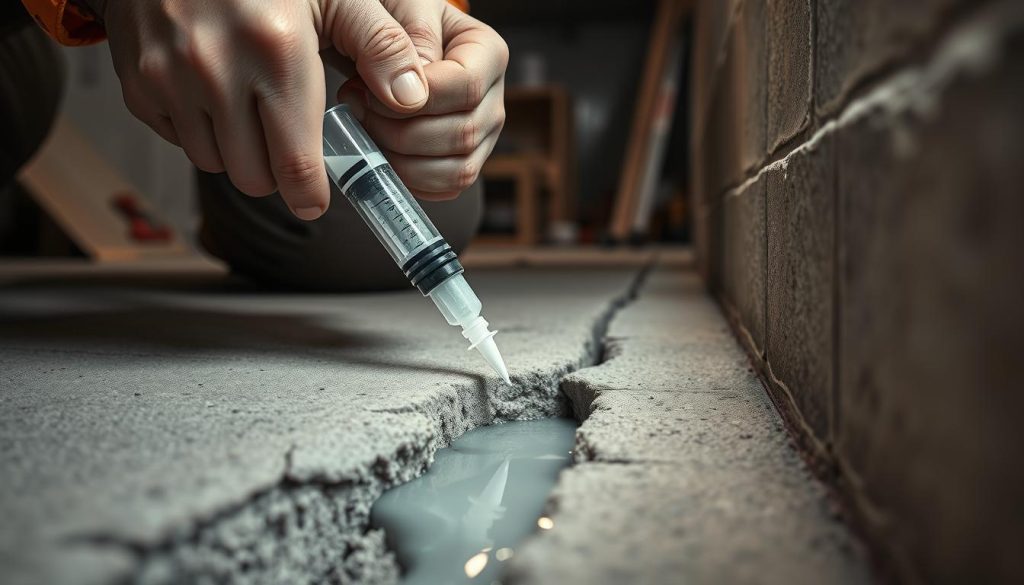
Small holes, fast cure, typically completed in a day
The work is often done in a single day. The resin cures quickly so treated areas are usually usable the same day.
Improving ground bearing and reducing further subsidence
Expanding resin increases local bearing capacity. That reduces the chance of future subsidence and limits follow‑on repairs.
- Small holes give targeted treatment with minimal surface impact.
- Expanding resin densifies weak soil and fills voids.
- The process can re‑level floors and reduce further movement.
- Fast curing means rooms are often back in use the same day.
- Laser monitoring controls lift to protect finishes and services.
- We map injections to match soil variability and load paths.
- Ideal for tight access sites where excavation would be disruptive.
- We issue a clear method statement and safety controls before work.
- Post‑treatment levels confirm outcomes and set future monitoring points.
- Our service includes advice to lock in long‑term benefits.
| Step | Action | Outcome |
|---|---|---|
| Drilling | Small diameter holes placed to suit load paths | Minimal surface impact |
| Injection | Controlled resin volumes injected into voids | Voids filled and soil densified |
| Densification & Lift | Monitored lift with lasers | Accurate level restoration |
| Verification | Post‑treatment level checks | Documented repair and monitoring points |
We keep sites clean and communicate progress at every step. For a prompt, minimally disruptive repair, Call Chris: 1300 970 930 or Email Chris.
Screw Piling
Screw piling gives reliable deep support where near‑surface soils cannot carry the load.
We install screw piles when deeper competent strata is needed. Our experienced team manages design, testing, and installation with minimal disruption.
How it works: Piles mechanically advance to depth. They transfer building loads into stronger layers below reactive clays or deep fill.
- Reaches stable strata beneath reactive or softened ground.
- Fast, low‑vibration install suited to tight access.
- Torque monitoring records capacity for verification.
- Can underpin existing footings or support new elements.
- We design pile layout to suit load, geometry and access on your property.
| Feature | Benefit | Verification |
|---|---|---|
| Mechanical advance | Consistent capacity into competent layers | Torque logs and test records |
| Low spoil & quick setup | Minimal disruption to occupants | Site notes and as‑installed photos |
| Corrosion protection | Long‑term durability | Certification and warranty |
| Integration with beams/brackets | Direct support for structural loads | Design drawings and compliance docs |
We coordinate with other trades and supply full as‑installed records. Call Chris: 1300 970 930 or Email Chris: chris@underpinning-melbourne.com.au
Wall Crack Repairs and structural preservation
After structural stabilisation, we restore cracked masonry to its original strength and appearance.
We complete repairs only when the subsoil issues are fixed. That prevents chasing live cracks and saves time and cost.
Our work combines proven techniques with careful finishing to preserve your building.
Stitching, repointing and tying after stabilisation
We use stainless helical stitching to restore tensile continuity across brittle masonry. Repointing seals joints and improves weather resistance.
Discrete wall ties connect leaves and secure facades where needed. Internal plaster is repaired once movement is controlled.
Preventing recurrence with correct site control and footing support
Correcting surface falls and improving footing support reduces the chance of new cracking over time. We inspect lintels, sills and corners for hidden damage during works.
- We stabilise first, then repair to avoid repeat works.
- Helical stitching and ties restore structural action across cracks.
- Repointing protects masonry from moisture and further damage.
- We provide care advice to help maintain your house finishes.
- We leave the site clean and supply photos and documentation of completed repairs.
Call Chris: 1300 970 930 or Email Chris
Structural Engineering Reports and VBA-compliant certification
We translate technical inspection data into plain advice you can rely on. Our team manages the full process from site checks to final sign‑off.

Independent assessment, monitoring and documentation
Independent assessment reduces risk and clarifies the scope of work. We arrange site inspection, level surveys and monitoring points to record change over time.
Reports document causes, monitoring results and recommended remediation in clear language. They support insurer, lender or body corporate requirements.
Report coordination and council documentation
Our team coordinates engineering drawings, permit paperwork and VBA‑compliant certification. Council documentation is prepared where underpinning or piling is required.
- Reports explain causes, options and design loads in plain language.
- We archive drawings, test data and photos for traceability and quality assurance.
- You have one point of contact from assessment to sign‑off for service clarity.
| What the report shows | Benefit | Who uses it |
|---|---|---|
| Cause diagnosis & monitoring logs | Targets the right remedial work | Insurers & engineers |
| Design loads & drawings | Enables compliant construction | Council & certifiers |
| As‑built records & VBA certificate | Provides final compliance and warranty | Homeowners & lenders |
To arrange an inspection or request a structural report, Call Chris: 1300 970 930 or Email Chris: chris@underpinning-melbourne.com.au.
drainage and foundation movement melbourne — assessments, quotes and costs
A precise site inspection lets us give you a reliable quote and realistic timelines.
We offer a free no‑obligation structural assessment and a transparent fixed‑price quote. Book a site inspection or email photos and a brief history of movement in your house. Call Chris: 1300 970 930 or Email Chris.
Free no‑obligation structural assessment and fixed‑price quote
Our team visits the site, records levels and inspects moisture sources. We explain options and list inclusions clearly.
What affects cost: soil, moisture, access and treatment area
Pricing varies with soil reactivity, severity of movement, access limits and the size of the treatment area. Non‑invasive methods can often finish in a day, reducing time on site and disruption.
- Book a free assessment to understand scope for your property.
- We supply a fixed‑price quote with clear inclusions and exclusions.
- Share photos and questions in advance to speed the process.
| Factor | Effect on cost | Typical outcome |
|---|---|---|
| Soil reactivity | Higher testing and deeper treatments | Increases material and labour |
| Access constraints | Special equipment or staging | Longer time on site |
| Treatment area size | More materials and crew time | Higher total cost, staged options available |
To schedule an inspection or request a quote visit our contact page. We welcome customer questions and explain each line item so you can decide with confidence.
Why choose Underpinning Melbourne for peace of mind
Our company combines long experience with council‑compliant methods to give you real peace of mind.
We have over 20 years’ practical experience on clay, sand and fill sites across Greater Melbourne. We are fully VBA Registered and insured, which keeps your project compliant and secure.
Our team gives honest assessments. We explain options plainly and never upsell unnecessary work.
What you can expect from our service
- Our experience spans common local soils and tricky access situations.
- We plan work to reduce downtime and household impact.
- Clean, respectful sites and punctual crews are standard practice.
- We coordinate engineers, reports and council paperwork for you.
- Our expertise covers underpinning, resin injection and screw piling.
- A single point of contact gives proactive updates through every stage.
- Customer care continues after completion with maintenance and moisture advice.
Fast, clear communication and reliable delivery
Homeowners value quick, non‑invasive solutions and clear timelines. We aim to finish most low‑impact jobs in a day and keep you informed while we work.
| Feature | Benefit | Assurance |
|---|---|---|
| 20+ years’ experience | Proven methods for local soil types | VBA Registered & insured |
| Honest team advice | No unnecessary work | Fixed‑price quotes |
| Minimal disruption | Tidy sites and punctual crews | Clear method statements |
Call Chris: 1300 970 930 or Email Chris: chris@underpinning-melbourne.com.au
Our step-by-step process to fix drainage issues and foundation movement
Our team follows a clear, staged process. We use simple checks and engineering judgement to set the right priority, limit disruption and deliver a permanent result.
Site inspection, moisture and level checks
We begin with a focused site inspection. Moisture tests and floor level mapping show where support has changed.
Engineering-led plan and council-compliant methodology
Next we prepare an engineering plan. It sets council-compliant staging and safety controls so work proceeds with clarity.
Works scheduled for minimal downtime — often in a day
Where resin injection suits, we drill, inject, densify and verify levels. Fast curing often allows same‑day reuse.
Certification, aftercare and preventative drainage advice
We finish with verification, certification and handover. You receive reports, photos and an aftercare plan with tailored preventative advice.
- Step 1: Site inspection, moisture checks and level mapping.
- Step 2: Assessment, engineering plan and fixed‑price quote.
- Step 3: Works with monitoring, verification and certification.
Call Chris: 1300 970 930 or Email Chris: chris@underpinning-melbourne.com.au. Our team stays available for follow‑up and to share practical knowledge.
Conclusion
Take firm action now to protect your house from subsidence with an engineered plan you can trust.
We restore safety and peace of mind with VBA‑compliant underpinning, resin injection or piling. Our team stabilises the ground, re‑levels floors and then repairs walls and finishes to a high standard.
Reactive clays, moisture swings, tree roots and leaking services often start the problem. Early assessment limits damage and reduces long‑term repair cost.
Book a free assessment and a fixed‑price quote. Use our wall crack diagnosis tool or Call Chris: 1300 970 930 or Email Chris: chris@underpinning-melbourne.com.au.