
We explain how to assess and protect homes on high-risk river corridors so you can act with confidence.
Victoria’s river systems and overlays create real flood risk for many towns. We guide you through planning cues, how water moves across ground, and what that means for property safety.
We are Underpinning Melbourne — structural preservation specialists. With 20+ years’ experience we offer VBA-registered, council-compliant methods like concrete underpinning, restumping, resin injection and screw piling.
Our approach is calm and engineering-focused. We give free no-obligation structural assessments, fixed-price quotes and coordinated engineering reports. Call Chris: 1300 970 930 or Email Chris: chris@underpinning-melbourne.com.au.
For a quick estimate use our underpinning cost calculator. We explain risks, stabilise ground and certify the work to protect value and long-term safety.
Key Takeaways
- River corridors and local overlays can increase flood risk to homes.
- We offer VBA-registered, council-compliant engineered solutions.
- Assessment, fixed pricing and clear scope keep work transparent.
- Proven methods include underpinning, restumping, resin injection and screw piling.
- Book a free assessment to get a calm, practical plan before the next storm.
Understanding Melbourne’s floodplain context and foundation risks
Understanding which rivers back up and where water spreads is the first step in managing flood risk. We translate technical maps and historic levels into clear actions you can use when assessing property or planning work.

Victoria’s major rivers — the Murray, Goulburn, Campaspe, Wimmera, Latrobe, Mitchell and Barwon — set the broad pattern of where floods occur. Each river behaves differently, so local history matters.
Reading council maps and overlays
Council planning reports use LSIO and Floodway Overlay (FO) notations to mark higher inundation corridors. Check these overlays early. They affect approvals, design and insurance.
Towns and real examples to learn from
Shepparton, Rochester, Echuca, Wangaratta, Horsham, Traralgon, Bairnsdale and Geelong all show how floods affect homes, roads and drainage. Historic events in 2011, 2021 and 2022 give useful flood levels for planning.
- Rivers set exposure: the Murray and Goulburn influence many populated areas.
- Flat ground spreads water: towns with low relief see wider impacts and ponding.
- Use historic levels: determine safe habitable floor heights and access routes.
Plan early and site-specifically. That reduces surprises, protects property and guides resilient, council-compliant decisions.
How to assess your property on a floodplain before works or purchase
Start with official data. Obtain a Special Flood Level or Flood Information Certificate from council or water authority. This gives site-specific flood levels, depths and probabilities.
Use the council planning property report to confirm overlays such as LSIO or FO. Overlay status affects approvals and planning time.
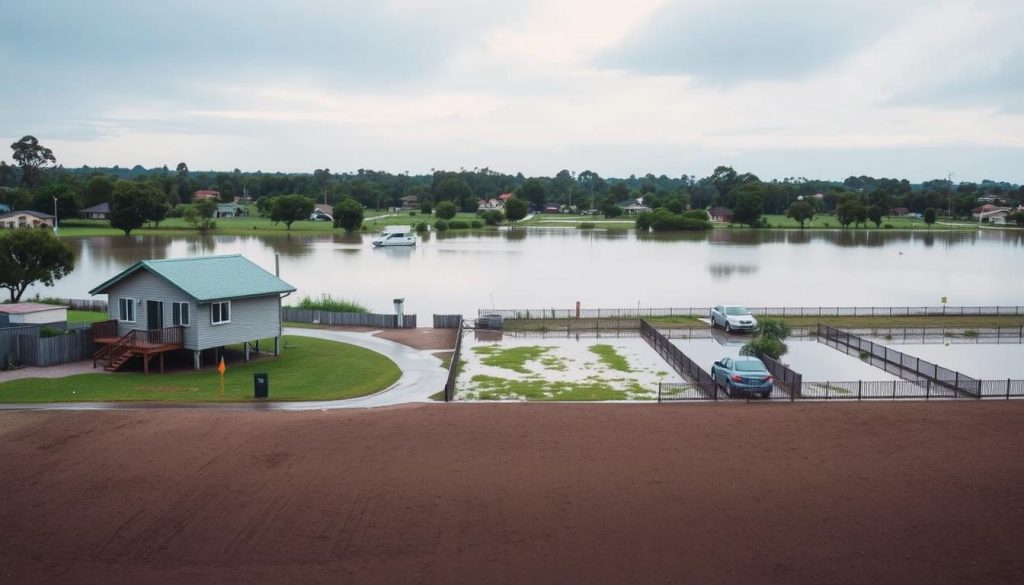
On-site checks and signs to note
Compare ground level to the road and neighbours. Low lots can concentrate flows and cause ponding.
Walk the site after rain. Look for ponding, blocked drains, salt marks and discoloured brickwork.
Insurance, access and safety
Contact insurers early for indicative premiums. Some properties face exclusions or higher excesses in flood areas.
- Record wall cracks and step cracks aligned with openings.
- Ask locals about past floods and access during storms.
- Plan egress and shut-off points for safety during storms.
| Document / Check | What it shows | Action |
|---|---|---|
| Flood Information Certificate | Probable flood depths and event frequency | Adjust floor levels and scope of works |
| Planning report (LSIO / FO) | Overlay controls and permit needs | Engage engineer and council early |
| On-site signs | Ponding, salt marks, cracks | Schedule free structural assessment and targeted investigations |
We offer free no-obligation structural assessments, coordinate engineering reports and ensure VBA-compliant certification. Call Chris: 1300 970 930 or Email Chris: chris@underpinning-melbourne.com.au.
Practical ways to secure floodplain melbourne foundations with VBA-compliant solutions
Protecting buildings near rivers starts with clear, VBA-compliant engineering options you can trust.
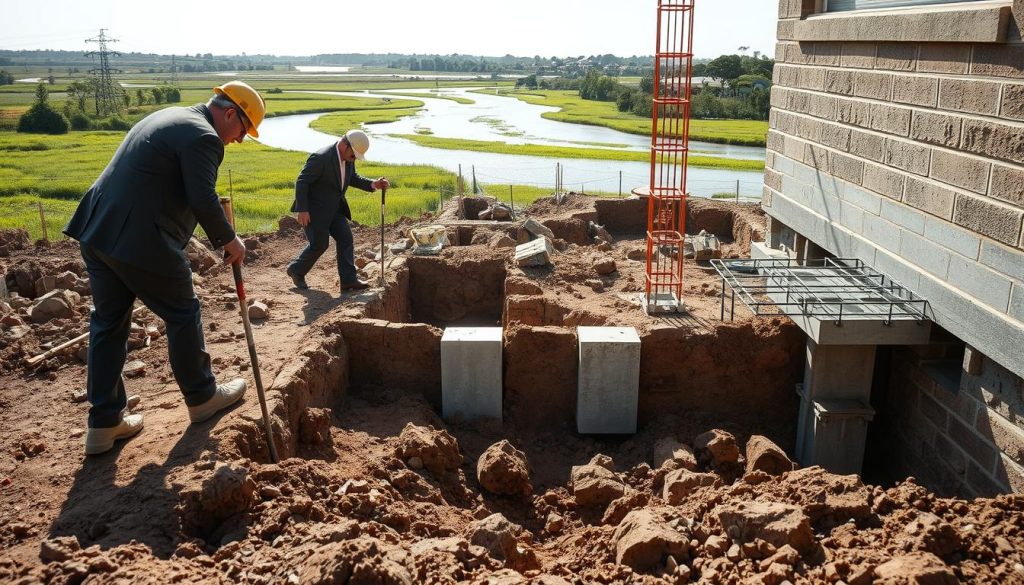
We offer engineered options to restore bearing and reduce future flood damage. Each choice depends on ground, water behaviour and the likely flood depth.
Concrete underpinning to stabilise subsided slabs
Concrete underpinning re-supports settled slabs after drainage change or washout. It restores bearing and reduces ongoing movement.
Restumping and reblocking for raised homes
We replace rotten stumps and re-level houses on reactive or saturated ground. This limits post‑flood sag and improves access for inspections.
Resin injection and screw piling
Resin injection fills voids and densifies soil with minimal excavation. It suits local washout repairs.
Screw piles reach competent strata where soft, wet ground exists. They resist uplift and speed installation in saturated conditions.
Wall repairs, certification and resilient design cues
We repair structural wall cracks with engineered details and prepare reports for council certification. For higher flood depth, resilient design is safer than trying to keep all water out.
- Raise living levels above credible flood levels.
- Fit flood vents and use robust lower‑level materials.
- Improve drainage and maintain stormwater paths away from houses.
We are VBA‑registered, insured and engineering‑focused. Book a site inspection to get a free assessment and fixed‑price quote: book a site inspection. Call Chris: 1300 970 930 or Email Chris: chris@underpinning-melbourne.com.au.
Conclusion
Managing flood risk starts with clear data, calm decisions and proven engineering.
Victorian exposure varies by river catchment and local history. Obtain certificates that confirm the credible flood level before design or purchase.
We safeguard homes with VBA‑compliant solutions. We provide free no‑obligation assessments, fixed‑price quotes and coordinated engineering reports. Small works like cleared drains and smart stormwater lines reduce damage and speed recovery after flooding.
Secure your documents, then book a site inspection or email photos today. Call Chris: 1300 970 930 or Email chris@underpinning-melbourne.com.au.