
We offer soil testing and engineering guidance to ensure your project proceeds safely and to council standard from the first site visit.
We are Underpinning Melbourne, Structural Preservation Specialists. Our calm, engineering-led approach protects homes and restores foundations with certified solutions.
With over 20 years of experience, we combine field testing, analysis and on-site support to avoid costly surprises during construction. Our service covers initial site assessment, borehole sampling, design recommendations and implementation support.
We coordinate structural engineering, manage approvals and deliver a clear path to permanent repairs. Expect honest findings, fixed-price quotes and minimal disruption. Book a free assessment: Call Chris: 1300 970 930 or Email Chris: chris@underpinning-melbourne.com.au.
Key Takeaways
- Thorough site investigation underpins successful projects and council approvals.
- We blend structural and geotechnical engineering to protect your foundations.
- Services include testing, analysis, design advice and on-site implementation.
- Over 20 years’ experience, VBA registered and fully insured.
- Transparent pricing, no upsell, and practical solutions sized to your needs.
Trusted soil testing for Melbourne foundations, done right the first time
We deliver practical soil testing so you can make confident choices about your foundations. Our local team combines site checks, field sampling and lab analysis. We focus on clear findings that reduce risk and cost.
Local expertise tailored to ground conditions
Our engineers assess varied soil conditions across the city. We test clays, historical fill and shallow soils to find hidden issues early.
VBA-compliant methods that minimise disruption
We use council-ready methods and documentation. That keeps approvals simple and limits mess, noise and delays on your site.
- Tailored testing: field sampling and lab work matched to your site.
- Clear outcomes: results that guide construction choices and save time.
- Compliance: VBA-certified methods and council-ready paperwork.
- Practical support: continuous engineering oversight from first inspection to completion.
We specialise in helping anxious homeowners and investors understand risk fast. Book a free assessment and a fixed-price quote via our soil testing services. Call Chris: 1300 970 930 or Email Chris: chris@underpinning-melbourne.com.au.
geotechnical report underpinning melbourne: what it covers and why it matters
A full site investigation identifies soil behaviour and the risks that could derail your construction plans. We coordinate structural engineering assessments and give honest findings you can act on.

When your building needs a geotech report before underpinning
A geotechnical report is needed when foundations show settlement, cracking or movement that demands engineered rectification. Councils and engineers often require a site investigation and soil testing before approving works.
From subsidence to wall cracks: linking site conditions to structural issues
The report links site conditions to visible issues like wall cracks, sticking doors and sloping floors. It outlines groundwater, reactivity, fill and bearing capacity that affect stability and construction safety.
- Scope and solutions: the assessment defines options and clear construction steps so your project proceeds with confidence.
- Inner-city risks: we check historical fill and nearby developments to manage adjacent structure impacts.
- Standards and checks: AS 2870 site classification and, where needed, a footing probe inform design decisions.
Clear findings reduce disputes and speed approvals. For a fast, transparent assessment and coordinated structural engineering, see our underpinning cost calculator or call Chris: 1300 970 930 or Email Chris: chris@underpinning-melbourne.com.au.
Our geotechnical investigation process for underpinning projects
We start every project with a focused desktop review and a short site inspection. This sets clear priorities for field testing and drilling so works are efficient and low impact.
Initial site assessment and desktop review
We map local geology, services and prior developments. That early work helps us plan the scope of investigation and reduce unnecessary disturbance.
Field testing, borehole drilling and soil sampling
Field work includes borehole drilling, footing probes and in-situ tests. These steps profile layers, moisture and bearing capacity for reliable construction inputs.
Laboratory analysis, ground behaviour modelling and risk assessment
Lab analysis confirms soil classification, strength and reactivity. We model likely ground movement and assess risks to stability and nearby structures.
Design recommendations, reporting and on-site implementation support
We deliver clear design recommendations that align with standards and structural engineering requirements. Our team issues VBA-compliant certification and supports contractors on site.
- End-to-end management: from investigation to handover.
- Clear communication: short updates at each stage.
- Practical outcomes: concise report, specifications and on-site advice.
Standards, certifications and council compliance you can rely on
We deliver compliant site classification and actionable footing advice so your build stays on track. Our AS 2870-2011 site classification provides footing recommendations designers can use immediately.
VBA registration and insured work protect you through design, construction and final certification. We supply council-ready documentation signed by qualified engineers.
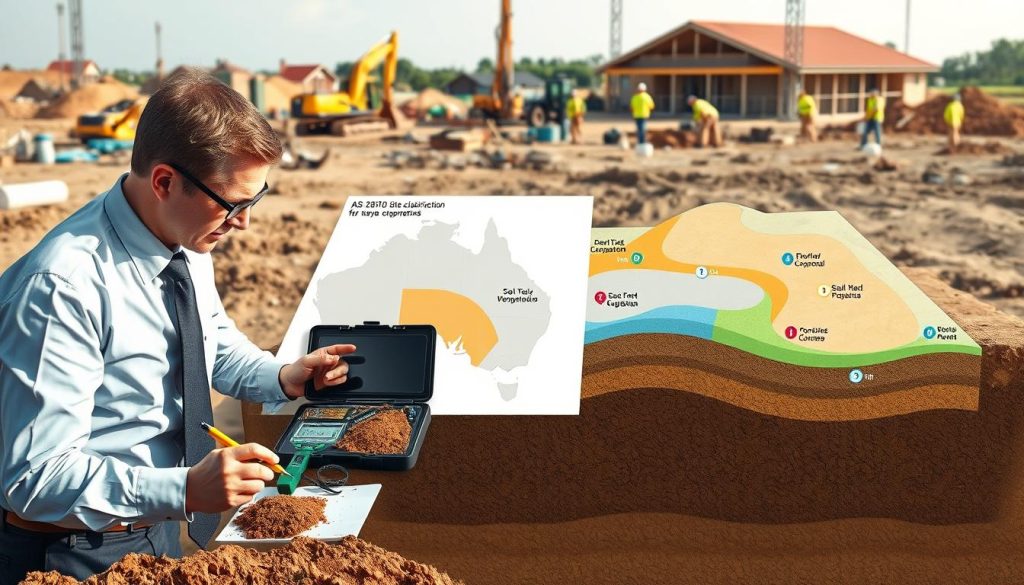
AS 2870 site classification and footing recommendations
These classifications set the design requirements and footing depths for your project. They guide builders on excavation, drainage and how to manage water around foundations.
VBA registration, insurance and council-ready paperwork
We apply Australian standards across our investigations, documentation and on-site supervision. Safety is first: we plan construction sequencing to control groundwater and excavation risk.
- AS 2870 classification with clear footing directions for designers.
- Council-compliant documentation signed by engineers.
- Insured, VBA-registered team covering the whole project.
- Reports include contractor requirements to avoid ambiguity on site.
- We coordinate with your engineers and builders to close out RFIs quickly.
Expect consistent standards, traceable test data and responsive support until your project is complete. Call Chris: 1300 970 930 or Email Chris: chris@underpinning-melbourne.com.au.
How soil testing informs the right underpinning solution
Understanding ground behaviour is the first step to a lasting foundation fix. We use targeted soil testing and site analysis to match design and construction methods to site conditions.
Concrete underpinning vs resin injection vs screw piling
Concrete suits load-bearing walls with good access. It gives proven stability for heavy loads.
Resin injection lifts slabs and fills voids with little disruption. It is not a substitute when structural capacity is needed.
Screw piling or mini-piles work well in soft soils and tight access. They speed installation and limit site disturbance.
Designing for stability, groundwater, soft soils and restricted access
Our engineering analysis checks bearing capacity, reactivity and seasonal water. That drives depth, spacing and construction sequencing.
- Soil testing results guide selection between concrete, resin and screw pile solutions.
- High-reactivity clay and water swings often require deeper or piled options for stability.
- We design to AS 2870 criteria and detail water control for excavation and cure.
| Method | Best for | Disruption |
|---|---|---|
| Concrete | Accessible load-bearing walls | Moderate |
| Resin Injection | Slab lifting, voids | Low |
| Screw Piling | Soft soils, tight access | Low–Moderate |
| Staged Solutions | Heritage or confined sites | Minimal to controlled |
We minimise disruption and never upsell. Final designs focus on durable performance of foundations and nearby structures.
What’s included in your geotechnical report and structural assessment
We bring together soil testing, lab data and engineer-signed documents in one practical file. This package gives you clear directions for construction and council-facing documentation.
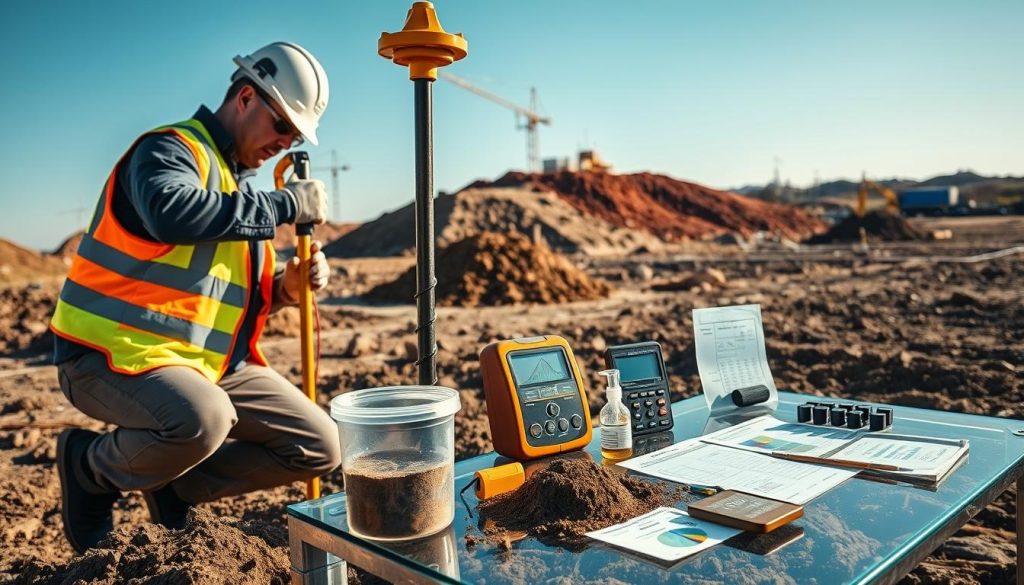
Site classification, test logs, analysis and foundation design recommendations
We supply AS 2870 site classification, borehole logs and laboratory results. Mapped layers show how the ground will behave under load.
Analysis summaries translate technical data into practical recommendations for footing depths, bearing pressures and materials.
Structural engineering report coordination and certification
We coordinate the structural engineer’s report and certification so you have one responsible contact. Reports are formatted for council, insurers and builders.
For upper storey additions we include a footing probe to confirm existing footing dimensions and capacity. Implementation support ensures works follow design intent.
- Clear outcomes: AS 2870 classification with construction implications.
- Test evidence: logs, lab data and mapped layers.
- Practical directions: foundation recommendations and construction sequencing.
- Single point of accountability: we coordinate the engineer and certification.
Fast, fixed-price quotes and prompt timelines keep your programme on schedule. Call Chris: 1300 970 930 or Email Chris: chris@underpinning-melbourne.com.au.
Pricing clarity, timelines and how to book a fast site inspection
Transparent fixed-price quotes and prompt site inspections make budgeting easy. You start with a free, no-obligation structural assessment. Send photos and your address and our office team begins a quick review.
After your enquiry, an office member collects details. Engineers then prepare a clear quote that lists scope, inclusions and any council requirements.
Fixed-price quotes and typical turnaround times
We issue fixed-price quotes that spell out what the service includes and any additional requirements. This avoids surprises and helps you plan other work.
Typical timelines follow four stages: assessment, field testing, lab analysis and final documentation. We agree the exact timeframes in your quote so you know when the job will finish.
- Start with a free assessment by emailing photos and the address.
- Fixed-price quote lists scope, inclusions and council paperwork needs.
- Turnaround time for soil testing and analysis is confirmed up front.
- Fast mobilisation for urgent safety concerns or time-sensitive projects.
- One point of contact from quote acceptance to handover keeps communication simple.
Our team coordinates access, locates services and schedules fieldwork to suit you. We minimise disruption and only charge for the necessary scope of work.
Call Chris: 1300 970 930 or Email Chris to book your site inspection today. Clear timelines and regular updates keep your project predictable from start to finish.
Conclusion
Get prompt, standards-led support to keep construction moving and avoid costly delays.
We restore safety and peace of mind with engineered solutions that last. Our team is VBA registered and fully insured.
Our engineers link testing to workable designs and on-site support. This prevents delays and structural issues on inner-city developments.
Choose a calm, engineering-led path to protect your building value. Expect clear findings, permanent repairs and council-ready documentation.
Start with a free assessment and a fixed-price service that suits your project. Contact us, Call Chris: 1300 970 930 or Email Chris: chris@underpinning-melbourne.com.au.