
We diagnose and fix leak-driven slab problems for Melbourne homeowners who need a clear, council‑compliant repair path today.
Underpinning Melbourne are structural preservation specialists. We calm worried owners with engineering-led guidance and practical options.
Underfloor and in-slab water often goes unseen until it causes noticeable damage. Signs include higher water bills, damp floors and new cracks in concrete.
Our team uses non‑invasive detection — acoustic listening, thermal imaging and pressure testing — to find the source with minimal access. Then we recommend a repair that protects your foundation and property.
We are VBA-registered, insured and have 20+ years’ experience. Expect fixed-price quotes, coordination of engineering reports and council-compliant methods that reduce disruption.
Key Takeaways
- Non-invasive testing finds leaks early to limit concrete damage.
- We give clear, engineering-led advice from VBA‑registered experts.
- Repairs focus on foundation safety, permanence and council compliance.
- Transparent fixed-price quotes and coordinated reports for peace of mind.
- Free no-obligation structural assessments — call Chris: 1300 970 930 or Email Chris.
Underpinning Melbourne — calm, engineering-led help for water-related slab movement
Hidden moisture beneath a home can slowly undermine support long before obvious cracks appear. We stop that risk with a clear Detect‑Repair‑Protect process that focuses on permanence, not patchwork.
We are VBA‑registered and fully insured. Our team brings decades of experience and practical solutions to safeguard your foundation with minimal disruption.
We provide measured, engineering‑led support when water affects your slab. You get honest assessments and a fixed‑price quote before work starts.
- Clear scope of repairs aligned to VBA and council requirements.
- Coordination of structural engineering reports and certification.
- Focused access points and short onsite time to keep disruption low.
- Permanent structural repairs plus plain‑language explanations at every step.
- No upsells — only the work your home needs.
Call Chris: 1300 970 930 or Email Chris for a free structural assessment and a council‑compliant service plan.
How leaking pipes trigger slab movement and structural problems
Small, persistent leaks under a home can slowly change soil conditions and shift the concrete beneath you. We assess how water alters reactive clay and how that leads to structural problems.
Reactive clays: moisture gain, expansion and heave
Reactive clay soils swell when they gain water. That uplift can push a concrete slab upward, causing distortion.
Moisture loss and consolidation leading to settlement
When leaks stop or dry weather returns, the same soils dry and shrink. The slab then settles unevenly.
Undermined bearing capacity and differential movement
Repeated wetting and drying weakens soil bearing capacity. This creates differential movement across the foundation.
From slab distortion to wall cracks and jammed doors
Distortion shows as new cracks in plaster and brickwork, lifted tiles and doors that stick. Small water sources often start subtle and worsen over time.
How we respond
- We map moisture to verify leak-driven soil change.
- Engineers link crack patterns to the underlying cause.
- We stabilise the foundation before repairing finishes.
- Fix the leak, then protect the structure to prevent repeat damage.
| Mechanism | Effect on structure | Typical sign | Our action |
|---|---|---|---|
| Soil swelling | Upward heave of concrete | Lifted tiles | Moisture mapping and targeted stabilisation |
| Soil shrinkage | Settlement and loss of support | Cracked plaster | Underpinning or resin support before cosmetic repairs |
| Long-term saturation | Reduced bearing capacity | Soggy patches near foundation | Repair water source, then engineered foundation works |
We focus on permanent, engineering-led solutions that protect your foundation and restore safety. Call Chris: 1300 970 930 or Email Chris: chris@underpinning-melbourne.com.au.
Leaking pipes slab movement melbourne
Hidden leaks under a house quietly change soil conditions and put foundations at risk. We service Melbourne-wide with fixed‑price transparency and council‑compliant methods.
We trace the leak source, stabilise the foundation and manage the whole repair process for you. Our plumbing partners use acoustic and thermal tools to pinpoint water escape without heavy excavation. That lets engineers plan structural works only where needed.
We cover key areas with fast response. Common reactive-clay suburbs we help include the Inner South East, Bayside and the Mornington Peninsula. Frequent suburbs are Glen Iris, Brighton, Caulfield, Mornington, Mount Eliza and Dandenong.

- Melbourne’s reactive clays make slabs sensitive to small plumbing leaks.
- We fix the leak source, then stabilise the foundation in one coordinated service.
- Minimal access, tidy reinstatement and clear drainage advice to reduce future risk.
- Book your assessment today to prevent further slab damage.
- Call Chris: 1300 970 930 or Email Chris.
Common signs to watch for in Melbourne homes
Early detection makes repairs simpler and less costly. Below are clear, calm pointers to help you spot issues before they worsen. If you notice one or more signs, arrange a free assessment.
Rising bills and spinning meters
Watch for a steady rise in water bills you cannot explain. Check the meter at night. If it spins with taps off, that usually points to a hidden leak.
Musty odours, mould and damp flooring
Persistent damp smells or mould indicate moisture under the home. Flooring that feels cold or soft may hide ongoing water damage.
Warm patches, warped floors and cracks
Warm spots underfoot can mean hot water lines are leaking under the concrete. Warped floating floors, lifted tiles and new cracks in plaster or skirtings show prolonged moisture or structural change.
Outdoor signs
Soggy strips or green staining beside the foundation are red flags. Early detection limits further damage and lowers repair costs.
- We confirm signs with non-invasive testing before recommending excavation.
- We then propose an engineered response tailored to your home.
| Sign | Likely cause | Immediate action |
|---|---|---|
| Rising water bills / spinning meter | Hidden water leak | Call for acoustic and pressure testing |
| Musty odour / mould | Damp underfloor areas | Moisture mapping and ventilation advice |
| Warm patches / warped floors | Hot water line failure under concrete | Thermal imaging then targeted repair |
| Soggy garden strips / green streaks | Continual discharge near foundation | Drainage review and leak tracing |
Call Chris: 1300 970 930 or Email Chris for a free no‑obligation assessment.
Why slab leaks happen: plumbing and site causes
Small defects in plumbing or site setup can trigger broader foundation issues. We prioritise correct diagnosis before structural works.
Common culprits are simple and avoidable. Age, pressure and poor installation combine with site factors to create persistent problems.
High mains pressure and joint stress
Excess mains pressure strains joints beneath concrete. Over time, this increases the chance of a leak and local damage.
Building work, settling and nearby construction
Site vibration or recent construction can crack buried lines. Even minor shifts in the building fabric may stress fittings under the slab.
Renovation damage and poor installation
Trades can nick or bend lines during renovations. Incorrect bedding or unsupported runs create stress points that fail.
Thermal stress and drainage on reactive soil
Hot water lines expand and contract. Without insulation this causes fatigue in the metal and joint areas.
Poor drainage lets clay soils saturate. That drives uplift and adds pressure on shallow services.
We test first, then act. Our process checks pressure, inspects materials and audits site drainage before recommending works.
- Older galvanised and soft copper pipes corrode and fail.
- High mains pressure stresses joints under concrete.
- Nearby construction and settling can crack buried lines.
- Renovations often create hidden weak points.
- Poor drainage saturates reactive soil and drives heave.
- We sequence plumbing fixes before structural stabilisation.
| Cause | Immediate effect | Typical sign | Our diagnostic action |
|---|---|---|---|
| Corroded older metal | Slow water loss | Rising bills or damp patches | Material inspection and pressure test |
| High mains pressure | Stressed joints | Joint failures under concrete | Pressure regulation and targeted repair |
| Thermal cycling of hot lines | Fatigue at joints | Warm spots and local wetting | Thermal imaging and replacement with insulation |
| Poor drainage / reactive soil | Heave and local uplift | Lifted finishes and soft ground | Drainage remediation and engineered stabilisation |
Fix the original cause and repeat problems stop. We design a plan that sequences plumbing work first, then stabilisation and repair to protect your home.
Call Chris: 1300 970 930 or Email Chris for a clear diagnosis and compliant repair plan.
Non-invasive diagnosis before any repair work
Our diagnostic approach prioritises certainty so repairs are targeted and minimal. We apply engineering-led tests to find the source of a leak without unnecessary access. That reduces disruption and gives you a clear repair path.
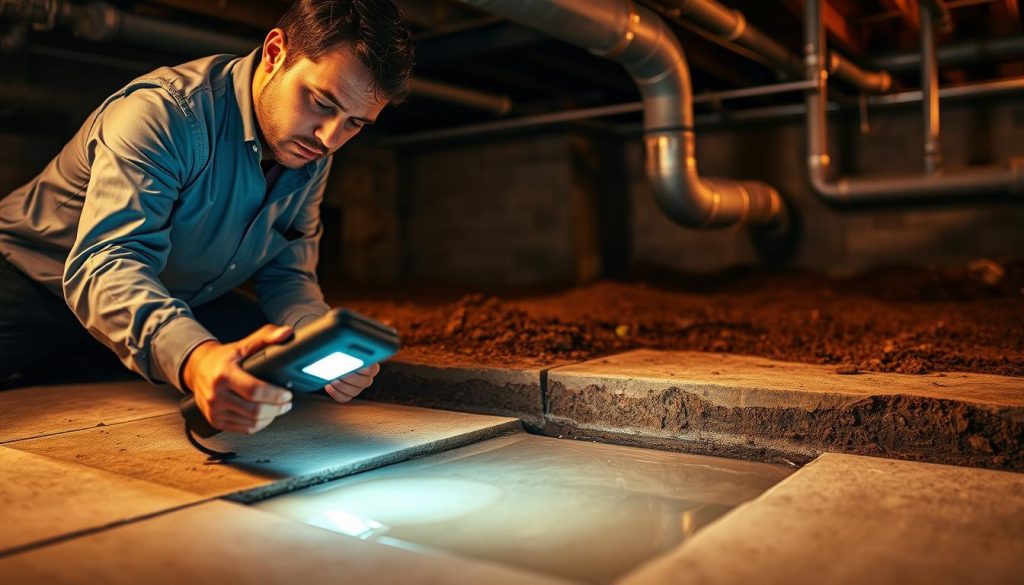
Acoustic listening and thermal imaging to pinpoint leaks
Acoustic sensors detect pressurised noise under concrete and under your floor. Thermal imaging shows hot water signatures and hidden wet spots quickly.
Tracer gas and pressure testing for certainty
Tracer gas finds tiny leaks where water is not visible. Pressure testing then confirms circuit integrity before we open any surface. This process protects finishes and speeds up repairs.
Moisture mapping and movement monitoring over time
Moisture mapping shows the wet soil extent and any damp flooring. We monitor for time-based trends to separate seasonal change from plumbing faults.
- Our experts explain each test and the results.
- You receive a concise report for insurance or council needs.
- This service avoids needless demolition and schedules work promptly after diagnostics.
We use experience and careful testing so repairs are right first time. Call Chris: 1300 970 930 or Email Chris.
Structural solutions matched to the cause
We match repair methods to the confirmed cause so your foundation gets the right support.
Concrete underpinning to re-support and stabilise foundations
Concrete underpinning restores bearing under settled edges. We lift and level while limiting access to the affected area.
Resin injection to fill voids and improve soil bearing
Resin injection void-fills and increases bearing capacity beneath concrete slabs. It cures quickly and stitches adjoining areas for long-term stability.
Screw piling, restumping and wall repairs
Screw piling transfers loads to deeper strata where topsoil is weak. Restumping and reblocking renew timber floor support. We repair walls and cracks only after stabilisation.
- Coordinated services: concrete underpinning, resin injection, screw piling, restumping, wall crack repair.
- Compliance: our team prepares engineering reports and council documentation.
- Maintenance: we advise on drainage and ongoing care to reduce repeat issues.
| Solution | Primary use | Benefit |
|---|---|---|
| Concrete underpinning | Settled edges and loss of support | Restores level and bearing permanently |
| Resin injection | Voids under concrete slabs and soft soil | Rapid cure, minimal access, improves soil bearing |
| Screw piling | Compromised subsoils | Deep support, bypasses weak topsoil |
| Restumping / reblocking | Timber floor sag and level issues | Renewed support and safe floor alignment |
We are VBA registered and insured. Call Chris: 1300 970 930 or Email Chris for an honest assessment and a coordinated repair plan.
Resin injection vs traditional methods: choosing the right fix
Modern injection methods consolidate weak ground beneath concrete without heavy excavation. That makes them an efficient choice when time and neat reinstatement matter.
Resin systems cure fast, often allowing immediate traffic over treated areas. They fill voids and bond loose soil so the concrete regains support quickly.
Addressing underlying soil, not just surface damage
We focus on fixing the soil that causes repeat problems. Consolidation prevents future settlement and reduces the chance of new cracks.
When to stitch panels and re-support adjoining areas
Stitching binds separated panels and restores continuity across joints. Where adjacent sections show loss of support, we re-support them to stop differential steps.
- Resin injection cures fast, limiting downtime.
- It targets weak soil beneath concrete slabs for lasting repair.
- Traditional mudjacking is often messier and less durable.
- Stitching and re-support protect adjoining areas from renewed movement.
- Our experience guides whether resin, underpinning or piling is best.
| Method | Primary benefit | Site impact | When we use it |
|---|---|---|---|
| Resin injection | Rapid cure; consolidates soil | Minimal access; tidy finish | Voids under concrete and minor settlement |
| Mudjacking | Lifts panels quickly | Messy; longer drying time | Temporary fixes where cost is the main concern |
| Underpinning / piling | Deep, permanent support | More invasive; longer work time | Severe loss of bearing or structural requirement |
We offer transparent recommendations that favour permanence and minimal disruption. Call Chris: 1300 970 930 or Email Chris.
Our Detect – Repair – Protect process
Our three-step method gives you certainty from diagnosis to long-term care. We deliver a calm, engineering-led process with free assessments and a fixed-price quote. You get one accountable team coordinating reports, VBA compliance and timely repairs.
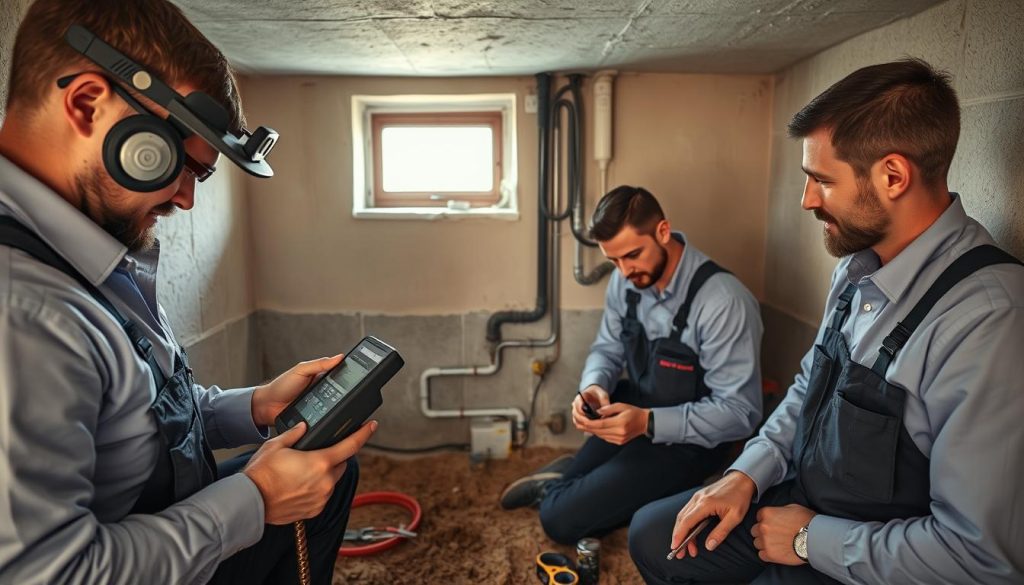
Detect: assess, locate and confirm the leak source
Detect focuses on certainty. We use acoustic listening, thermal imaging, tracer gas and pressure testing to pinpoint the leak.
We confirm the source before opening any surfaces so repairs are targeted and minimal. You receive a concise diagnostic report suitable for insurance or council needs.
Repair: rectify plumbing issues and stabilise the structure
Repair coordinates licensed plumbing trades alongside structural stabilisation. We rectify defective sections and sequence works to protect finishes.
After replacement work, systems are pressure-tested. That verifies integrity and reduces the chance of repeat leaks.
Protect: pressure testing, drainage advice and maintenance planning
Protect includes inspection of nearby risk points and drainage improvements. We advise on valve upgrades and ongoing maintenance to keep your home safe.
You receive a clear timeline and a fixed-price quote before we begin. We communicate progress so your peace of mind stays intact. Call Chris: 1300 970 930 or Email Chris.
| Stage | Key actions | Outcome for you |
|---|---|---|
| Detect | Acoustic, thermal, tracer gas, pressure testing | Confirmed source; minimal access; report for insurance/council |
| Repair | Licensed plumbing works and structural stabilisation | Defective sections fixed; system pressure-tested |
| Protect | Drainage advice, valve upgrades, maintenance plan | Lower future risk; clear maintenance schedule |
Why choose Underpinning Melbourne for water-related slab issues
Choose an experienced, accountable team that coordinates diagnosis, repair and compliance. We bring 20+ years’ experience and a practical approach to protect your home and foundation.
VBA-registered, insured and council-compliant methods
We are fully VBA registered and insured. Our methods meet council requirements and engineering standards.
Honest assessments — no upsells, just what’s needed
Our assessments are direct and focused on your needs. You receive a clear report and practical options, not unnecessary work.
Minimal disruption with fixed-price transparency
We keep access targeted and the site tidy. You get fixed-price quotes before any work starts so there are no surprises.
Free no-obligation structural assessments and report coordination
Book a free assessment and we will coordinate engineering reports and council paperwork for you.
- We are VBA Registered, insured, and council-compliant.
- Our assessments are honest and focused on your needs.
- We minimise disruption with targeted access and tidy work.
- You receive fixed-price transparency before works commence.
- Free structural assessments help you act with confidence.
- We coordinate engineers to document a compliant foundation fix.
- Our experts communicate clearly and avoid technical jargon.
- We protect your home and property value as a priority.
- Our team stands behind the quality of our workmanship.
- Choose a calm, engineering-led partner for slab problems.
Call Chris: 1300 970 930 or Email Chris. Visit our underpinning cost calculator for an indicative estimate.
Local expertise across Melbourne’s reactive clay suburbs
Our local teams respond quickly across the clay belt to stop small water faults becoming large foundation problems.
We serve the Inner South East, Bayside and the Mornington Peninsula with free assessments and fixed‑price quotes. Our technicians know how local soils behave and what each area needs.
Inner South East, Bayside and Mornington Peninsula coverage
These areas have reactive ground that can change with moisture. We map moisture, then plan targeted repairs that suit tight urban sites and coastal conditions.
Fast response to Glen Iris, Brighton, Caulfield, Mornington, Mount Eliza and Dandenong
We attend Glen Iris, Brighton, Caulfield, Mornington, Mount Eliza and Dandenong frequently. Our rapid response helps protect homes before minor problems escalate.
- We understand local soil behaviour across key areas.
- We coordinate plumbing detection and structural stabilisation together.
- Our methods suit older housing stock and dense infill estates.
- We provide suburb-specific drainage and moisture advice.
- Book your local assessment to stabilise your slab promptly.
| Region | Typical issue | Our response |
|---|---|---|
| Inner South East | Reactive clay heave and soft spots | Moisture mapping, targeted resin or underpinning |
| Bayside | Coastal saturation and drainage failings | Drainage remediation and tailored stabilisation |
| Mornington Peninsula | Older homes with buried water lines | Fast leak tracing and coordinated repair |
Free no‑obligation assessments and clear fixed‑price quotes are available. Call Chris: 1300 970 930 or Email Chris. For local enquiries use our contact page.
Conclusion
Undetected wet areas under concrete slabs can lead to floor distortion, cracked finishes and rising repair costs. Act early if you see warm floors, musty odour or higher water bills. These signs often point to a water leak that can affect soil support and cause concrete damage.
We diagnose precisely using non‑invasive tools, then recommend targeted fixes such as resin injection, underpinning or screw piling. We repair the cause and restore your foundation with council‑compliant documentation.
Book a free assessment and get a fixed‑price quote. Call Chris: 1300 970 930 or Email Chris: chris@underpinning-melbourne.com.au. Learn more about comparative methods on our restumping vs underpinning page.