
We provide clear answers and an engineering-led plan to protect your home from foundation failure.
As structural preservation specialists, we assess your site and explain when pit methods are the right solution. Our team inspects footings, concrete continuity and soil to deliver a VBA-compliant outcome.
We offer a free no-obligation structural assessment, a fixed-price quote and coordination of engineering reports. Safety and certification guide every step.
Expect minimal disruption, careful site protection and respectful communication. We restore stability with long-lasting solutions that keep your home safe and valuable.
Call Chris: 1300 970 930 or Email Chris: chris@underpinning-melbourne.com.au to book a site inspection or send photos for a fast response.
Key Takeaways
- We give clear, engineering-based advice on pit methods and alternatives.
- Free structural assessment, fixed-price quote and report coordination.
- VBA-registered and fully insured work prioritises safety and compliance.
- We evaluate footings, concrete continuity and soil before proposing a solution.
- Minimal disruption, respectful communication and long-term stability for your home.
- Contact Chris for prompt guidance and next steps: 1300 970 930.
Underpinning Melbourne: structural preservation specialists you can trust
We combine engineering rigour and respectful site care to protect your structure.
With more than 20 years’ experience our VBA-registered team delivers council-compliant methods. We are fully insured and manage risk, documentation and certification for your building.
Start with a free, no-obligation structural assessment. You then receive a clear, fixed-price quote so costs and timelines are known up front. We never recommend extra work unless it is needed.
- Over 20 years stabilising local homes with engineered solutions.
- VBA-registered team handling council submissions and certification.
- Step-by-step plan that protects the structure while we do the site work.
- We coordinate engineering reports and provide reliable documentation.
- Transparent quoting — use our cost calculator or request a fixed-price proposal.
Contact us for calm, honest advice. Call Chris: 1300 970 930 or Email Chris: chris@underpinning-melbourne.com.au.
What is pit underpinning and when is it the right method?
Here we describe the mass concrete technique and why engineers select it for certain foundations.
Mass concrete works by staged excavation beside the footing, then pouring concrete in controlled sections. Each pour cures for days until it reaches design strength. Traditional jobs can reach a depth of around three metres, with spoil removed from site.

How the staged process works
We excavate in stages to keep the structure supported. Each stage is sized and spaced to suit loads and the local soil profile.
When this method is preferred
This approach suits significant settlement, the need to enlarge a footing, or where access prevents piling rigs. Typical signs are cracks near windows, sticking doors and uneven floors.
Soil, clay and safety considerations
Reactive clay can cause seasonal movement if sections are treated unevenly. We assess the soil and design to limit differential movement between treated and untreated areas.
- We plan excavation, shoring and spoil management before work starts.
- Concrete pours are staged to allow curing and to protect the existing foundation.
- Every job is VBA-compliant and backed by structural engineering certification.
Pit underpinning Melbourne: our calm, engineering-led process
Before any work begins, we perform a free structural assessment to define the scope and safety controls. This gives you clear, engineering-led advice and a transparent plan.
From free assessment to fixed-price quote and report coordination
We provide a no-obligation assessment and a fixed-price quote that lists scope, inclusions and certification. Our engineers specify locations, reinforcement and concrete strength for your foundation.
Managing disruption: access, excavation, curing times and site protection
We schedule work around your home life and explain access needs. Excavation is staged to keep support, protect gardens and reduce noise.
- We protect services and isolate work zones.
- Concrete pours include curing time allowances and weather plans.
- The team conducts daily housekeeping and provides progress updates each day.
- We close pits and reinstate surfaces once checks confirm strength.
| Stage | What we do | Outcome |
|---|---|---|
| Assessment | Free site visit and engineering review | Clear scope and safety plan |
| Quote | Fixed-price proposal with inclusions | Transparent costs and timeline |
| Works & Handover | Staged excavation, pours, inspections, reinstatement | Certified, warrantied solution |
For a prompt response and to arrange a free assessment, contact us.
Underpinning methods compared: pits, resin injection and screw piling
Different foundation solutions suit different problems; we explain when each method is best.
Traditional mass concrete concrete underpinning uses staged excavation and poured concrete. Each pour needs days to cure. This method is proven for enlarging footings and fixing localised settlement where access is limited.
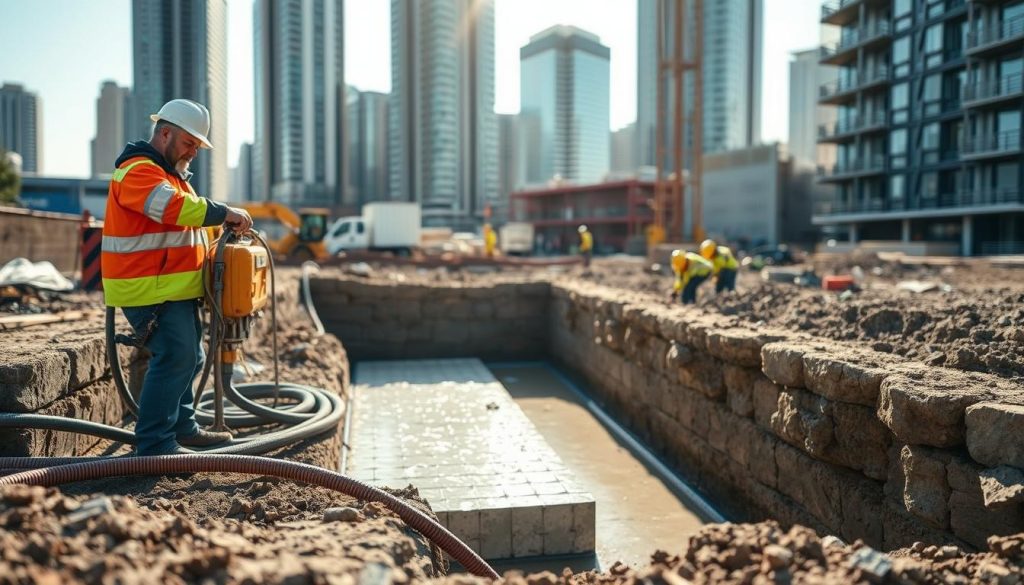
Resin injection (chemical injection)
Resin injection is fast and minimally invasive. Technicians drill small keyholes (6–16 mm), inject expanding resin and often restore levels within minutes. Resin can densify weak soil and reduce disruption. Typical Australian costs range roughly $4,000–$15,000 depending on scope.
Screw piling and mini-piles
Screw piles transfer loads to deeper, stable strata. They avoid large excavations and suit sites with poor near-surface soil or higher loads. Piling provides a direct load path and limits future differential movement when correctly engineered.
Choosing the right solution
We compare methods against soil conditions, building type, access and subsidence severity. We never upsell. Our recommendation balances performance, risk and budget and is backed by council-compliant engineering reports.
| Method | Strengths | Limitations | Typical use |
|---|---|---|---|
| Mass concrete | Permanent, clear load path | Excavation, spoil removal, curing time | Enlarging footings, local settlement |
| Resin injection | Fast, non‑invasive, rapid cure | Less suitable for large load transfers | Ground improvement, minor re-levelling |
| Screw piling | Deep load transfer, minimal spoil | Site access for equipment, higher cost | Poor near-surface soil, heavy loads |
Costs, timelines and what affects your quote
Understanding likely costs and the expected time on site helps you plan with confidence.
We start with a free, no‑obligation assessment and provide a clear, fixed-price quote after inspecting the foundation and site.
Typical investment ranges in Australia and what drives price
Minor stabilisation jobs for a small house can begin from around $5,000. More complex projects often sit in the $15,000–$30,000 range. Severe cases can exceed $50,000.
Resin injection projects commonly range $4,000–$15,000 depending on area and damage. Traditional concrete solutions cost more where excavation, spoil removal and reinstatement are extensive. Screw piles add price but suit deeper bearing needs.
How long work takes: excavation vs injection vs piling
Pits and staged concrete pours need excavation and curing days. Resin injection is fast and often cures within minutes. Piling times depend on depth and access.
- Major drivers: extent of movement, chosen method, reactive soil and site access.
- We sequence work to reduce disruption and keep key areas usable.
- You receive a programme showing start dates, milestones and handover time.
Call Chris for a free assessment and a transparent, fixed-price quote: Call Chris: 1300 970 930 or Email Chris: chris@underpinning-melbourne.com.au.
Signs your home may need underpinning or soil stabilisation
Early recognition of settlement signs helps protect your property and budget. We reassure homeowners and give clear, honest guidance. If you spot these signs, book a free assessment and we’ll explain options without upsell.
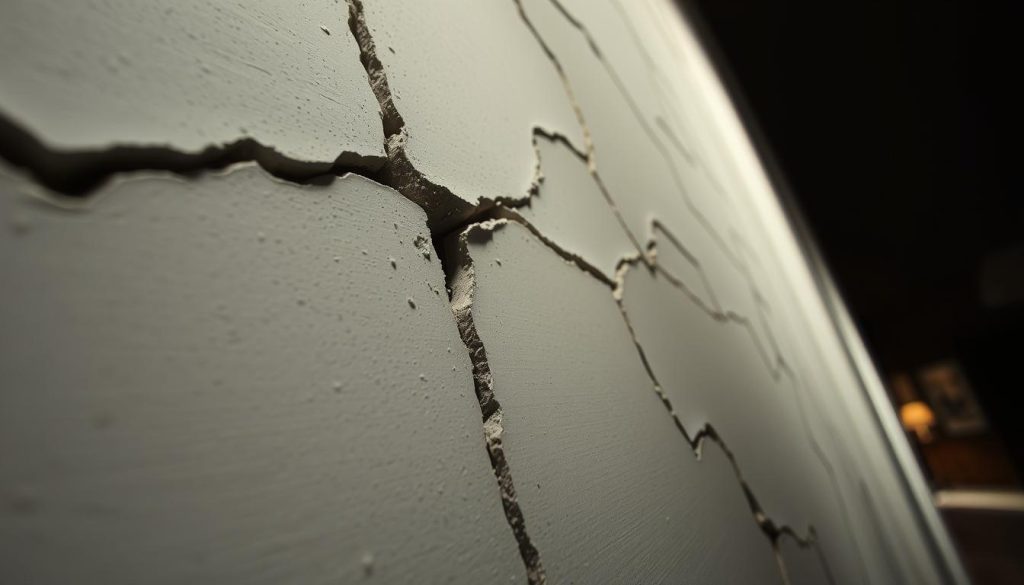
Cracks in walls, sticking doors/windows and step cracking in brickwork
Look for new or widening cracks, especially diagonal lines from window and door corners. Step cracking in brickwork or mortar can show differential movement in the structure.
Sticking doors and windows often mean frame distortion from a shifting foundation.
Uneven floors, gaps at skirtings and slab movement
Uneven floors, soft spots or slab dips deserve prompt inspection. Gaps at skirtings, ceilings or between fixtures and walls often accompany subsidence.
Poor drainage, water pooling and seasonal clay movement
Water pooling near footings and poor drainage can worsen reactive soil movement. Seasonal shrink‑swell cycles may increase damage over time.
| Sign | Likely cause | Immediate action |
|---|---|---|
| Diagonal cracks in walls | Differential settlement | Book assessment; monitor width |
| Sticking doors & windows | Frame distortion from movement | Inspect frames; schedule review |
| Uneven floors & skirting gaps | Slab movement or voids | Survey levels; plan repairs |
| Water pooling | Poor drainage, reactive clay | Improve drainage; assess risk |
If you think you may need underpinning, call us for a free, no‑obligation assessment. We provide honest advice and a clear plan for your house. Call Chris: 1300 970 930 or Email Chris: chris@underpinning-melbourne.com.au.
Why choose Underpinning Melbourne for pit underpinning and alternatives
We deliver engineered repairs that protect your home and restore long‑term value.
We bring more than 20 years’ experience, VBA registration and full insurance to every job.
Our team offers council‑compliant methods and honest assessments. We never recommend work you do not need.
Certified, full‑service support
We coordinate structural engineering reports and certification for a clear, compliant outcome.
Where deeper bearing is required, we install piles and manage pile testing to confirm performance.
Transparent process and minimal disruption
Request a free, no‑obligation assessment and receive a fixed‑price quote that lists scope and timeframes.
Our solutions include resin injection and concrete underpinning where appropriate, tailored to each structure and soil profile.
- 20+ years’ experience and VBA registration for dependable delivery.
- Engineered options across resin injection, concrete underpinning and piling.
- We stabilise homes and buildings with careful site management and respectful communication.
- Transparent advice focused on repair and prevention, never upselling.
For prompt guidance, contact us. Call Chris: 1300 970 930 or Email Chris: chris@underpinning-melbourne.com.au.
Conclusion
Acting quickly when your home shows movement protects value and avoids complex repairs.
We design engineered solutions to suit your soil and building type. Our options include mass concrete, resin injection and piling. You will understand the process, time on site and how we manage excavation and construction safely.
We fix cracks in walls, uneven floors and gaps with durable repair work and full certification. Get a free assessment and a fixed-price quote to see options that match your problem and site constraints.
For prompt help and a clear plan, see our restumping vs underpinning guide or call Chris: 1300 970 930 or chris@underpinning-melbourne.com.au.