
We help Melbourne homeowners fix foundation problems in Nillumbik with clear, engineering‑led solutions. If your home shows signs of movement, we provide calm, practical advice and a fast route to safety.
We are Underpinning Melbourne — Structural Preservation Specialists. Our team brings years of experience to every job and focuses on safety, VBA‑compliant certification and long‑term stability.
You get a free, no‑obligation inspection and a fixed‑price quote. We coordinate structural engineering and handle permits so your project runs smoothly.
Call Chris: 1300 970 930 or Email Chris: chris@underpinning-melbourne.com.au to book a site inspection or send photos for early advice.
Key Takeaways
- We protect your home with engineered foundation solutions that last.
- Free structural inspection and a clear, fixed‑price quote.
- Our team manages permits and VBA certification for peace of mind.
- We explain options in plain language and minimise disruption.
- Fast advice: call or email photos before we visit site.
- Service built on care, technical skill and accountability.
Local specialists preserving Nillumbik homes with proven, engineering-led foundation repairs
We combine engineering rigor and local experience to protect your building’s foundations.
Our mission is simple: keep your home safe and compliant. We deliver VBA‑registered, insured repair work with council‑compliant methods.
Typical projects follow a clear process. Structural and geotechnical advice guides the method. We choose deeper supports where shallow footings show stress.
We never upsell. You get honest assessments, a free inspection and a fixed‑price quote. We also coordinate engineering reports and permits to speed approval.
What you get from our team
- Cause-based repair: we fix the foundation issues, not just surface cracks.
- Engineering-led scope: registered engineers sign off each design.
- Minimal disruption: we preserve access and services where possible.
- Documentation: clear records for council and VBA certification.
| Stage | What we do | Why it matters | Outcome |
|---|---|---|---|
| Inspection | Free structural assessment and photo review | Identifies root cause and risk level | Clear, fixed‑price quote |
| Design | Engineer and geotech input | Matches method to soil and building loads | Council‑ready plans |
| Delivery | Registered, VBA‑compliant execution | Reduced disruption and certified works | Long‑term foundation stability |
If you need prompt advice or to book an inspection, contact us. Call Chris: 1300 970 930 or Email Chris: chris@underpinning-melbourne.com.au.
Signs your house needs underpinning in Nillumbik’s clay soils
Small cracks and sticky doors can signal serious ground movement under your house. These symptoms often start subtly. They then progress as clay soils react to wet and dry cycles.

Watch for clear warning signs in brickwork and timber. These indicate footing movement and possible subsidence in reactive soil.
Common symptoms: stepped brick cracks, sticking doors, sloping floors and sinking corners
- Stepped cracks that track along mortar in your brick walls.
- Doors that begin to stick or scrape, especially external doors.
- A sinking external corner or uneven floors showing subsidence in the ground.
- Gaps at window heads or out‑of‑square reveals signalling wall movement.
- Hairline cracks that widen seasonally in clay soil conditions.
- Bowing walls, misaligned sills and loose bricks as structural warning signs.
- Problems that worsen after heavy rain or prolonged dry spells.
If you notice two or more of these signs, your house may need underpinning soon. Early assessment reduces further damage and makes repairs more efficient.
Free no‑obligation structural assessments and fixed‑price quotes are available if you recognise these symptoms. Call Chris: 1300 970 930 or Email Chris: chris@underpinning-melbourne.com.au to book an assessment so we can confirm causes and stabilise your home.
Underpinning Nillumbik: our core services to stop subsidence and restore level
We offer engineered services that stop movement and return your home to true level. Our works focus on cause‑based repair and clear scopes to minimise disruption.
Concrete underpinning for deeper, stable footings
Mass concrete underpins and beam‑and‑base systems extend footings to deeper bearing strata. This concrete method is ideal where weak ground needs bypassing.
Restumping and reblocking to re‑level timber homes
We replace decayed supports and re‑level timber floors with new stumps and blocks. See our restumping vs underpinning guide for details.
Resin injection for targeted soil stabilisation and lift
Geopolymer resin compacts weak soil and can lift settled slabs with minimal excavation. It is fast and causes little disruption.
Screw piling for wet, sandy or reactive soil conditions
Screw piles and micropile‑style supports suit wet or sandy ground and tree‑affected sites. They provide reliable capacity and adjustable support.
Wall crack repairs and council‑ready engineering reports
We repair cracks after the foundations are stabilised so repairs last. Registered engineering reports and VBA compliance are included.
| Service | When used | Benefit |
|---|---|---|
| Concrete underpinning | Reactive clay or weak bearing strata | Deep, durable footings and long‑term level |
| Restumping & Reblocking | Timber homes with decayed stumps | Restores floor level and renews supports |
| Resin injection | Localised settlement, slab lift | Minimal excavation and fast lift |
| Screw piling | Wet, sandy or tree‑affected ground | Adjustable, high capacity support |
We match method to your building, loads and site constraints. Call Chris: 1300 970 930 or Email Chris: chris@underpinning-melbourne.com.au.
Choosing the right method for your foundations and soils
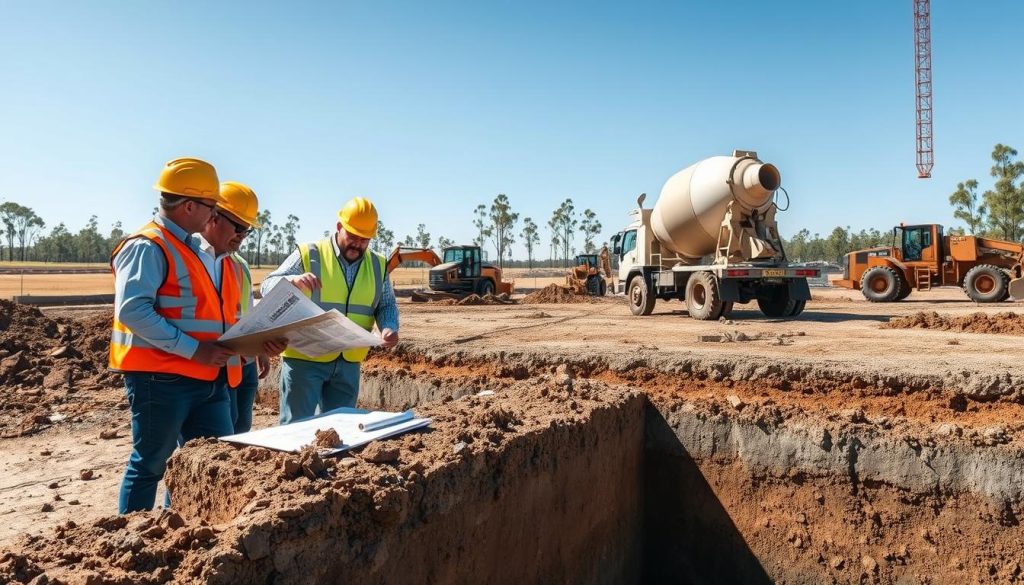
Choosing the correct method starts with a quick, practical assessment of your soil, access and the extent of movement. We inspect your site and discuss options that fit safety, council rules and budget.
Mass concrete underpins, beam-and-base and when they’re best
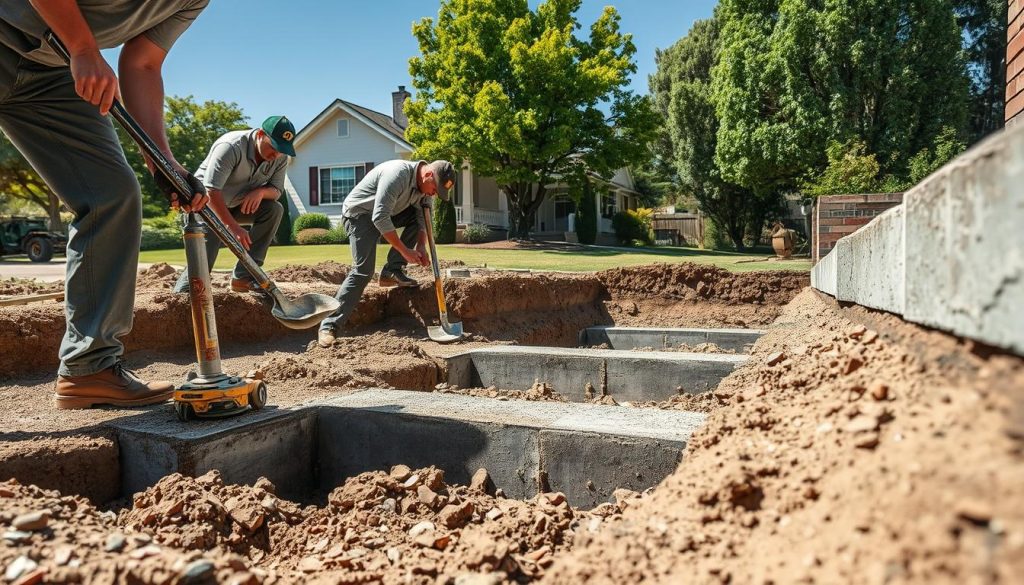
Mass concrete and beam‑and‑base systems suit many homes where deeper bearing is reachable. Conventional mass concrete underpins commonly go to about 2.1 m depth to reach stable ground.
Beam‑and‑base spreads loads and can bridge softer ground. This method is reliable where clay or weak soil needs a durable foundation solution.
Screw piles and micropile-style support for problem ground and trees
Screw piles perform well in wet or sandy ground and tight access areas. They underpin walls and edges with minimal excavation.
Micropile‑style options suit deeper supports or tree‑affected zones. These methods manage tree‑induced moisture variation and reduce ongoing movement.
Modern resin/geopolymer solutions as a fast, minimally invasive alternative
Geopolymer resin can stabilise soil and lift settled slabs quickly. It causes little disruption and is often a cost‑effective way to close cracks and re‑level floors.
We provide honest recommendations and never upsell. Our engineers select the method, sizes and spacing to address subsidence. You get a clear method statement that explains the steps, risks and contingencies.
Our process: calm, transparent and compliant from first inspection to certification
From inspection through certification, we keep the process clear and calm for homeowners. We aim to remove uncertainty and to solve foundation issues with a planned, staged approach.
Free no‑obligation structural assessment and fixed‑price quote
Book your inspection and we’ll review your home on site. You receive a written assessment and a transparent, fixed‑price quote.
Engineering design, permits and VBA‑compliant execution
Our team coordinates engineering design and building permits early. Works proceed under registered engineer oversight and VBA‑compliant documentation.
Minimal disruption, careful excavation and clean site handover
We sequence excavation to protect the structure and services. Excavation is staged to control ground stability and reduce risk.
Engineers inspect at key milestones. We monitor ground and structure as each stage is finished.
- Time on site is minimised by planning and clear communication.
- We resolve issues quickly to avoid delays to your job.
- You receive certification and records for future property needs.
- We leave the site clean and safe for your family.
| Stage | What happens | Control points |
|---|---|---|
| Inspection | Free site visit and written assessment | Initial engineer review and fixed quote |
| Design & permits | Engineer drawings and permit lodgement | Council approvals and VBA paperwork |
| Excavation & install | Staged excavation to protect services | On‑site engineer inspections and monitoring |
| Handover | Final inspection and certification | Compliance records and clean site |
Call Chris: 1300 970 930 or Email Chris: chris@underpinning-melbourne.com.au to book an inspection or send photos for quick advice.
Why choose Underpinning Melbourne for foundation repairs
We pair 20+ years experience with clear, certified processes to protect your home.
Our team is fully VBA Registered and insured. We follow council‑compliant methods and keep documentation for your records.
We focus on fixing subsidence at the source. Structural and geotechnical input guide each design so the solution matches soil behaviour and load paths.
We provide free assessments and fixed‑price quotes. Engineering reports and permit coordination are included to reduce delays.
| Benefit | What we do | Outcome |
|---|---|---|
| Proven experience | 20+ years delivering foundation repairs | Long‑term stability and fewer return visits |
| Certified work | VBA Registered team and insured trades | Council‑ready, compliant installation |
| Cause‑based solutions | Engineer + geotech design | Prevents recurring damage and movement |
| Respectful site conduct | Minimised disruption and attention to doors and services | Safe, tidy handover and restored function |
We price fairly and never upsell. You get responsive communication and firm engineering oversight that stands behind the repair.
Want a quick estimate before we visit? Try our cost calculator or Call Chris: 1300 970 930 or Email Chris: chris@underpinning-melbourne.com.au.
Pricing, timelines and what to expect in Nillumbik projects
We explain cost drivers and schedule so your project proceeds without surprises. Our approach gives you a clear quote after a short assessment. That helps you plan budgets and household arrangements.
What drives cost, how long the job takes and how we reduce downtime
Costs depend on depth to bearing, soil behaviour, access and the length of affected walls. Engineering requirements and provisional sums also affect price.
Time on site varies by method. Typical jobs take several days to a few weeks. We stage work to limit disruption and protect finishes while we restore level.
We reduce downtime through early material planning, clear sequencing and milestone checks. You get regular updates and inspection hold points during the process.
Photos and plans we can assess before a site visit
Send photos and plans for a quick preliminary assessment. This early review speeds the formal assessment and shortens the time to a fixed quote.
- Pricing depends on depth, soil and access constraints.
- We confirm scope after inspecting cracks, levels and footing condition.
- You receive a fixed‑price quote that lists inclusions and exclusions.
- Expect clear updates on job milestones and control points.
If you want a prompt review, Call Chris: 1300 970 930 or Email Chris: chris@underpinning-melbourne.com.au.
Where we work in Nillumbik and the types of buildings we support
Across the region we care for a wide range of structures, from heritage masonry to modern slabs. We match methods to each building so loads transfer safely to stable ground.
Eltham, Diamond Creek, Hurstbridge, Greensborough fringe and surrounds
We service Eltham, Diamond Creek, Hurstbridge and the Greensborough fringe. Our team responds to local soil conditions and site access constraints.
Weatherboard, brick veneer, heritage and modern slab-on-ground structures
Our work covers weatherboard homes on stumps, brick veneer and heritage masonry, plus slab-on-ground houses. We assess reactive clay and variable soil profiles on site.
- Local reach: we cover common suburbs and nearby rural allotments.
- Structure range: buildings and small commercial structures.
- Problem areas: subsidence near creeks, trees and sloping blocks.
- Care for walls: heritage walls are staged to control movement and cracking.
- Service focus: we maintain access and services while work proceeds.
| Building type | Typical soil | Preferred method | Outcome |
|---|---|---|---|
| Weatherboard on stumps | Reactive clay | Reblocking / screw piles | Restored level and renewed supports |
| Brick veneer | Variable profiles | Beam-and-base or micropiles | Stable walls and even floors |
| Heritage masonry | Shallow topsoil over clay | Careful staged supports | Controlled movement, minimal cracking |
| Slab-on-ground | Wet or sandy ground | Resin lift or screw piling | Fast lift with limited excavation |
If your home may need underpinning, book a site inspection or email photos today. Call Chris: 1300 970 930 or Email Chris: chris@underpinning-melbourne.com.au.
Conclusion
A timely inspection can stop subsidence before it becomes major damage to your home.
Our team diagnoses the soil and foundation causes, then selects the right method — concrete underpinning, screw piles or resin where suitable. Works use staged excavation, monitoring and engineer sign‑offs to control risk and protect walls and finishes.
You get a clear process from inspection through certification and handover. The job is documented, VBA‑compliant and focused on restoring level and long‑term stability for your house.
Book a free assessment and fixed‑price quote. Try our wall crack diagnosis tool, Call Chris: 1300 970 930 or Email Chris: chris@underpinning-melbourne.com.au.