
We explain how underpinning noise and dust affect your home and how to keep disruption low.
We are Underpinning Melbourne, Structural Preservation Specialists. Our mission is to save Melbourne homes from foundation failure with a calm, engineering‑focused approach.
Works to stabilise a foundation can generate both noise and dust, especially on clay sites or where mixed fill exists. Licensed teams, geotechnical surveys and strict site controls cut risks and protect resident health.
We prioritise safety, VBA‑compliant certification and clear communication. You’ll get a free structural assessment, a transparent fixed‑price quote and an engineering report when needed.
Call Chris: 1300 970 930 or Email Chris: chris@underpinning-melbourne.com.au
Key Takeaways
- We outline where most disturbance comes from and how we control it on site.
- Licensed assessments reduce the chance of unexpected foundation issues.
- Non‑invasive options like resin injection lower disruption and cure fast.
- Our VBA‑registered approach keeps works compliant and documents safety.
- Free, no‑obligation assessments help you choose the right path for your home.
Underpinning Melbourne’s calm, engineering-led approach to a quieter, cleaner site
We prioritise engineered solutions that keep your home calm and safe during works. Our team is fully VBA registered and insured. We use council‑compliant methods and give honest advice at every stage.
Before any work starts, an engineer reviews your building, structure and stability objectives. We select a method and materials to reduce disturbance. Licensed contractors follow a clear process to protect your home.
Our foreman coordinates trades on site. Tasks are sequenced to avoid peak impacts and keep your home functional. Daily checks record housekeeping, access paths and control measures.
- Free assessment, fixed‑price quote and engineering report coordination.
- Modern resin methods are fast‑curing and non‑invasive, lowering airborne particles and upheaval.
- We maintain VBA and council compliance to protect you and neighbours.
Clear communication reduces stress. Call Chris: 1300 970 930 or Email Chris: chris@underpinning-melbourne.com.au.
Where underpinning noise and dust come from during the underpinning process
We explain the main sources so you can understand what to expect. Different approaches generate different impacts. We choose methods that match soil, depth and load to limit disruption.
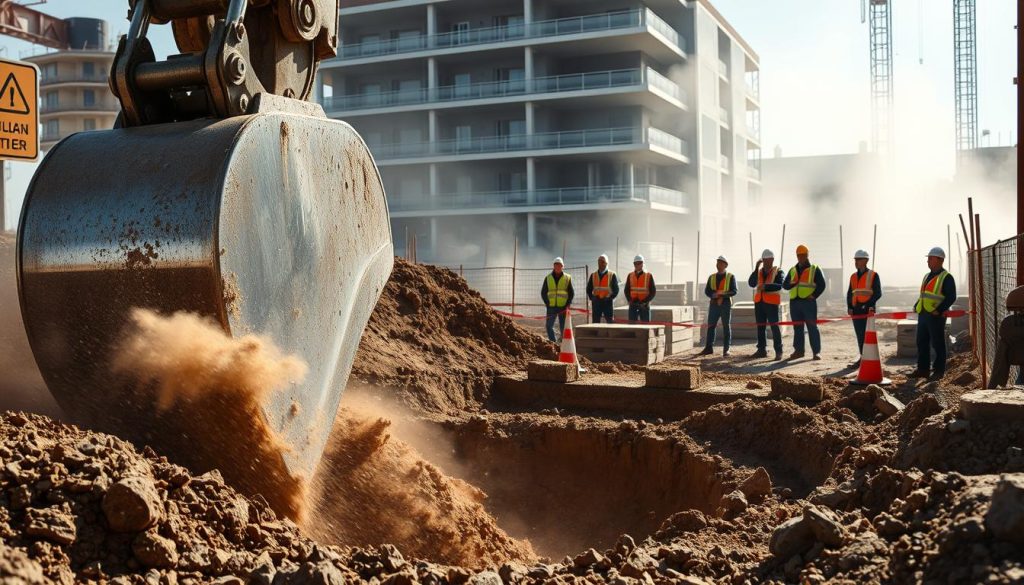
Mass concrete pits and hand excavation
Hand-dug pits create spoil piles. Dry break-out and cart-away lift particles into the air.
Concrete mixing and placement add intermittent impact from saws and tools. Changes in pit depth alter effort and ground disturbance.
Screw/helical piles and steel push piers
Helical piles use torque rather than impact. Vibration and overall disturbance are lower.
Steel push piers run with hydraulic rams. The sound is steady and predictable, and nearby walls suffer less movement than driven systems.
Resin injection and slab lifting
Resin needs small ports and minimal excavation. Expanding resin fills voids fast, cuts airborne particles, and shortens exposure windows for occupants.
- We offer Concrete Underpinning, Screw Piling, and Resin Injection.
- Methods are matched to site soil and expected load to avoid overworking equipment.
- For an instant estimate use our cost calculator.
Call Chris: 1300 970 930 or Email Chris: chris@underpinning-melbourne.com.au
Pre-works assessment to prevent dust and noise blowouts
Early testing and surveys make site risks clear before any excavation begins.
We start with a focused assessment to map soil types, water levels and hidden hazards. This reduces surprises that raise costs and delay the programme.
Soil and groundwater checks: reactive clays, high water tables, and subsurface surprises
We test soil to identify reactive clays and moisture-driven conditions. Groundwater checks show if dewatering is needed and which control factors apply.
Baseline monitoring: crack gauges, survey points, and vibration thresholds
Baseline crack gauges and survey points record movement before works begin. We set vibration thresholds to protect finishes and overall stability.
Compliance setup: VBA standards, council permits, utility clearances, and asbestos management
We coordinate structural engineering reports and council‑compliant documentation. Permits, traffic plans and service locates are confirmed before site entry.
- We inspect the existing foundation for safe sequencing and temporary support.
- We manage asbestos risk with licensed contractors and formal clearances.
- Good assessment contains surprises and prevents on‑the‑fly changes that worsen foundation issues.
- You receive a clear plan, programme, and communications schedule.
Call Chris: 1300 970 930 or Email Chris: chris@underpinning-melbourne.com.au
Choosing the right method to reduce underpinning noise and dust
Choosing the right method starts with matching your building to site limits and neighbour expectations.

Mass concrete pits: when to use them and how to stage quietly
Mass concrete pits suit homes where bearing soils sit close to the surface. They are robust and economical for many existing foundation types.
We stage work, seal skips, and use misting to cut airborne particles. Short shifts and containment reduce intermittent impact and keep the process compliant.
Screw/helical piles: immediate bearing with minimal spoil
Helical piles deliver load quickly with low vibration. They need small access and create very little spoil.
For tight sites, this method shortens the programme and causes less disturbance to surrounding structures.
Steel push piers and mini‑piled beams: tight access, controlled lifts
Steel push piers reach competent strata with controlled lifts. They suit fragile masonry and precise re‑levelling.
Mini‑piled beams spread load where point loads would overstress foundations. Both types work well where depth or access limits rule out large excavation.
Resin injection: fast, clean ground improvement
Resin fills voids with minimal excavation. It cures quickly and shortens time on site.
Resin reduces spoil, cuts program risk and often lowers overall cost. We use it where soil conditions and depth needs allow.
Selection factors
We assess load path, access, soil conditions, depth and neighbour sensitivities before final design.
- Method type follows the existing foundation and building geometry.
- We weigh cost, process and programme impacts plainly.
- Access limits and site conditions often dictate the practical choice.
We never upsell. We match the solution to your home, soil and neighbours. Minimal disruption and council compliance are non‑negotiable.
Call Chris: 1300 970 930 or Email Chris: chris@underpinning-melbourne.com.au
On-site controls that actually work on Melbourne sites
A well‑run site focuses on clean execution, clear records and neighbour respect. We prioritise safety, protection of materials and minimal disruption during each project.
Dust suppression uses water misting, vacuum extraction and tool shrouds to stop airborne particles at source. Small ports and resin methods further reduce spoil from any excavation.
Containment and air management
We fit poly sheeting, zipper doors and HEPA air scrubbers where work touches live areas. Negative‑pressure setups keep particles inside the work zone. This protects residents and finishes.
Low‑impact equipment and scheduling
Torque monitoring and tuned hydraulics cut low‑frequency sound. We stage high‑impact tasks inside agreed windows and plan around weather.
Waste, haulage and verification
- Sealed skips and dampened spoil keep streets clean.
- Materials and elements are sheltered to avoid re‑work.
- Daily logs, photos and QA checks verify concrete, resin and fixings meet tolerances.
- Our contractor team signs off checklists so you get clear updates.
We prioritise safety, clean sites and documentation. For a calm, predictable process call Chris: 1300 970 930 or Email Chris: chris@underpinning-melbourne.com.au. See our services at Underpinning Melbourne.
Health, safety, and neighbour care during works
We plan every safety step so residents feel secure while works proceed. We protect safe access to your home and set a single contact for questions. Our site lead manages communications and quick responses if concerns arise.
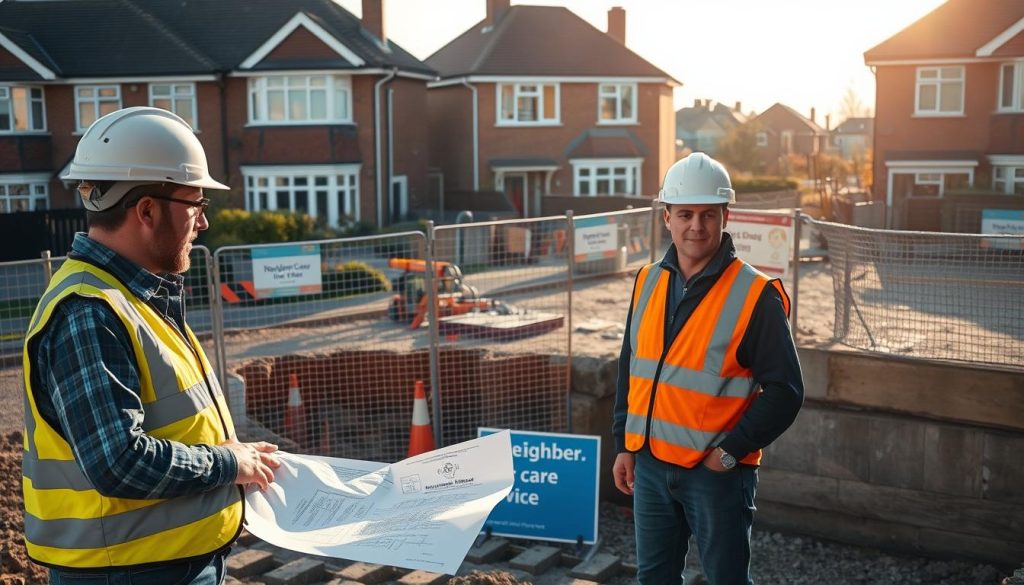
Resident protection and temporary moves
We keep clear paths so you can enter and leave your property safely during every stage.
We brief occupants on simple PPE where brief exposures are unavoidable.
If a loud lift or saw cut is planned, we arrange short relocations when needed.
Asbestos and hazardous particulates
Older buildings may contain asbestos. We engage licensed removal contractors and secure formal clearance certificates. This protects finishes, foundation elements and your family from harmful particles.
Neighbour notifications and monitoring
We send pre‑start letters with contact numbers and a clear schedule.
Vibration monitoring protects nearby walls, floors and finishes.
We maintain a respectful, quiet culture on site and act fast if any cracks or damage are reported.
- We keep safe access paths to your home during all stages.
- We manage asbestos with licensed removal and formal clearances.
- Vibration monitoring guards nearby building elements.
- Daily clean‑ups, coverings and barriers protect your property.
Call Chris: 1300 970 930 or Email Chris: chris@underpinning-melbourne.com.au
Costs, trade‑offs, and setting expectations
A clear budget plan stops surprises and keeps your home project on track. We give fixed‑price quotes that list likely variations. This helps you compare options with confidence.
Budget levers
Method choice changes material and labour costs. Resin options often reduce time on site and can lower overall cost.
Access and water issues raise plant time and disposal needs. We price these items transparently and include allowances for unknowns.
What minimal disruption really looks like
Minimal disruption means you can usually remain in your home with an occupancy plan. We stage work so high‑impact tasks do not run at once.
- Major cost factors: method, access, groundwater control.
- We budget for unknowns to avoid surprise costs mid‑project.
- Concrete volumes, plant time and disposals are shown clearly.
- Payment schedules tie to contractor milestones and quality hold points.
- Settlement risk is monitored after works with clear reporting.
| Element | Typical cost driver | How we manage it |
|---|---|---|
| Method | Materials & labour | Engineer selects efficient solution |
| Access | Plant hire & time | Plan logistics; minimise excavation |
| Groundwater | Dewatering & contingency | Pre‑works testing and allowances |
| Settlement monitoring | Instruments & inspections | Baseline gauges and post‑work checks |
We provide free, no‑obligation assessments so you can budget with confidence. For detailed comparisons see our restumping vs underpinning guide.
Call Chris: 1300 970 930 or Email Chris: chris@underpinning-melbourne.com.au
Conclusion
We deliver permanent support by combining testing, the right technique, and strict monitoring.
Sound investigation, a matched method and tight quality control stop further settlement. Modern low‑impact choices such as resin and helical piles reduce site time while giving durable support to your foundation and floors.
Baseline monitoring before and after works validates outcomes. Our VBA‑compliant approach gives you clear documentation, a fixed price and an engineering report when needed.
Ready to act? Book a free assessment. Call Chris: 1300 970 930 or Email Chris: chris@underpinning-melbourne.com.au.