
We provide fast, engineering-led inspections and fixed-price quotes when you notice cracking and worry about safety or value.
We are Underpinning Melbourne, Structural Preservation Specialists with over 20 years’ experience. Our team offers VBA‑registered designs, certification and clear reports to restore your home with minimal disruption.
Melbourne’s reactive clay soils often cause subsidence and visible signs such as diagonal brick breaks, stepped mortar gaps and sloping floors. Our process diagnoses the underlying cause and applies proven solutions like concrete underpinning, resin injection, restumping and screw piling.
Expect calm, honest advice. We focus on stabilising the cause, not just cosmetic repair. Most works are fast and low‑disruption and areas are usable soon after treatment.
Call Chris: 1300 970 930 or Email Chris: chris@underpinning-melbourne.com.au for a free, no‑obligation inspection and a transparent quote.
Key Takeaways
- We offer free structural assessments and clear, fixed‑price quotes.
- Our engineering-led methods target subsidence causes, not just symptoms.
- VBA‑compliant designs and certification come standard with our services.
- Common signs include diagonal brick breaks, gaps around frames and sloping floors.
- Many stabilisation methods are non‑invasive and completed quickly.
- Contact our team for a same‑day photo review or to book an on‑site inspection.
Why Melbourne homes develop wall cracks in reactive soils
Local clay soils drive seasonal shifts that commonly show up as visible damage to brickwork and plaster.
Reactive soil expands when wet and shrinks in drought. These moisture cycles stress footings and load paths. That uneven behaviour creates subsidence and localised movement beneath a house.
Common causes include heavy rain after long dry spells, tree roots drawing water near footings and leaking pipes that wash out fines. Voids can form under slabs or strip footings and older foundations often cope poorly with these changing conditions.
Extensions can add uneven loads. The result is concentrated stress at wall junctions and visible separation in masonry. Understanding soil behaviour is the first step to an engineered, permanent repair.
- We tailor designs to your site, not a one‑size‑fits‑all fix.
- We diagnose causes before any stabilisation work begins.
How to recognise structural wall cracking, not just cosmetic
Knowing the signs of serious cracking helps you choose the right inspection and fix.
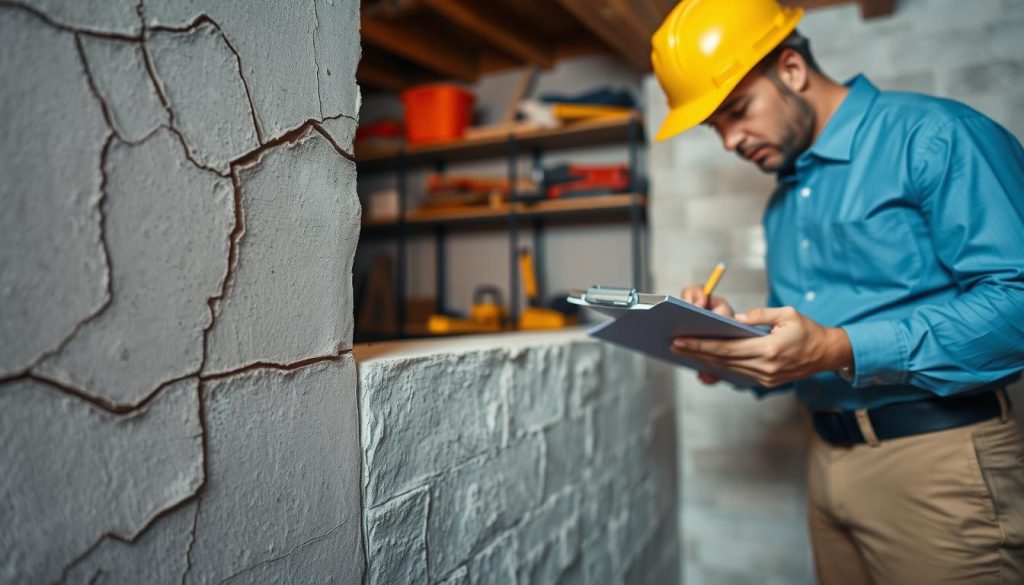
We explain clear indicators so you can act without alarm. Small, hairline marks under 1–2 mm are often cosmetic. Wider, zig‑zag or stepped patterns usually show active subsidence and need assessment.
Watch for quick changes after heavy rain or drought. Rapid new cracking commonly links to reactive clay behaviour under your house.
Common symptoms to check
- Diagonal or stepped cracking in external brickwork near openings.
- Gaps forming around windows and doors or frames that jam.
- Widening cracks over weeks, sloping floors or bulging plaster.
- Multiple cracks appearing quickly after weather shifts.
- Photograph key areas with a ruler to monitor width changes.
When to book an on‑site inspection: if cracks exceed 5 mm, or several symptoms appear together. We provide a clear risk guide and next steps.
| Indicator | Cosmetic | Structural action |
|---|---|---|
| Hairline splits | Under 2 mm, static | Monitor; photo log |
| Diagonal/stepped breaks | Rare | Urgent inspection and report |
| Jamming doors/windows | Occasional | Subfloor check; engineer review |
| Rapid post‑rain cracking | Possible cosmetic | Assess for subsidence and soil issues |
Wall crack types that signal foundation movement
Visible patterns in brickwork often reveal deeper issues that need an engineer’s eye. We translate technical signs into simple language so you can act with confidence.
Stepped and diagonal breaks in mortar
Stepped cracks following mortar lines are classic signs of subsidence or differential settlement. Diagonal cracking from windows or doors shows distortion where loads shift. These clues help us map affected zones for targeted stabilisation.
Horizontal splits and cornice or skirting gaps
Long horizontal cracks under sills or lintels can widen with ongoing settling. Internal plaster cracking at cornices or skirtings often points to floor or wall displacement. Such patterns guide our repair sequencing.
Vertical breaks at junctions and extensions
Vertical cracks at wall junctions and joins to extensions typically indicate uneven settlement. We inspect these areas to assess risk and plan a minimal‑disruption solution.
Gaps at joints, lintels and under windows
Gaps at expansion joints, lintels and beneath window sills show distortion from uneven footings. Multiple crack types together suggest wider site issues; we use those patterns to design a precise remedy.
- We diagnose first, then propose VBA‑compliant stabilisation.
- Use our diagnosis tool for a quick photo review and next steps.
What causes wall cracks: subsidence, settlement and ground conditions
Understanding what triggers structural distress helps you fix the issue permanently, not just cosmetically.

Shrinking and swelling clays, tree roots and drought cycles
Reactive clay reacts to moisture swings. In dry spells it shrinks and pulls away from footings. After rain it swells and can lift rigid masonry.
Tree roots speed the process by extracting water near edges. That seasonal action is a common cause of subsidence and shifting floors.
Leaking pipes, poor drainage and soil washout creating voids
Hidden leaks and poor drainage wash fines from beneath slabs and pads. Voids form and load paths change. That leads to rapid local settlement.
Poorly compacted fill, ageing footings and uneven load from extensions
Poorly compacted fill can settle over years. Older foundations may not carry new loads. Extensions and openings concentrate stress near windows and joins.
- Shrinking clays pull support away from footings.
- Swelling clays can uplift rigid masonry.
- Leaking pipes and poor drainage create hidden voids.
- Poor compaction and ageing footings cause differential settlement.
- Uneven loads concentrate stress around floors and openings.
We prevent recurrence by diagnosing the specific cause and designing council‑compliant, engineered repairs. That stops the problem at source and protects finishes and frames.
Our engineering‑led approach to permanent crack repair
A thorough site diagnosis sets the direction for every lasting remedial solution we deliver.
We begin with a focused inspection of the subfloor, stumps, soils and footings. Our team pinpoints whether settlement, shrink‑swell or washout is the main issue.
Next, engineers prepare a VBA‑compliant design and certification. We coordinate structural reports and council approvals where required.
- We stabilise the foundation before any cosmetic repair.
- You receive a clear scope, pricing and a program timeline.
- We answer your questions and outline risks and expected outcomes.
Industry practice shows cosmetic patching fails when underlying activity continues. Our process focuses on durable, non‑invasive ground improvement and precise re‑levelling where suitable.
Honest, no‑pressure recommendations help you choose practical solutions. For a quick online estimate try our underpinning cost calculator.
Stabilisation methods we use to stop movement and protect walls
We apply engineered methods to restore bearing capacity and stop ongoing subsidence. Our aim is permanent, low‑disruption repair that protects finishes and keeps rooms usable.
Resin injection to densify soil, fill voids and re‑support footings
Resin injection compacts weak zones and fills voids beneath pads and slabs. It restores bearing capacity quickly and is often completed in a day.
Concrete underpinning for long‑term footing stabilisation
Concrete underpinning adds new support beneath key load paths. It delivers durable results for aged or overloaded footings and suits most brickwork repairs.
Restumping and reblocking to correct sinking stumps and uneven floors
We replace or reblock sinking stumps to re‑level rooms. This method is ideal where timber or concrete stumps have lost support.
Screw piling for reactive sites, extensions and deeper load transfer
Screw piles reach stable strata for reactive soils and new extensions. They transfer loads deeper and reduce sensitivity to moisture cycles.
- We select a single method or a hybrid solution based on measured site needs.
- Works are sequenced to deliver predictable, verifiable results fast.
- We monitor lift and pressure to ensure the structure is safely re‑supported.
| Method | Best for | Downside | Typical time |
|---|---|---|---|
| Resin injection | Voids, weak soil beneath slabs | Not for very deep issues | Same day to 1 day |
| Concrete underpinning | Long‑term support under key walls | More invasive; longer cure | 1–3 days per bay |
| Restumping / Reblocking | Sinking stumps, uneven floors | Access under house required | 1–2 days |
| Screw piling | Reactive soil, extensions, deep transfer | Higher initial cost; deep work | 1–3 days |
From inspection to completion: fast, low‑disruption process and pricing factors
From first inspection to final sign‑off, we deliver predictable outcomes and clear timelines.
We start with a free on‑site inspection and monitoring where needed. This lets us map ground conditions and confirm the cause of issues.
Next, engineers prepare a tailored scope and a transparent, fixed‑price quote. You receive a simple program showing expected time and key milestones.
Fast, non‑invasive works with usable areas soon after treatment
We favour non‑invasive methods that reduce dust, noise and excavation. Many resin and re‑levelling projects finish in hours or within a day.
Treated areas are often usable immediately after curing. We document outcomes and confirm stability before demobilising.
What influences cost and program
Soil type, existing support, and lift required determine scope and price. We inspect the site to identify ground conditions and any hidden risks.
| Driver | How it affects cost |
|---|---|
| Soil condition | Denser ground may need less work; soft soils need more treatment |
| Existing support type | Timber or concrete supports change access and method |
| Lift and severity | Greater lift or larger areas increase time and materials |
- Start with a free site inspection and monitoring if required.
- We provide a clear fixed‑price quote and a simple timeline.
- We welcome your questions and explain contingencies up front.
- We document the works and confirm final results before leaving.
For a quick consult or to book an inspection, use our contact page. Call Chris: 1300 970 930 or Email Chris: chris@underpinning-melbourne.com.au.
Why choose Underpinning Melbourne for wall cracks foundation movement melbourne
We combine engineering rigour with respectful, low‑disruption work to secure long‑term outcomes. Our approach focuses on diagnosing the root problem and delivering practical solutions that last.
20+ years’ experience, fully VBA Registered and insured
Experienced, registered team
Our team holds VBA registration and full insurance. We carry engineering certification and follow council‑compliant methods.
Free assessments and honest advice
We provide a no‑obligation assessment. You get clear, honest guidance and only the scope you truly need.

- We are specialists in stabilising homes affected by ground movement.
- Transparent work programs that are efficient and tidy.
- Consistent quality from inspection through to completion.
- Practical repair solutions that address the problem at its source.
| Feature | Benefit | Why it matters |
|---|---|---|
| VBA registration & insurance | Certified, compliant work | Protects your building and investment |
| Engineering‑led design | Council‑compliant solutions | Long‑term stability, less rework |
| Low‑disruption programs | Fast, tidy completion | Home usable sooner; minimal impact |
Call Chris: 1300 970 930 or Email Chris: chris@underpinning-melbourne.com.au
Speak to a structural preservation specialist today
Contact our specialists for a prompt assessment and a straightforward, fixed‑price quote. We offer a free, no‑obligation inspection and clear advice tailored to your site and schedule.
Call Chris on 1300 970 930 or email chris@underpinning-melbourne.com.au
Call or email for a fast phone consult. We answer your questions and outline likely timeframes, access needs and next steps for repair.
Book a site inspection or email photos for a same‑day review
Book an on‑site inspection that fits your family routine. Or email photos for a same‑day review and initial recommendations.
- Free assessment and a clear, fixed‑price quote without pressure.
- We explain expected time for works and when treated areas are usable.
- Our team coordinates the inspection, work program and documentation.
- Ask any questions about repairs, warranties and compliance paperwork.
| Request | Response | Typical time |
|---|---|---|
| Photo review | Same‑day initial feedback and recommendations | Hours |
| On‑site inspection | Engineer‑led diagnosis and written quote | 1–3 days for report |
| Fixed‑price quote | Clear scope, costs and start date | Issued within 48 hours of inspection |
Conclusion
Our goal is to protect your house and your peace of mind with engineered, lasting repairs.
Start with a clear inspection so we can find the cause and stop further damage. We stabilise the ground first, then restore finishes so the issue does not return.
Our compliant, engineering-led approach uses underpinning solutions and resin or screw piling where needed. We keep disruption low and complete many jobs in hours or days.
For a free assessment and a fixed‑price quote, visit our underpinning solutions page. Call Chris: 1300 970 930 or Email Chris: chris@underpinning-melbourne.com.au.