

We offer a free structural assessment to identify why you see gaps at window frames and how underpinning can protect your house.
We are Underpinning Melbourne — Structural Preservation Specialists. Our calm, engineering‑first approach focuses on safety and long‑term structural integrity.
Common signs include cracked walls near frames, sticking joinery and uneven floors. These often point to local soil loss or subsidence rather than glazing faults.
We provide VBA‑compliant inspections and clear reports. Many properties can be stabilised quickly with modern methods such as resin injection or traditional concrete underpinning when needed.
Call Chris: 1300 970 930 or Email Chris: chris@underpinning-melbourne.com.au. Ask for a free quote and book a site inspection today.
Key Takeaways
- Gaps at frames often signal local foundation distress, not a glazing fault.
- We deliver VBA‑compliant inspections and clear, fixed‑price quotes.
- Many homes are stabilised in a day using resin injection with minimal disruption.
- Our approach prioritises safety, compliance and lasting structural integrity.
- Contact us for a free inspection, assessment and transparent underpinning options.
Why gaps around windows point to foundation movement in Melbourne homes
Small separations at window and door frames frequently signal deeper footing issues. We explain the chain of cause and effect so you can act early without alarm.
How shifting footings distort door and window frames
When a footing settles or heaves it twists the reveal and sill. This twisting causes diagonal cracks at corners, sticking doors and uneven floors. Our engineers trace these symptoms back to the bearing behaviour beneath the load points.
Reactive clay, droughts and heavy rain
Local clay soils swell after downpours and shrink in drought. These seasonal swings in soil moisture drive differential settlement and can lead to mild subsidence near openings. Leaking pipes and poor drainage make the problem worse.
We recommend an engineering diagnosis and a council‑compliant remedy. Options range from ground improvement to deeper underpinning. For a quick estimate of likely works, see our underpinning cost calculator.
Common signs your foundation needs attention
Noticing odd cracks or sticking joinery can be the first clue that your home needs professional assessment. We help anxious homeowners spot reliable warning signs and explain next steps clearly.
Cracks radiating from window and door corners
Look for diagonal cracks at reveals that widen over time. These often track from openings and indicate local bearing change rather than surface damage.
Sticking doors, jammed windows, and uneven floors
Sticking doors or jammed sashes signal frame distortion. Uneven floors or trip lips point to sinking in slabs or stumps.
Separations at skirtings, cornices and brickwork
Check skirtings, cornices and external brick courses for step cracking or wider joints. Multiple patterns together usually mean structural problems, not cosmetic faults.
- Diagonal cracking from corners that worsens over months.
- Gaps at skirtings and control joints showing differential movement.
- Sticking doors and jammed windows from distorted frames.
- Uneven floors and visible step cracks in brickwork.
If you see several of these signs, you may need underpinning or ground improvement. We offer a calm, engineering‑first diagnosis and a free assessment with a fixed‑price repair quote. Book a site inspection or try our wall crack diagnosis tool.
What causes foundation problems in Greater Melbourne
Hidden site factors such as leaky pipes, tree roots and un‑compacted fill often explain progressive structural issues.
Soil moisture swings are a key driver. Extended drought shrinks reactive clay and sudden rain makes it swell. This cycle can cause subsidence and cracking near openings.
Leaking pipes and poor drainage concentrate water at footing edges. Pooled water weakens the soil and lets footings settle. Fixing drainage is often the most cost‑effective prevention.


Other common causes
- Tree roots dry clay or invade cracked pipes, changing moisture and causing damage.
- Uncompacted fill beneath extensions compresses under load and leads to settlement.
- Nearby construction alters groundwater paths or adds vibration and settlement risk.
- Renovations can add loads that the original supports were not designed to carry.
We assess each factor to find the real cause, not just treat visible symptoms. Our recommendations often combine drainage correction and engineered underpinning to protect your property and ensure long‑term stability.
Underpinning Melbourne: our calm, engineering‑first approach
An engineering‑led inspection starts every project. We assess risk, explain options and prepare a VBA‑compliant scope before any work begins.
Our focus is clear: structural integrity first. We do not upsell. We only recommend what your home genuinely needs.
VBA‑compliant assessment and structural integrity focus
Experienced structural engineers carry out the assessment. You receive drawings, a written scope and council‑compliant methodology.
Honest advice — no upselling, just what your home needs
We coordinate engineering reports and certification. Resin re‑levelling can often be done in a day with minimal disruption. Traditional underpins need excavation and cure time. We explain both openly.
- Transparent communication: staged milestones and clear timelines.
- Fixed‑price contracts: aligned to the engineered design.
- Minimal disruption: stabilise first, then re‑level where safe.
| Service element | What we deliver | Typical time |
|---|---|---|
| VBA‑compliant assessment | Survey, report, drawings, council method | 1–2 weeks |
| Resin re‑levelling | Fast ground improvement, minimal excavation | 1 day |
| Concrete underpinning | Deeper bearing, long‑term stability | Several weeks (excavation & cure) |
| Certification | Engineer sign‑off and council paperwork | On completion |
Service options to fix gaps and restore structural integrity
We match engineered methods to the cause. After inspection we recommend the least invasive repair that will deliver permanent stability.
Concrete underpinning for deeper, stable bearing
Concrete underpinning extends footings to deeper, more stable strata. Typical excavation reaches up to ~3 m with staged pour and cure. This method suits heavy loads and complex buildings.
Resin injection for ground improvement and re‑levelling
Resin injection densifies the ground through small keyholes (6–16 mm). It can re‑level a house in a day with roughly 30‑minute cure at each injection point. This is low disruption and fast return to use.
Screw piling and timber support repairs
Screw piles provide deep support where competent layers sit further down. Restumping and reblocking renew timber supports beneath subfloors. We then repair cracks once stability is assured.
- Integrated approach: drainage, footing support and crack repair.
- Choice based on: soil, access and structural need.
- Outcome: a tailored, engineered repair plan for your home.
| Method | Benefit | Typical time |
|---|---|---|
| Concrete underpinning | Deep, durable bearing for heavy loads | Several weeks |
| Resin injection | Fast re‑levelling, minimal excavation | 1 day |
| Screw piling | Deep transfer to competent strata | 1–5 days |
| Restumping & crack repair | Renewed subfloor support and finished repair | Days to weeks |
Resin injection vs traditional underpinning
We explain how we choose the right repair. The decision follows an engineering assessment of load, access and soil.
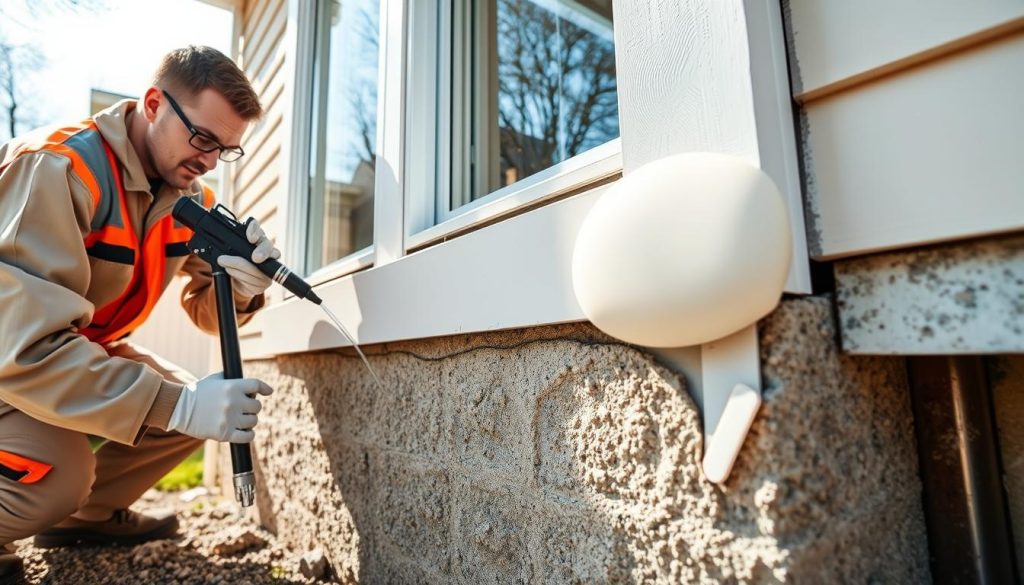
Non‑invasive keyholes and fast cure
Resin injection uses small keyholes (6–16 mm). The resin cures in about 30 minutes and often allows same‑day re‑levelling.
This method is clean, quiet and fast. It fills voids and improves ground bearing with minimal disruption.
When concrete underpins are the right call
Traditional underpinning requires excavation, soil removal and pouring concrete. It needs several days to cure and suits heavy loads or deep competent layers.
In reactive clay, piecemeal underpins can cause differential seasonal change and further damage if not designed holistically.
- We weigh access, noise, cure time and operational continuity.
- We mitigate risks such as water paths beside excavations.
- Method choice follows engineering judgement, not sales preference.
Outcome: you receive a clear comparison of cost, disruption and long‑term stability, with documented monitoring to protect finishes.
Our investigation and repair process
Our process begins with a no‑cost site visit so we can see the issue first‑hand and prioritise safety. We review photos you send and explain the assessment steps clearly.
Free site inspection, photo review and level survey
We carry out a prompt inspection and photo review to triage risk. A level survey quantifies settlement or heave patterns so you get facts, not guesswork.
Structural engineering report coordination
Where required, we coordinate with structural engineers and arrange any testing. The engineer’s report identifies causes and lists compliant remedies.
Fixed‑price, council‑compliant scope and scheduling
You receive a clear, fixed‑price quote and a council‑compliant scope with drawings. We sequence drainage work first if needed and explain access, noise and safety controls.
- Start: free inspection and photo review to triage the case.
- Measure: level survey and documented assessment before works.
- Plan: engineered scope, fixed price and permitted schedule.
- Deliver: our team manages works to minimise disruption and keep you informed.
If you want to get free quote options, call Chris or email and we will book a site inspection. Our service keeps communication open at every step.
How long will the work take, and what to expect on site
Know the likely timeframes and what our team will do on site so you can plan with confidence. We set practical expectations and keep the house operational where it is safe to do so. This short guide explains the typical process and on‑site routine.
Typical resin re‑levelling in as little as a day
Resin re‑levelling is fast. Many jobs finish in a day with areas returned to use quickly.
The resin cures in about 30 minutes at each injection point. Noise is low and work uses small keyholes, not large excavations.
Site access, noise, and keeping your home operational
We plan site access to protect gardens and paths. The team sets up safety zones and keeps the work area tidy.
- Many resin jobs finish in a day and rooms are usable soon after.
- Expect low noise and small keyholes rather than large digs.
- We locate utilities and protect services before drilling or digging.
- Traditional underpinning takes longer due to excavation and cure time.
- We sequence rooms so the building remains as liveable as possible.
- You receive regular updates on lift targets and level readings during the job.
- Final checks confirm outcomes against the engineered plan and we debrief on maintenance tips.
Our service focuses on safety, clear communication and minimal disruption. If the engineered plan requires deeper works, we explain the extra time and steps before any work begins.
Pricing transparency and factors that influence cost
Understanding what drives a quote makes the repair choice easier. We provide clear, fixed‑price quotes based on an engineered scope. This helps you compare options with confidence.

Method selection, soil conditions and accessibility
Method choice strongly affects labour, programme and reinstatement. Resin injection is fast and often needs less restoration work. That reduces labour and overall disruption.
Soil reactivity, extent of settlement and site access shape the scope. Hard access raises the cost and may extend the time on site. We list these drivers in every proposal.
Why stable pricing favours resin and screw piles for some jobs
Resin and screw piles usually give more predictable pricing. Both methods are efficient where depths and access are known.
Traditional underpinning is labour‑intensive. It often varies with excavation complexity and cure periods.
- We issue an itemised, fixed‑price quote tied to the engineer’s scope.
- Our quote includes reinstatement and documentation to avoid surprises.
- We can phase a job to tackle critical zones first.
- Ask for a comparative quote to weigh method trade‑offs for your property.
| Factor | How it affects price | Typical range / note |
|---|---|---|
| Method | Resin vs traditional underpinning or screw piles | Resin projects: ~$4,000–$15,000; traditional varies widely |
| Soil & access | Reactive soils or tight access increase labour | Site visit required to confirm |
| Scope & reinstatement | Extent of settlement and finish repairs | Included in our fixed‑price proposals |
| Programme | Longer jobs add labour and equipment costs | We outline expected on‑site time and milestones |
Why Melbourne homeowners choose Underpinning Melbourne
People choose our team for dependable results and open communication at every step.
20+ years of hands‑on expertise means we understand typical site risks and sensible repairs. We are fully insured and VBA Registered so you get peace of mind from start to finish.
Council‑compliant methods and documented certification
We follow council requirements and issue certified paperwork on completion. That documentation protects your property value and eases resale or lending processes.
Local engineers and clear communication
Local structural engineers guide the assessment and sign‑off. Our friendly team explains the work plainly, answers questions and updates you through the programme.
- Compliant underpinning: engineered plans and fixed‑price quotes.
- Minimal disruption: resin re‑levelling can often re‑level a house in a day.
- We stand by our work: before‑and‑after level data and warranty on completed work.
Our approach balances speed, safety and long‑term integrity so your home and building assets stay protected.
Get help today: free assessment, photos welcome
Start protecting your home today with a free, no‑obligation assessment. Send photos for an initial review and we will tell you if an on‑site inspection is needed.
We offer a prompt inspection and a level survey when required. Modern resin methods often cure in about 30 minutes, enabling same‑day re‑use in many cases.
Call Chris on 1300 970 930 or email chris@underpinning-melbourne.com.au
Call or email today for a quick chat. Our team will answer your questions and arrange the next steps.
Book a site inspection — honest, fixed‑price quotes
You can book a site inspection today for a measured survey and clear advice. After assessment you receive an honest, fixed‑price quote with inclusions and timing.
- Contact us today for a free assessment of your concerns.
- Email photos today for initial feedback before we visit your site.
- Book a site inspection today for a level survey and expert advice.
- Receive a free quote today with clear inclusions and a practical timeline.
- Call Chris: 1300 970 930 or Email Chris: chris@underpinning-melbourne.com.au.
- Our team is ready to answer your questions and explain underpinning options.
We prioritise your safety and long‑term stability. Start today and protect your property with compliant, engineered repairs.
Conclusion
A prompt engineering assessment turns visible signs into a clear repair plan. We investigate diagonal cracks, jammed doors and uneven floors so you know if subsidence or other soil problems require action.
Our team recommends the least disruptive solutions. Many jobs suit resin injection for fast re‑levelling. Where deeper bearing is needed, we specify concrete underpinning to protect the building long term.
We manage work with council‑compliant reports, fixed prices and clear documentation. If you think your house may need underpinning, contact us for advice and next steps. Contact us for a free assessment or Call Chris: 1300 970 930 or Email Chris: chris@underpinning-melbourne.com.au.