

We stabilise and restore homes with engineered solutions you can rely on. If you search for a fast, council‑compliant solution to foundation movement, we offer clear assessments, certified methods and fixed‑price quotes to resolve the issue.
Underpinning and foundation repair demand a calm, engineering‑first approach. Our VBA‑registered team has 20+ years’ experience. We protect your building with minimal disruption and clear communication.
We deliver concrete underpinning, resin injection and screw piling, plus reblocking and wall crack repairs. You get a free structural assessment and coordinated engineering reports to speed approvals. Typical costs vary by soil, access and extent of damage; early action saves time and higher remedial bills. For a quick guide use our cost calculator or contact us.
Call Chris: 1300 970 930 or Email Chris: chris@underpinning-melbourne.com.au.
Key Takeaways
- We provide certified, council‑compliant foundation repairs with minimal disruption.
- Free structural assessment and fixed‑price quotes before any works start.
- Costs depend on soil type, access and extent of movement; early action saves money.
- We coordinate engineering reports and final certification for you.
- VBA‑registered, insured team with 20+ years’ experience.
Underpinning Melbourne’s calm, engineering-first approach
Our work begins with engineering assessment, not sales pitches. We diagnose the cause of movement and design a focused remedy for your foundation.
VBA‑registered and fully insured, our practitioners follow council‑compliant methods. That gives you certified works and peace of mind at handover.
We offer a free on‑site structural assessment and provide fixed‑price quotes before any work starts. You will receive clear scopes and documented timelines so decisions are simple and timely.
What we promise
- Engineering logic first to resolve foundation issues, not upsells.
- Explanation of site conditions and why a chosen method suits your building.
- Minimal disruption, safe access planning and regulated documentation.
- Coordination of engineering reports and council certification.
| Service | Benefit | Typical outcome |
|---|---|---|
| Free structural assessment | Clear diagnosis of soil and building conditions | Reliable method recommendation and fixed quote |
| VBA‑registered team | Insured, compliant practitioners | Council certification on completion |
| Documented process | Transparent timelines and scopes | Reduced surprises and lasting support for your home |
To arrange a free inspection and a fixed quote, book a free assessment or call Chris: 1300 970 930. Email: chris@underpinning-melbourne.com.au.
What is helical pier underpinning and when is it used?
This engineered solution uses screwed steel shafts to reach firm strata below weak soils. We explain the method in plain terms so you can decide with confidence.
How steel shafts transfer loads to stable ground
The shafts are screwed through the soft topsoil until they reach competent ground. They take load from existing footings and foundations and move it to deeper strata.
We monitor installation torque to confirm capacity. That real‑time check verifies the engineered design and ensures the foundation will have reliable support.
Best-fit conditions: reactive clays, tight access and fast projects
This method suits reactive clay sites where seasonal movement causes settlement. It also works well where access is limited and large excavations are impractical.
There is no long concrete cure time, so the process is faster on time‑sensitive jobs. In some cases, geopolymer injection offers quicker slab lifting or ground compaction. We choose the right underpinning method after assessing soil profiles and site conditions.
| Condition | Recommended method | Key advantage |
|---|---|---|
| Reactive clay | Steel shaft system | Deep transfer of load; minimal excavation |
| Limited access | Screw shaft method | Small footprint; fast installation |
| Shallow subsidence | Geopolymer injection | Quick rise and ground compaction |
Helical pier underpinning Melbourne
Our crews install approved screw systems across inner‑city terraces and outer suburban homes. We work on projects of all sizes and tailor the approach to each home.
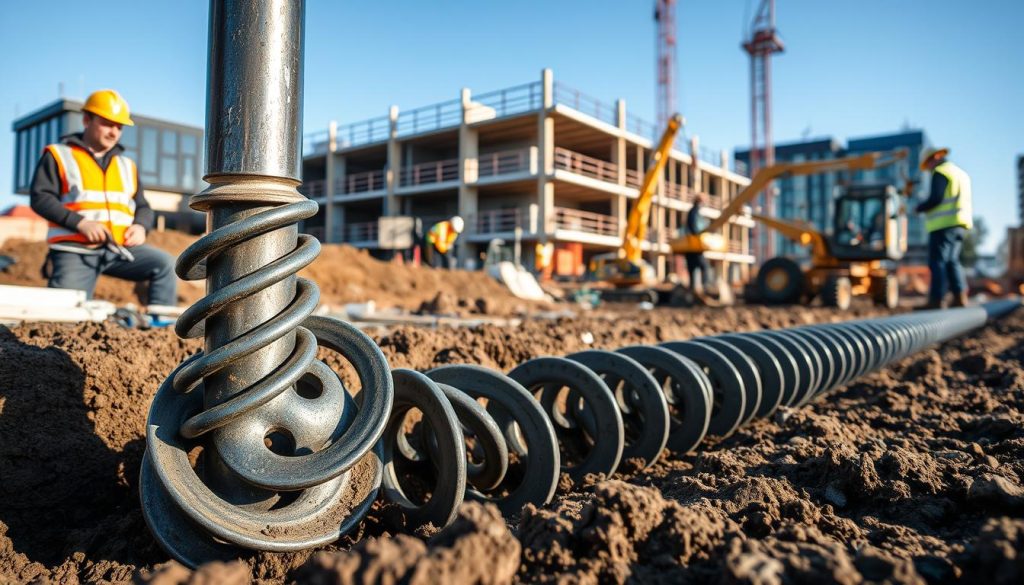

We manage the job from assessment to final certification. That means engineered designs, installation, council liaison and documented QA. You get a clear handover, warranty and maintenance guidance.
We adapt methods for tight sites, shared boundaries and sensitive heritage buildings. The process suits projects where noise, vibration and access must be controlled.
- Local teams that understand soil and drainage conditions.
- Targeted foundation repairs with minimal disruption to your building.
- Every job receives an engineered scope and compliance documentation.
- We keep your home safe and operational throughout the works.
Our team coordinates with engineers and councils to avoid delays. We focus on safety, clear communication and permanent solutions to common foundation issues.
Call Chris: 1300 970 930 or Email Chris: chris@underpinning-melbourne.com.au.
Signs your Melbourne home may need underpinning
We help homeowners spot problems early and respond with a calm, engineered plan. Small defects can be the first sign of a larger problem under the slab or footings. Early recognition saves time and cost.
Cracks in walls and slabs, jammed doors and sticking windows
Look for new or widening cracks in plaster, brick or concrete slabs. Hairline splits can grow into structural cracks if left unchecked.
Jammed doors and sticking windows often signal differential movement. Gaps in frames or skewed sashes may point to ongoing subsidence.
Uneven floors, leaning walls, and pooling water around footings
Uneven or sloping floors confirm settlement. A simple level check across a room can reveal a slope.
Leaned or bowed walls suggest foundation issues and need prompt assessment. Pooling water near footings shows poor drainage that softens soil and increases risk of subsidence.
- External step cracking in brickwork is a common field indicator.
- Persistent moisture and leaks at foundation level worsen movement in reactive clay conditions.
- Early diagnosis prevents further damage to finishes, services and structure.
Book a free assessment and we will provide an honest, fixed‑price scope and clear advice without pressure. Call Chris: 1300 970 930 or Email Chris: chris@underpinning-melbourne.com.au.
Our diagnostic process: assessment to engineered solution
First, we map how the building is moving and record the causes on site. This lets us target the right fix quickly.
On-site structural assessment and site review
We begin with a free structural assessment to document movement patterns. Our team inspects footings, drainage and services for contributing issues.
Engineering report coordination and compliant design
We coordinate engineers and compile a VBA-compliant design package. That ensures council requirements and clear certification at handover.
Transparent scope, timeline and fixed-price quote
You receive a clear scope and a fixed-price quote before work starts. The quote lists inclusions and the installation sequence to avoid surprises.
- Soil and conditions review to understand reactivity and moisture.
- Explanation of why a chosen method suits your site and loads.
- Access, safety controls and temporary support are planned up front.
- Our experience helps anticipate risks and manage them proactively.
| Step | What we check | Outcome |
|---|---|---|
| Assessment visit | Movement mapping, footing checks, site photos | Documented diagnosis and scope |
| Soil review | Reactivity, moisture, concrete interface | Method recommendation and capacity checks |
| Design & quote | Engineered drawings, VBA compliance, fixed quote | Transparent timeline and council-ready package |
Helical piers vs other underpinning methods
Not every job benefits from the same structural repair; we match solution to site. We compare common repair types so you can see which suits your soil, access and budget.

Mass concrete underpinning: when traditional is the right method
Mass concrete underpinning uses staged excavation and concrete pours to extend footings to firmer ground. It works well where depths are modest and access allows.
Staged pits, reinforcement and curing time make this concrete approach reliable. It is often chosen for older structures with shallow footings.
Screw piling and micropiles: depth and access considerations
Micropiles and screw piling provide capacity at greater depths with less excavation. These types suit tight sites and sensitive structures.
They reduce disruption and let us work near services and adjacent foundations while delivering deep support.
Resin injection geopolymer options for crack closure and slab lifting
Geopolymer resin compacts weak soil and can lift slabs quickly. This method is efficient for localised cracks and shallow settlement.
We select the right type based on loads, soil profile, access and programme. We assess risks to nearby structures and recommend the least disruptive option.
| Option | Best for | Key benefit |
|---|---|---|
| Mass concrete | Shallow repairs, good access | Proven, durable concrete solution |
| Screw piling / micropiles | Deep variable soil, tight access | Minimal excavation; deep capacity |
| Resin injection | Localised slab lift, crack repair | Fast, low‑impact ground compaction |
We recommend the right method for your site and provide council‑ready documentation for the chosen approach. Call Chris: 1300 970 930 or Email Chris: chris@underpinning-melbourne.com.au.
Step-by-step helical underpinning process
We follow a clear, step‑by‑step process that turns a diagnostic report into certified foundation support. This section outlines the main stages so you know what to expect and why each step matters.
Site preparation, layout, and minimal-access installation
We prepare safe access points and set out pile locations to match the engineered drawings.
Minimal‑access rigs install the steel shafts with low noise and vibration. This reduces disruption to your neighbours and to internal finishes.
Torque-controlled installation and load testing
Torque is recorded continuously to confirm bearing capacity in real time.
We install test locations first to validate design assumptions before full production begins. Results are logged and compared to the engineer’s criteria.
Lifting, re-levelling, and structural verification
We connect new support to existing footings with engineered brackets and verified fixings.
Controlled jacking re‑levels slabs and walls within specified tolerances. We monitor levels and structural responses during lifting to prevent damage.
- Final checks: re‑torque, fixings inspection and as‑built records.
- Finish works: concrete infill or reinstatement where specified.
- Handover: certification and a concise maintenance guide at practical completion.
Costs and factors that influence pricing in Melbourne
We explain typical cost ranges and the main factors that change a quote. This helps you plan and decide with confidence.
Typical price ranges
Minor works often start around $5,000. These are localised fixes with good access and limited structural work.
Moderate projects usually fall between $10,000 and $30,000+. These involve larger areas, multiple support points or deeper soil work.
Complex jobs on larger buildings can exceed $50,000. Severe movement, difficult access and extensive reinstatement drive costs up.
Key drivers of cost
- Extent of damage: wider or deeper problems need more materials and time.
- Soil conditions: reactive clay, moisture and depth to competent layers increase scope and cost.
- Access: constrained sites add specialist equipment and protection works.
- Method selected: concrete underpinning or screw systems change programme and labour.
- Building size and layout: bigger houses need more piles, pits or concrete.
Why early intervention saves money
Small problems can escalate. Delaying repair raises the risk of damage to finishes, services and structural elements.
Early action often keeps a job in the lower cost band. It reduces time on site and the need for extensive reinstatement.
| Cost band | Typical scope | When to expect |
|---|---|---|
| Minor ($5k–$10k) | Localised support, small lifts, good access | Small cracks; early diagnosis |
| Moderate ($10k–$30k+) | Multiple supports, moderate re‑levelling, some reinstatement | Widening cracks; uneven floors |
| Complex (>$50k) | Deep support, large reinstatement, heritage or tricky access | Severe movement across large building |
We provide transparent, fixed-price quotes with documented inclusions and assumptions. Book a free assessment to confirm a tailored scope and the most efficient compliant method.
For a clear starting point visit our site or Call Chris: 1300 970 930. Email: chris@underpinning-melbourne.com.au.
Why choose Underpinning Melbourne for foundation repairs
Our team focuses on clear diagnoses so your house gets the right repair, not extra work. We bring 20+ years’ experience and deliver honest advice every step of the way.
We diagnose causes first and pick the safest, most efficient method. That keeps costs sensible and avoids unnecessary upsells.
- Our experienced team has completed compliant repairs across the region.
- We protect occupants and neighbours with a safety‑first approach.
- Clear communication and tidy sites reduce disruption to your home and daily life.
- Certification on completion gives you documented assurance for records and resale.

We coordinate engineers and council requirements to avoid delays. Our programmes respect your time and aim to finish on schedule. We stand behind our workmanship and materials so your home stays safe and retains value.
| Promise | What it means for you | Outcome |
|---|---|---|
| 20+ years’ experience | Proven methods and local soil knowledge | Reliable, long‑lasting repairs |
| Honest assessments | No unnecessary works or upsells | Clear, fixed‑price quotes |
| VBA registration & certification | Council‑ready documentation | Compliant handover and peace of mind |
Related services to stabilise and protect your structure
From slab lifts to full foundation renewal, we tailor solutions that suit your soil and access. Our core services address the full range of foundation issues with certified methods and clear compliance documentation.
Concrete underpinning, restumping and reblocking
Concrete underpinning is used for shallow improvements and staged-pit solutions. We also provide restumping and reblocking to renew failing bearers, joists and stumps.
Screw piling, wall crack repairs and drainage improvements
For limited-access sites we use screw piling and resin injection for targeted slab lifts. Wall crack repairs complement re-levelling and structural stabilisation.
Drainage upgrades control moisture. Good drainage reduces soil movement and future risk to your foundations and walls.
Structural engineering reports for council compliance
We prepare engineering reports for council and lender compliance. That covers designs, as-built verification and handover paperwork to protect your home and building records.
- Service packages: tailored to structure, budget and programme.
- Coordination: we manage trades to streamline on-site work.
- Maintenance advice: simple steps to keep foundations stable after works.
| Service | Best for | Benefit |
|---|---|---|
| Concrete underpinning | Shallow soil problems | Staged, durable repairs |
| Restumping / reblocking | Timber bearers and stumps | Renewed load paths |
| Drainage upgrade | Moisture-prone sites | Reduced soil movement |
Book your free structural assessment today
Start with a free site review to turn uncertainty about your house into a practical plan. We focus on clear steps so you understand the job, timing and likely outcome.
Call Chris: 1300 970 930 or Email Chris: chris@underpinning-melbourne.com.au.
Send photos or book a site inspection for a fast, clear solution
Send photos of cracks or uneven floors for a quick preliminary review. We can often advise on the likely cause before a visit.
- Fast clarity: a free no‑obligation assessment and a fixed-price quote for the defined job scope.
- We schedule a site visit at a time that suits your household and explain options on-site.
- Our team confirms the safest approach and plans work to reduce disruption in live‑in homes.
- We can coordinate engineering reports and council paperwork if the foundation repair requires approval.
- We prioritise urgent jobs where subsidence risks are escalating and act quickly to deliver a practical solution.
Want more detail? Read our restumping vs underpinning guide or contact us now for a prompt, fixed quote and clear next steps.
Conclusion
We restore stability to homes with engineered repairs that stop movement at its source.
Our approach puts engineering first. We assess ground and footings, choose the right underpinning methods and deliver a compliant job with minimal disruption.
Small cracks and out‑of‑square doors or windows are signs to act. Early action prevents subsidence and protects your home and its value.
Every job is documented and certified. You get a fixed‑price quote, clear timelines and a maintenance guide for lasting performance of your foundations and structure.
Call Chris: 1300 970 930 or Email Chris: chris@underpinning-melbourne.com.au to book your free assessment and move forward with confidence in your structure.