

We explain how site classification guides safe footing and slab design for your home. This introduction gives clear information about what each category means for foundations in the local area.
At Underpinning Melbourne we protect homes with an engineering‑led approach. Our team has 20+ years of experience and VBA registration. We provide free, no‑obligation assessments and fixed‑price quotes.
A standard site report covers soil type, soils reactivity, bearing capacity and site features like trees and fill. That information tells engineers how to design a footing to handle movement.
We explain the practical steps for testing and design, and when to act fast. Our services include underpinning, reblocking, resin injection and screw piling. We coordinate engineering reports and deliver council‑compliant solutions with minimal disruption.
Call Chris: 1300 970 930 or Email Chris: chris@underpinning-melbourne.com.au
Key Takeaways
- Site classification directs safe footing and slab design.
- Reports include soil testing, bearing capacity and site features.
- We provide engineering guidance to reduce risk and save time.
- Our VBA‑registered team offers free assessments and fixed quotes.
- Contact us for clear next steps and council‑compliant solutions.
What site classification means for your Melbourne home’s foundation
Site reports translate subsurface testing into practical choices for durable foundations.
Reports record soil type, reactivity, bearing capacity and key site features like trees, fill and slope. This information tells engineers how the ground will move with changes in moisture and water.
Classification is set from subsurface conditions. It is not a preference you can pick. Engineers use the testing data to set a profile and size footings or piles for the expected movement.
- Testing estimates how soil and soils respond to seasonal moisture cycles.
- The right classification guides slab depth, beams or piles for lasting performance.
- Reports include reactivity, bearing and features that affect structural risk.
We translate that technical information into clear, compliant solutions for you. Our goal is permanent protection with minimal disruption.
Call Chris: 1300 970 930 or Email Chris: chris@underpinning-melbourne.com.au
soil class m h e p melbourne — what each class tells you
Understanding each site rating helps you match foundation detail to likely ground movement.
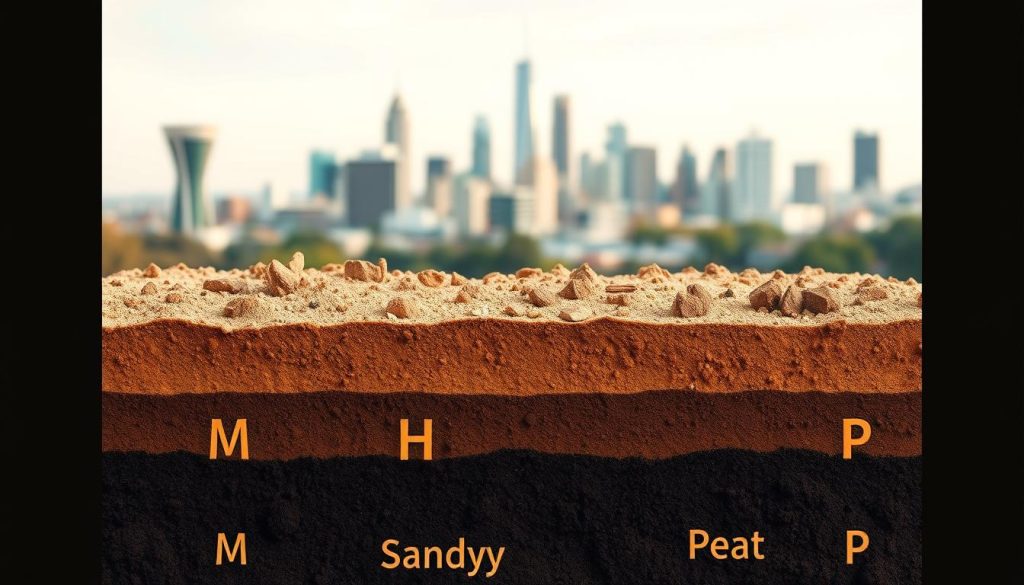

We summarise the practical implications so you know what to expect and which remedies work.
Class M — moderate reactivity
Moderate clay needs well‑detailed slabs, beams and drainage. Good design controls small seasonal movement.
Engineers often specify reinforced slabs and targeted moisture control rather than deep piling.
Highly reactive to very highly reactive clays
Heavy clays swell and shrink with moisture swings. That increases cracking and uneven floors.
Designs use deeper beams, screw piles or restumping to reduce risk and keep the structure level.
Extremely reactive clays
Extremely expansive clay soils demand robust engineering. Deeper piles or staged underpinning are common.
Strict water management and documented works are essential for long‑term stability and insurer confidence.
Problem sites
Sites with trees, fill, slopes or nearby structures need tailored remediation. These features make behaviour unpredictable.
Testing narrows the range of reactivity and defines bearing in the report. We then match footing types to the profile and budget.
- Key metrics: reactivity rating, bearing capacity, soil type, depth and moisture condition.
- We provide free assessments, fixed‑price quotes and VBA‑documented repairs.
For a quick diagnostic tool and practical advice see our wall crack diagnosis tool or Call Chris: 1300 970 930 or Email Chris: chris@underpinning-melbourne.com.au.
Melbourne soil types and areas: how local ground conditions drive classification
Different ground zones around the city create distinct foundation risks. We map common ground types so you can see how your street’s geology influences footing choices.

West of Darebin Creek to the Yarra mouth
Heavy grey‑brown volcanic soils dominate here. These volcanic soils are dense and can make planting challenging.
For foundations, engineers expect higher stiffness but also specific movement responses under moisture change.
North‑west and western plains
These plains carry heavy clays that commonly crack in a dry summer cycle.
Gypsum can improve friability, but we still design for reactivity and seasonal movement.
South of Burwood Highway and coastal belts
Dark grey sands and loam sit over clay layers in these belts. They drain well yet may lower bearing at shallow depth.
Historically used for market gardens, these types suit shallow plant beds but need deeper footing checks.
Dandenong Ranges, Red Hill and foothills
Red‑brown loam here is rich in nutrients and retains moisture under higher rainfall.
Plants grow well in these areas, but slopes and seepage still affect foundation design.
North‑east and central highlands
This area shows mixes of loam over clay, granite and sedimentary mixes. Fruit regions and hills present varied ground that needs careful classification.
- Practical tip: note nearby trees, slope and fill when you book testing.
- We assess how local ground types alter footing depth, drainage and moisture control.
How to get your site tested and classified — step by step
We provide a clear how‑to you can follow today. Follow these steps to book testing, get a site profile and move to compliant footing design.

Pre‑check your block
Begin with a quick walk‑around. Note trees, fills, slope and any history of damp or pooling.
These details guide where to place test points and reduce surprises during the test.
Arrange the testing
For tight suburban blocks we use hand augers to sample targeted points without heavy machinery.
Choose tracked or 4×4 drill rigs when you need deeper bore logs or complex ground profiles.
Understanding the report
Reports list soil type, reactivity, bearing capacity and site features such as trees, fill and slope.
That information forms the profile engineers use to size footings or piles and to draft the compliance drawings.
Interpreting results with an engineer
We translate the test data into clear engineering steps. That includes footing detail, moisture control and council documentation.
We coordinate testing and the structural report, then offer a fixed‑price quote based on the data — not guesswork.
- Email plans and photos for a fast first step and quick site scheduling.
- Call Chris: 1300 970 930 or Email Chris for a free assessment.
Foundation solutions matched to each rating (and when to underpin)
Our approach pairs the right remedial method with the site profile, avoiding unnecessary works. We match repairs to risk so you keep costs down and outcomes permanent.
For M sites
Standard slabs usually suffice with targeted drainage and jointing. Early wall crack repairs stop minor movement becoming major.
For higher reactive sites
We use deeper beams, screw piling and strict moisture management around clay and clay soils. These measures limit seasonal movement.
For extremely reactive ground
Engineered fixes often include staged underpinning or piles. Strict water control and documented reports protect the home and insurer requirements.
For problematic fills and trees
Remediation starts with removing or treating fill and managing roots near footings. A structural report defines the permanent remedy.
Our methods
- Concrete underpinning to re‑support and re‑level the structure.
- Restumping and reblocking where subfloor soils have settled.
- Resin injection to densify local ground and improve bearing.
- Screw piling to bypass weak layers and stabilise footings.
We document every step for engineers and council approvals and protect your family while works proceed. Call Chris: 1300 970 930 or Email Chris: chris@underpinning-melbourne.com.au
Why choose Underpinning Melbourne for testing, reports and repairs
Our team brings decades of hands-on experience to testing, reports and permanent repairs. We are VBA‑registered, fully insured and council‑compliant. That means certified works and peace of mind for your home.
We take a calm, engineering‑led approach. Our advice is clear and focused on safety. We never upsell. We minimise disruption and protect your belongings while we work.
What we handle for you
- End‑to‑end coordination: we arrange soil testing, manage bore access and brief structural engineers.
- Fast testing options: hand augers for tight access or 4×4 and tracked rigs for deeper data.
- Transparent pricing: free, no‑obligation assessments and fixed‑price quotes before work starts.
- Certified delivery: we certify works to council standards and keep you informed at every step.
- We service a wide range of suburbs and site types across the metropolitan area and ranges.
We save you time by handling logistics and fast report turnaround. Call Chris: 1300 970 930 or Email Chris. For direct enquiries use our contact us page to book a free assessment.
Conclusion
We finish with a simple, practical route to permanent footing solutions and garden care.
Melbourne presents varied soils, from loam to sands and grey clays. Proper soil testing and careful testing of site features guides a durable design.
Our step is clear: assess, test, design, certify and deliver. We manage water, garden irrigation and tree roots to reduce movement and protect your foundation.
Book a free structural assessment and get a fixed quote with certified works. Call Chris: 1300 970 930 or Email Chris: chris@underpinning-melbourne.com.au.