

We explain how unmanaged stormwater can cause house movement and what you should do now. Our team simplifies the link between poor drainage, reactive soil and shifting footings so you can act early.
Uncontrolled water near a house soaks reactive clay and can trigger footing movement. Older Melbourne buildings often have ageing gutters and pipes that clog with leaves and sediment. This creates pooling near the base of walls and speeds up structural distress.
We are Underpinning Melbourne, Structural Preservation Specialists with over 20 years’ experience. We offer engineered solutions such as underpinning, resin injection and screw piling. Our methods are VBA-registered, council-compliant and aim for permanent stabilisation with minimal disruption.
Quick checks you can do: extend downpipes two metres from the house, keep garden fall away from the slab, and monitor cracks. If cracks exceed 5 mm, seek an expert assessment and a structural report.
Key Takeaways
- Unmanaged stormwater and poor drainage can saturate reactive soil and cause footing movement.
- Older Melbourne homes commonly show early signs like overflowing gutters and pooling near walls.
- Our team uses VBA-compliant underpinning and council-approved fixes to restore stability.
- Small preventive steps can help, but cracks over 5 mm need professional assessment.
- We provide free, no‑obligation structural assessments and fixed-price quotes.
- Call Chris: 1300 970 930 or Email Chris: chris@underpinning-melbourne.com.au.
Why Melbourne’s stormwater and soil conditions drive foundation movement
Where local water collects, clay-rich ground can soften or harden, and that change shifts how the building bears load. We take an engineering-first view to explain the risks and how to fix them.
Reactive clays, moisture cycles and local climate
Clay layers in many areas expand when wet and shrink when dry. This cyclical change alters support to the foundations and raises the risk of movement over time.
Even small leaks or persistent wet patches can trigger swelling. Long dry spells then cause shrinkage, stressing walls and slabs.
How poor drainage concentrates water at footings
Blocked gutters, failing pipes or poor site grading send water toward the house. That extra water raises local moisture and softens the ground under load.
- Undersized systems and old pipes struggle with heavier rain.
- Overland flow can saturate corners and additions.
- Seasonal monitoring helps show how moisture affects cracks and levels over time.
We identify sources, explain the conditions that cause damage, and recommend compliant, permanent measures to protect your building and occupants.
Common signs your home is moving due to stormwater issues
You can spot water-related distress by watching for subtle shifts in doors, floors and masonry. Early detection saves time and cost. We explain what is normal and what needs urgent attention.
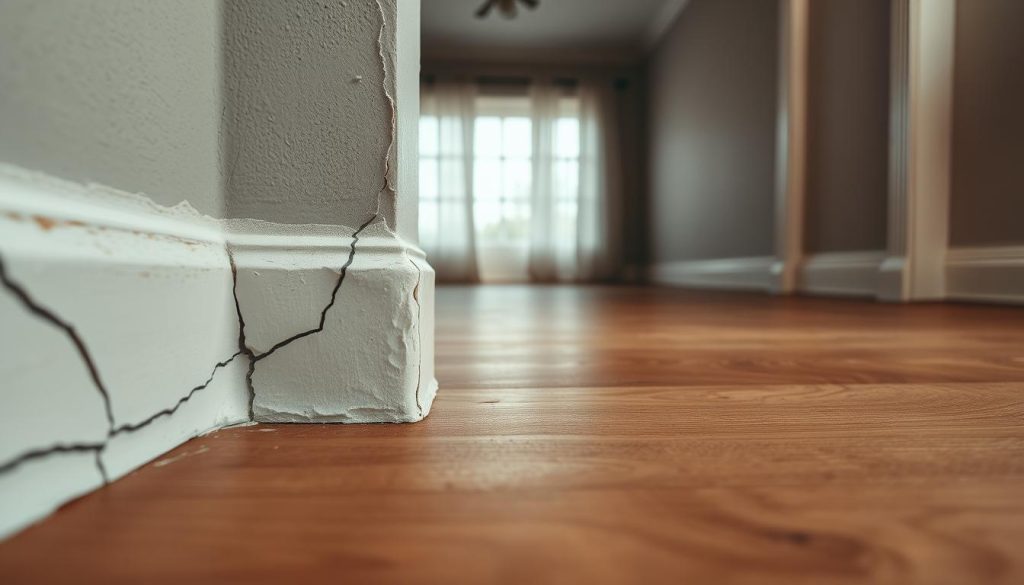

Cracks, sticking doors/windows, uneven floors and efflorescence
Look for new or widening cracks in brickwork and plaster, especially diagonal patterns near openings. Small hairline cracks under 1 mm are common; 1–5 mm should be monitored across seasons.
Sticking doors and windows show frames are racking. Uneven floors or hollow sounds under slabs may indicate loss of support beneath your home.
White salts (efflorescence) on masonry point to persistent moisture moving through the wall. That can cause long‑term damage if left unchecked.
Pooling water, overflowing gutters and slow-draining pits
After rain, check for puddles near the base of the house, overflowing gutters, or pits that take too long to clear. These surface signs reveal a strained drainage system.
- Photograph and date any changes to track them over time.
- Monitor crack widths through wet and dry seasons.
- If cracks exceed 5 mm, seek a professional assessment promptly.
We offer free, no‑obligation structural assessments to separate cosmetic issues from serious concerns. Use our wall crack diagnosis tool to get started, or call us for an engineering-led inspection.
stormwater problems foundation movement melbourne: pinpointing the causes
Small failures in guttering and below-ground pipes often start the chain that weakens ground support. We inspect your site to find the exact cause and plan council-compliant work with minimal disruption.
Blocked gutters, downpipes and pipe failures
Blocked gutters and downpipes spill water close to the house. That soaks clay and starts local loss of support beneath parts of the property.
Underground pipe failures — cracks, collapse or root ingress — act as hidden leaks. They saturate the ground and undermine the load-bearing soil.
Poor site grading and undersized or outdated systems
Poor grading can direct flow under slabs or toward walls rather than to legal discharge points. Older systems often lack capacity for current storms.
Silted pits and debris-filled grates reduce hydraulic performance. Trees near drains can invade joints and restrict flow during heavy rain.
- We identify whether gutters, pipes, trees or the site layout drive the issue.
- We recommend targeted repairs so the work fixes root causes, not just symptoms.
- Our approach is practical, honest and compliant with local council rules.
How to diagnose drainage issues at your property
Practical checks give a clear picture fast. Start with visual inspections and basic maintenance before calling specialists. These steps often reveal whether the issue needs simple repair or an engineering response.

Simple checks: gutter cleanliness, downpipe discharge, garden fall
Clear gutters twice a year, ideally before winter and spring. Install gutter guards to reduce debris and save time on upkeep.
Confirm downpipes discharge at least two metres from the house and that garden fall directs water away from the site. After rain, check pits and grates for standing water and how long the system takes to clear.
When to use CCTV drain inspections and hydro-jetting
If surface cleaning does not resolve the issue, arrange a plumbing service with CCTV. Cameras locate broken joints, blockages and root intrusion without digging.
Hydro-jetting removes silt and roots and often fixes recurring issue patterns that normal cleaning misses.
Seasonal monitoring of cracks and levels across wet/dry periods
Record crack widths and floor levels through wet and dry seasons. Keep a log of dates, rainfall and observations so our team can use engineering expertise to interpret the data.
We provide free, no‑obligation structural assessments and coordinate engineering reports where needed. Where multiple areas are affected, we prioritise safety and sequence works to minimise disruption.
| Check | Action | Frequency | When to escalate |
|---|---|---|---|
| Gutters & grates | Clear debris; install guards | Twice yearly | Overflow after heavy rain |
| Downpipes & outlets | Confirm discharge away from site | Seasonal | Puddles persist >24 hours |
| Pipes & underground | CCTV inspection; hydro-jetting | As needed | Slow draining or repeated blockages |
| Cracks & levels | Record measurements; log weather | Monthly through seasons | Widths increasing or >5 mm |
Call Chris: 1300 970 930 or Email Chris: chris@underpinning-melbourne.com.au for a prompt assessment.
Prevention first: practical steps to keep water away from your foundations
Simple site changes often stop excess water from ever reaching the building’s edge. We prioritise prevention with straightforward, council‑compliant measures that reduce risk and disruption.
Gutters, downpipes and outlet extensions
Fit correctly sized gutters and clear them twice a year. Use guards to cut cleaning time. Extend downpipes so outlets discharge at least two metres from the footing line.
Garden and site design
Re‑shape garden beds and paving to keep a continuous fall away from the house. This is the simplest way to prevent pooling near foundations.
Trees, planting and safe distances
Choose species with non‑invasive roots. Plant large trees 3–4 metres from stormwater lines to protect drains and the moisture balance under the slab.
Plumbing and ongoing maintenance
Fix leaks quickly. Build a basic maintenance routine for gutters, pits and grates. Small jobs now stop slow saturation and costly repairs later.
- Fit correct gutters and extend outlets ≥ 2 m from the property edge.
- Maintain garden fall so surface flows move away from the site.
- Use splash blocks or buried dispersion lines that meet council rules.
- Review your drainage design and keep a simple maintenance calendar.
For a quick estimate and to plan works that meet regulations, try our underpinning cost calculator or Call Chris: 1300 970 930 | Email Chris: chris@underpinning-melbourne.com.au.
Fixing movement: proven, council-compliant solutions for Melbourne homes
Engineered repairs restore bearing capacity and stop progressive damage to your home. We design work to be council‑compliant with VBA‑registered supervision and clear certification.
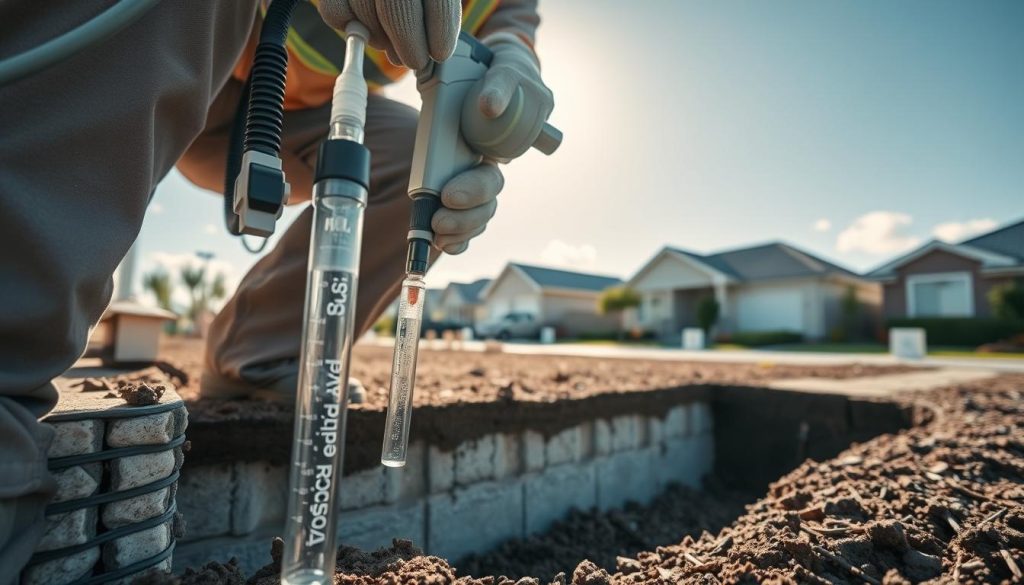
Concrete underpinning and restumping stabilise sinking footings. These methods match designs to your soils and building. They give durable support for floors and walls.
Resin injection compacts weak clay, fills voids and restores bearing capacity. It is non‑invasive, fast curing and corrects alignment with minimal disruption.
Screw piling transfers loads to firmer strata where the upper ground is unreliable. It is ideal for highly reactive or variable profiles and reduces program time on site.
After ground work, we repair cracks and apply surface sealing so water cannot re‑enter. If leaks caused the issue, we coordinate plumbing rectification before finalising repairs.
- Registered Structural Engineers design and certify each solution.
- We provide fixed‑price quotes and VBA‑compliant documentation for council and insurers.
- Our team delivers experienced, minimally disruptive work and lasting results.
To arrange a site visit or a no‑obligation quote, use our contact page or Call Chris: 1300 970 930 | Email Chris: chris@underpinning-melbourne.com.au.
Work with Melbourne specialists for lasting results
Start with an engineering-led inspection to get honest, practical advice you can trust. We assess each site, explain the design and outline required work clearly.
Underpinning Melbourne: engineering-led, honest assessments
We provide engineering expertise and plain-language reports. Our team is VBA-registered and insured. That means council-compliant designs and certified work for all types of homes.
Our offer: free no-obligation structural assessments and fixed-price quotes
Free assessments help you decide the right service. We give fixed-price quotes and coordinate engineering reports so you have clear costs and timelines.
Book a site inspection or email photos
Send photos to speed triage for your property. Or book a site inspection and we will inspect, propose solutions and schedule work to minimise disruption.
- Engage specialist services focused on structural preservation and drainage interactions.
- Honest, engineering-led service that explains findings in plain language.
- 20+ years’ local experience across heritage and newer areas.
- Fixed-price quotes, full documentation and council-aligned design.
- We coordinate trusted partners for CCTV, hydro-jetting and drainage repairs.
| Service | What we deliver | Compliance | Typical time |
|---|---|---|---|
| Site assessment | Engineering report, photo log, recommended solutions | VBA-registered report | 1–3 days |
| Drainage coordination | CCTV, hydro-jetting, design for discharge | Council-approved designs | 1–2 weeks |
| Structural repairs | Underpinning, resin injection, screw piling | VBA & council certification | Variable by scope |
| Aftercare | Crack repair, sealing and maintenance plan | Warranty and documentation | Follow-up within 6 months |
For prompt help, use our services. Call Chris: 1300 970 930 or Email Chris: chris@underpinning-melbourne.com.au.
Conclusion
Proactive checks and timely repairs stop minor drainage faults becoming major structural work.
Keep downpipes extended two metres, clear gutters twice a year and plant trees 3–4 metres from drains. These simple steps cut moisture at the site edge and reduce ground softening under the foundation and foundations.
If you see recurring cracks, uneven floors or damp walls, arrange CCTV and hydro‑jetting to check pipes and plumbing. That restores systems before we design and deliver permanent solutions.
We provide free assessments, fixed‑price quotes and a prompt service so you can act in good time. Call Chris: 1300 970 930 or Email Chris: chris@underpinning-melbourne.com.au.