

We help sellers protect sale outcomes by fixing foundation faults with an engineering-led approach that buyers and valuers trust.
Underpinning can restore a house’s structural certainty. A steady building frame reassures buyers at inspection and during valuation.
Underpinning Melbourne is a structural preservation specialist with 20+ years’ experience. We are VBA registered, insured and council-compliant.
Our free no‑obligation assessment explains the process, timing and certification you need for a smooth sale. We provide a transparent fixed-price quote and coordinate engineering reports.
We aim for minimal disruption so open homes can proceed. Call Chris: 1300 970 930 or Email Chris: chris@underpinning-melbourne.com.au.
Key Takeaways
- A stable foundation boosts buyer confidence and reduces negotiation risk.
- Early assessment uncovers issues before listing.
- We provide VBA-compliant reports and fixed-price quotes.
- Works are managed to limit disruption to inspections and open homes.
- Contact us for a free assessment, photos review or a firm quote.
Why foundation stability influences Melbourne resale value
A clear engineering record for foundations removes doubt at sale time. Buyers scan building reports in minutes. If the foundation shows stability, they feel safer bidding with confidence.
We explain how structural integrity converts into buyer trust. Certified repairs, recent inspection reports and clear photos shorten negotiation windows.
How structural integrity translates into buyer confidence and price
Documented stability reduces perceived risk. Valuers and buyers treat a solid foundation as a sign the house will not carry hidden future costs.
That trust often protects your asking price and shortens time on market. We provide VBA-compliant certification and a calm, engineer-led plan to support enquiries during due diligence.
Disclosures, building reports and what buyers look for at sale time
- Buyers and valuers prioritise foundation stability because it lowers perceived future costs.
- Clear disclosure with inspection and engineering reports prevents late renegotiation.
- Visible cracks can alarm buyers; we clarify which cracks are cosmetic and which indicate structural movement.
- Subsidence indicators and soil conditions influence building reports; we document the extent and proposed remediation.
We help agents answer buyer questions with facts, photos and repair evidence. Our reports focus on conditions, factors and the extent of any damage so buyers decide quickly and confidently.
What is underpinning? Traditional and modern methods explained
Below we set out the main methods used to secure a building to sound bearing strata. We describe each type in plain terms so you can see the process, timeframe and likely disruption.
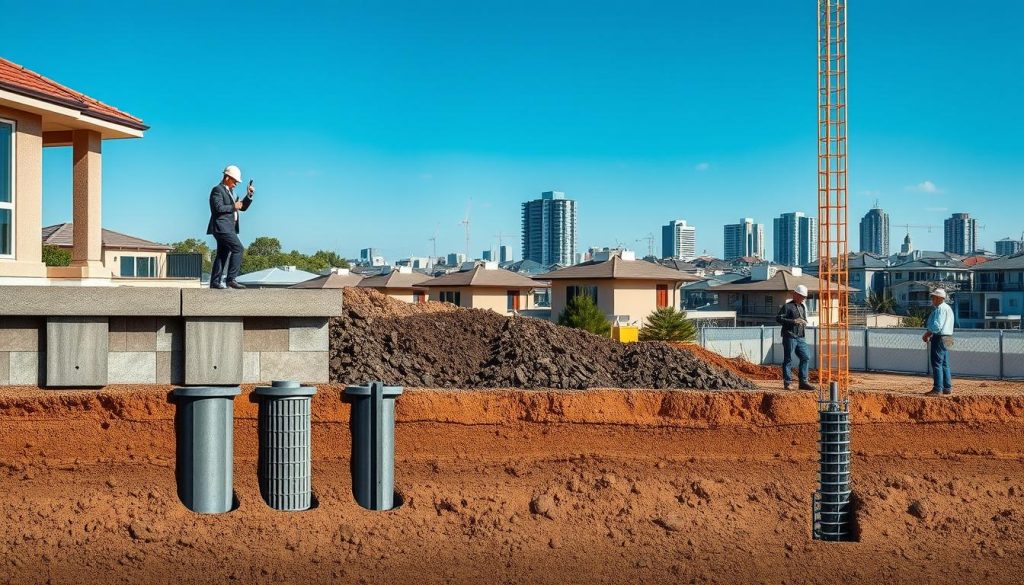

Mass concrete and beam‑and‑base (traditional)
Mass concrete underpinning uses staged excavations beneath the footing. Workers replace sections with concrete to reach stronger ground. This approach suits older footings and heavier loads.
Screw piling and piers for deeper strata
Screw piles transfer load to firm layers below soft soil. They need less excavation. The installer drives a pile to stable strata, then connects it to the foundation.
Resin injection and geopolymer solutions
Injection fills voids through small tubes. Expanding resin compacts weak soil, strengthens ground and can re‑level slabs. Suitable jobs may finish in a day with low disruption.
Choosing the right option
- We assess soil, foundations and observable movement.
- Concrete underpinning remains valid for some footing types.
- Resin offers a fast, non‑invasive solution when ground permits.
- Our engineer designs the repair with safety, compliance and certification.
| Method | Access | Typical duration | Best for |
|---|---|---|---|
| Mass concrete | Excavation around footing | Days to weeks | Old footings, heavy loads |
| Screw piling | Small rigs, minimal dig | 1–3 days | Deep weak soils, limited access |
| Resin injection | Very small access points | Hours to 1 day | Void filling, re‑level jobs |
Underpinning and resale value Melbourne
A clear engineering record and targeted work can turn a repair into a selling advantage.
We assess whether underpinning will add price or simply protect it. Our advice is honest. We never upsell.
When value lifts: repairs that remove known risk, come with engineering sign‑off and tidy before/after photos often boost buyer confidence.
When intervention preserves rather than adds
If movement is minor, monitoring plus documented inspections can be enough. This avoids needless cost underpinning and keeps campaign dates on track.
- Adds value: clear risk removed, certified work, visible evidence.
- Preserves value: uncertainty removed without major work.
- We weigh the extent of damage, market sentiment and likely uplift in your suburb.
For a quick guide to likely costs use our cost calculator. Call Chris: 1300 970 930 or Email Chris: chris@underpinning-melbourne.com.au.
Signs your home may need underpinning before you list
Early signs of foundation trouble are often subtle but should prompt a quick inspection. We assess issues calmly and explain what they mean for your sale timeline.
Wall cracks, sticking doors, sloping floors and subsidence indicators
Diagonal wall cracks near openings can show movement, not just surface plaster faults. Check gaps at skirting and new cracks above windows.
Doors that stick or misaligned frames often mean uneven settlement beneath the footings. Sloping floors and misaligned cornices usually match subsidence patterns in reactive clay soil.
- Diagonal wall cracks near windows or doors may indicate movement.
- Doors sticking or new gaps at skirting can suggest uneven settlement.
- Sloping floors and misaligned cornices often match subsidence in reactive soil.
- Moisture changes, leaks or poor drainage can worsen foundation problems over time.
- Tree roots and seasonal drying contribute to foundation damage in clay sites.
Our inspection maps cracks, records levels and identifies patterns versus isolated defects. We prioritise safety and recommend only necessary work with clear reasons.
You receive a practical assessment and next steps before you list your house. If repair is advised we coordinate engineering, design and VBA‑compliant certification.
| Indicator | Likely cause | Suggested first step |
|---|---|---|
| Diagonal cracks near openings | Settlement or movement | Book an inspection for crack mapping |
| Sticking doors or gaps | Uneven foundation levels | Record door movement, send photos for assessment |
| Sloping floors | Subsidence in reactive soil | Level survey and engineer review |
Book a free assessment or email photos for quick guidance. Call Chris: 1300 970 930 or Email Chris: chris@underpinning-melbourne.com.au.
Costs, factors and timeframes buyers should understand
A clear picture of probable costs, drivers and time helps you decide whether to repair before listing.
Mass concrete work and beam‑and‑base repairs are usually priced per metre. Expect roughly $1,000–$3,000 per metre for mass concrete and $1,500–$3,500 per metre for beam‑and‑base concrete underpinning.
Mini‑piled solutions cost per pile and often fall between $10,000 and $20,000 per pile depending on depth. Resin injection jobs often finish in one day and commonly range from $4,000–$15,000 for suitable homes.
Key cost drivers
Soil type, access and the extent of damage matter most. Reactive clay, deep voids or difficult access add labour and plant hire.
House footprint, the number of affected footings, and the cause of foundation damage also shape final prices. We provide a clear quote with scope, inclusions and council‑compliant process to avoid surprises.
Project duration and disruption
Some jobs finish in a day. Others require staged works over weeks. Resin injection cuts time and disturbance where conditions allow.
| Method | Typical cost | Typical time |
|---|---|---|
| Mass concrete | $1,000–$3,000/m | Days–weeks |
| Beam & base concrete | $1,500–$3,500/m | Days–weeks |
| Mini‑piled | $10,000–$20,000/pile | 1–3 days per pile |
| Resin injection | $4,000–$15,000 | Hours–1 day |
Our promise: honest scoping, engineering coordination and fixed‑price quotes. We minimise dust, noise and landscape disturbance and give ground and level readings so you see progress.
Book a site inspection for a tailored quote and recommendations. Call Chris: 1300 970 930 or Email Chris.
Choosing the right underpinning method for value, not overcapitalisation
Aim for a repair plan that addresses real risk and keeps your sale campaign on track. We balance compliance with cost so you do not spend more than necessary.

Assessing the return: cost underpinning vs potential sale uplift
We compare likely cost against expected uplift from buyer confidence. That shows whether cost underpinning makes sense for your home.
Key factors include soil behaviour, visible damage and local buyer expectations. We never upsell. We recommend only what protects the sale.
Minimising disruption and preserving landscaping for open homes
- The right method balances performance, time and presentation during open homes.
- Mass concrete or concrete underpinning suits heavy walls or deep footings.
- Resin can be a fast, low-impact solution when testing confirms suitability.
- We plan sequencing to protect gardens, driveways and staging.
| Method | Time | Impact |
|---|---|---|
| Mass concrete underpinning | Days–weeks | Higher landscape impact |
| Resin | Hours–1 day | Low disturbance |
| Screw piles | 1–3 days | Moderate access needs |
For a quick read on options and comparisons use our underpinning tool comparison. We give a clear, value‑focused plan to meet your foundation needs without excess spend.
Insurance, compliance and certification in Victoria
Policies can cover sudden events yet exclude slow soil movement; understanding that gap is critical.
Most home insurance policies exclude underpinning unless linked to a covered event. Flood or earthquake may be accepted, shrink‑swell clays or tree‑root subsidence usually are not.
We are VBA‑registered, work council‑compliantly, and provide full certification. This matters to buyers, lenders and conveyancers.
Our assessment includes photos, level surveys, scope of repairs, and a clear engineering pathway to sign‑off. We explain the soil conditions that caused movement, the proposed work, the likely cost and the expected time.
- Most policies exclude work unless tied to an insured event.
- Certification and council approvals support conveyance.
- We schedule work to meet contract dates and disclosure timelines.
- Speak with your insurer early; we supply the technical reports they need.
Call Chris: 1300 970 930 or Email Chris: chris@underpinning-melbourne.com.au.
Underpinning Melbourne’s process: calm, engineering-led, sale-ready
First, we carry out a free assessment to map damage and establish an engineered plan. This gives clear facts for your sale campaign. You see the scope, timing and likely costs before any work begins.
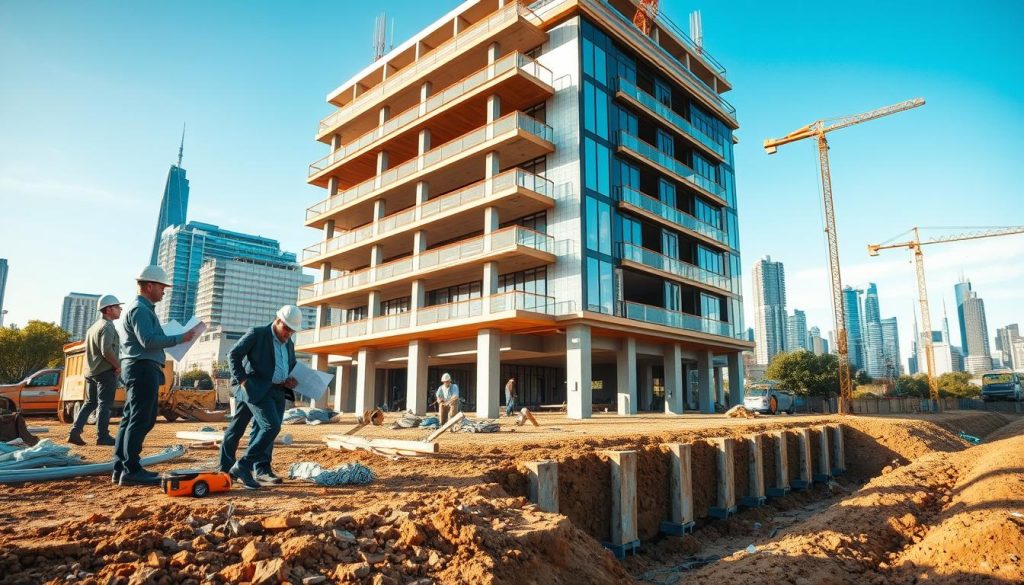
Free assessment, crack mapping and structural engineering reports
We start with a no‑cost inspection. We map cracks, take level readings and record site photos. An engineer reviews findings and issues a concise report for buyers and lenders.
Transparent, fixed-price quotes and method recommendations
You receive a clear quote that lists methods, timelines and inclusions. We explain resin injection where suitable, monitoring needs, and expected curing times. This keeps your campaign dates on track.
Council-compliant work, VBA-registered supervision and certifications
All work is council‑compliant and supervised by VBA‑registered staff. You get certificates and foundation documentation to hand to valuers, conveyancers and buyers.
- Free assessment and crack mapping to understand patterns and risk.
- Coordinated engineering reports and soil insights where needed.
- Fixed‑price quote with method options and time on site estimates.
- Work staged to limit disruption and protect your home presentation.
| Stage | What we deliver | Typical time |
|---|---|---|
| Assessment | Crack map, site photos, engineer review | 1–3 days |
| Quote | Fixed price, method options, inclusions | 2–5 days |
| Works | Council approvals, supervised job, certification | Hours–weeks (site dependent) |
Contact us to book an assessment. Call Chris: 1300 970 930 or Email Chris.
Conclusion
A focused, certified repair plan gives you control over timing and costs.
Clear foundation repair and concise engineering reports protect safety, contract certainty and buyer confidence. We match methods to soil type, site access and campaign timing.
Options include concrete solutions, mass concrete underpinning and traditional methods. Where suitable, injection offers a fast, low‑impact option. We outline likely costs and key drivers so you can plan with confidence.
Our experienced team delivers council‑compliant work, fixed quotes and certificates. Ready to proceed? Contact us, Call Chris: 1300 970 930 or Email Chris: chris@underpinning-melbourne.com.au.