

Recognising early foundation issues helps protect your home from costly failure. We describe common visible changes and give clear steps to get an assessment fast.
Small cracks, uneven floors and doors that stick are often the first clues of foundation movement. These issues can escalate to structural risk if left unchecked.
Our approach is engineering-first. We offer a free structural assessment and a transparent fixed-price cost calculator to help plan repairs.
We are VBA registered, insured and bring over 20 years’ experience. Our services include concrete underpinning, screw piling, resin injection and structural reports to meet council compliance.
Contact us for prompt support: Call Chris: 1300 970 930 or Email Chris: chris@underpinning-melbourne.com.au.
Key Takeaways
- Early wall or floor cracks often signal foundation movement and deserve quick attention.
- We provide a free structural assessment with clear next steps and no pressure.
- Our engineered methods protect structural integrity and meet council rules.
- Transparent fixed-price quotes help homeowners plan with confidence.
- VBA registration and 20+ years’ expertise reduce uncertainty and risk.
Foundation red flags in Melbourne’s soils: context, safety and peace of mind
Rapid changes in soil moisture create pressure that stresses footings and the surrounding structure. Reactive clay and mixed fill common across Melbourne respond strongly to wet and dry cycles. This movement can be gradual or sudden and affects long-term building integrity.
Why homes see movement: reactive clays, droughts and downpours
Clay soils shrink in drought and swell after heavy rain. That cycle puts uneven loads on a foundation. Plumbing leaks, poor site grading and nearby excavation add water or remove support. Large trees and garden beds change moisture near footings and can worsen settlement.


Our calm, engineering-first approach to structural preservation
We benchmark movement over time to separate cosmetic cracks from structural problems. Our process documents causes and effects so decisions are based on evidence, not guesswork.
- We prioritise occupant safety and immediate stabilisation.
- We specify council-compliant measures that suit local soil conditions.
- We present staged options with clear cost and time expectations.
- We provide certification to protect your asset and confidence.
Our team focuses on safety, minimal disruption and long-term integrity. We deliver VBA-compliant reports and honest recommendations so homeowners can make informed decisions about their building.
Signs you need underpinning Melbourne
We help homeowners tell cosmetic faults from active movement. Our free assessments focus on safety, integrity and VBA-compliant advice. Below are clear indicators that warrant inspection by an engineer.
Cracks in walls and floors
Look for vertical, diagonal or horizontal cracks that widen or recur after repair. Diagonals near openings often point to load shift rather than simple shrinkage.
Uneven or sloping floors
Floors that slope, dip or let objects roll show differential movement. Wide skirting gaps are a practical clue to shifting support beneath floors.
Sticking doors and windows
Out-of-square frames, jamming latches or daylight gaps at windows and doors reveal distortion around openings. These faults often link to foundation movement.

Separation, visible movement and moisture
Walls pulling from ceilings, tilting chimneys, sinking areas, bowing walls and spalling concrete indicate active stress or subsidence. Persistent moisture, efflorescence or pooling water at the perimeter increases risk and must be managed at the source.
- Act when cracks widen, gaps grow or movement continues over time.
- Our reports separate cosmetic defects from structural problems and give a fixed-price plan tied to stabilisation.
Call Chris: 1300 970 930 or Email Chris: chris@underpinning-melbourne.com.au for a free inspection.
What causes foundation issues in Melbourne homes
Rapid swings in ground moisture often trigger movement beneath footings and affect building stability.
We trace root causes before recommending work. Our assessments consider soil class, drainage, footing design and nearby vegetation. That helps prevent recurrence rather than masking symptoms.
Common drivers of movement
- Rapid wet–dry cycles in clay cause shrink‑swell and loss of bearing capacity.
- Leaking stormwater, sewer or water lines can wash out fines and undermine support.
- Large trees or dense gardens change moisture near footings and increase risk.
- Poorly compacted fill can consolidate over time and cause settlement.
- Footings not matched to the site’s soil class magnify seasonal movement.
- Nearby excavation, floods, droughts or seismic activity can trigger subsidence.
| Cause | Effect on structure | Typical remediation |
|---|---|---|
| Clay shrink‑swell | Uneven settlement, cracking | Drainage control, engineered footings |
| Plumbing leaks | Loss of bearing, erosion | Pipe repairs, stabilisation |
| Tree roots | Localized drying and heave | Root barriers, moisture management |
We prioritise drainage and plumbing fixes alongside structural measures. Prompt action reduces cumulative movement and lowers lifecycle cost over time.
When to act: thresholds that mean your home may require underpinning
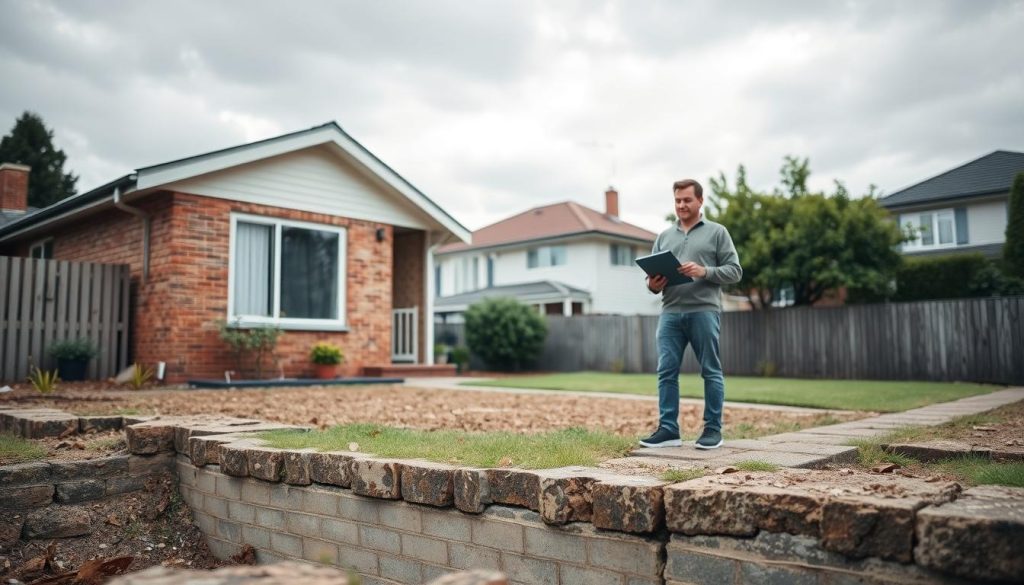
Escalating movement around openings or abrupt floor changes often mean support has changed. Early assessment saves time and money. We recommend quick checks when multiple indicators appear in one building.
Escalating or recurring cracks and new gaps around doors and windows
Act if cracks widen or return after repair. New daylight at frames or expanding gaps around skirtings and architraves signals growing distortion.
Noticeable floor slope or sudden changes after weather or leaks
Sudden uneven floors after storms or plumbing faults suggest a change in support conditions. Movement that follows heavy rain or leaks requires urgent investigation.
Don’t delay: minor issues can become serious structural problems
If doors windows jam, or misalignment appears in more than one area of the house, seek help. Our free, no‑obligation assessment confirms whether you require underpinning or if monitoring and drainage fixes suffice.
- Fixed‑price quote: We provide a clear quote when thresholds are met.
- Practical approach: We recommend the minimum viable engineering solution, VBA compliant.
- Safety first: Temporary stabilisation can be arranged while works are planned.
- Early action saves time: It limits damage and lowers lifecycle cost.
| Threshold | Observation | Recommended next step |
|---|---|---|
| Widening cracks | New or growing cracks near openings | Book an assessment and monitoring |
| Frame gaps | Daylight at doors and windows | Structural check and fixed‑price quote |
| Floor movement | Sudden slope after rain/leak | Urgent site inspection and temporary stabilisation |
Call Chris: 1300 970 930 or Email Chris: chris@underpinning-melbourne.com.au for a prompt assessment and transparent quote.
Underpinning and stabilisation solutions we offer
Engineered support systems halt movement and reinstate safe, level floors. We assess cause and choose the method that suits the site geology and the building’s needs. Our process sequences drainage and plumbing fixes before load transfer work to prevent repeat movement.
Concrete underpinning
Mass concrete bases increase bearing area and transfer load to competent zones. This method is durable and suits sites that need enlarged footing capacity.
Restumping and reblocking
We replace deteriorated stumps with concrete or steel to re-establish correct level and long-term support for floors and timber structures.
Resin injection
Fast and minimally invasive, resin injection lifts and re-levels slabs and floors with little downtime. It’s ideal where access and disruption are a concern.
Screw piling
Screw piles bypass weak or reactive soils and reach stable strata. They provide dependable support for extensions or repairs where shallow soils are unsuitable.
Wall crack repairs & reports
We complete stitching and tie-ins only after stabilisation to avoid recurrence. Our structural engineering reports are VBA-compliant and include certification and council documentation.
- We coordinate engineering design, council compliance and clear certification pathways.
- The team explains options, limitations and expected outcomes so clients select the right solutions.
- Practical maintenance guidance is provided to protect performance over time.
For a comparison of methods for stump and footing work see our restumping vs underpinning guide. Call Chris: 1300 970 930 or Email Chris: chris@underpinning-melbourne.com.au for a free structural assessment.
Why choose Underpinning Melbourne for foundation issues
We focus on lasting solutions that protect a house while keeping disruption minimal.
VBA registered, insured and council-compliant methods—no unnecessary upsells
We are VBA Registered and fully insured. Our team has 20+ years’ experience working with reactive soils across the city.
We specify council-compliant methods and deliver clear certification. That protects building value and reduces risk.
Free no‑obligation structural assessments and transparent fixed‑price quotes
Honest, engineering-led assessments identify root causes before work begins. We offer a free structural assessment and a fixed-price quote so you can plan with certainty.
Easy next steps: book a site inspection or email photos to Chris today
We respond quickly and respect your time. Fast-curing and non-invasive options can reduce downtime when appropriate.
- Minimal disruption: We tailor the service to site needs and staging.
- No upsells: Only the works required to meet safety and compliance.
- Coordination: We manage engineering reports, council paperwork and certification.
- Integrity and clarity: We explain alternatives, timelines and expected results.
| Feature | Benefit | What it means for your home |
|---|---|---|
| VBA Registration & Insurance | Compliance and protection | Certified work and peace of mind |
| Free Assessment | Clear diagnosis | Plan repairs without surprise costs |
| Fixed‑price Quote | Budget certainty | Confidence to schedule with minimal delay |
Timely intervention prevents further damage. Call Chris: 1300 970 930 or Email Chris: chris@underpinning-melbourne.com.au to book an assessment.
Conclusion
A calm, engineering-led response prevents ongoing movement and restores safe levels across floors.
If clear foundation issues appear — widening cracks in walls, sticking doors or sloping floors — act early to limit damage and protect property value. Our team explains soil behaviour, subsidence and practical repair options for each house.
We provide free assessments, fixed-price quotes and VBA-compliant certification. Book a site inspection or email photos today. For trusted advice, visit Underpinning Melbourne or Call Chris: 1300 970 930. Email Chris: chris@underpinning-melbourne.com.au