

We explain the key difference so you can protect your property with confidence. The first thing to know is simple: restumping replaces old or damaged stumps that lift a house, while underpinning strengthens the foundation of slabs or strip footings to support extra loads.
Homes on stumps sit above the ground with visible posts. Slab homes sit directly on the ground and need foundation work when footings fail.
Our engineering-led team focuses on safety and long-term structural integrity. We assess soil conditions, recommend the right support, and use council-compliant methods to preserve your property.
Call Chris: 1300 970 930 or Email Chris: chris@underpinning-melbourne.com.au for a free assessment and a fixed-price quote.
Key Takeaways
- Restumping suits homes raised on stumps; underpinning suits slab or strip foundations.
- Soil and ground conditions determine the best support for your home.
- Our process prioritises safety, compliance and lasting stability.
- We provide VBA-compliant certification and clear, fixed-price quotes.
- Free structural assessments help you avoid unnecessary cost and preserve structural integrity.
What’s the difference between underpinning and restumping for Melbourne homes?
Knowing whether your home sits on posts or on a slab changes the repair options you’ll consider.
Foundations 101: most local houses use one of three foundation types: raised on stumps, slab-on-ground, or strip footings. Each foundation has different risks and repair needs.
How to tell if your house is on stumps or a slab (simple on-site checks)
Look beneath external access points. If you can see a crawl space and visible posts, the house is on stumps.
If there is no underfloor access and the floor sits flush with the ground, it is likely a built slab.
Restumping (reblocking): replacing damaged stumps with new ones
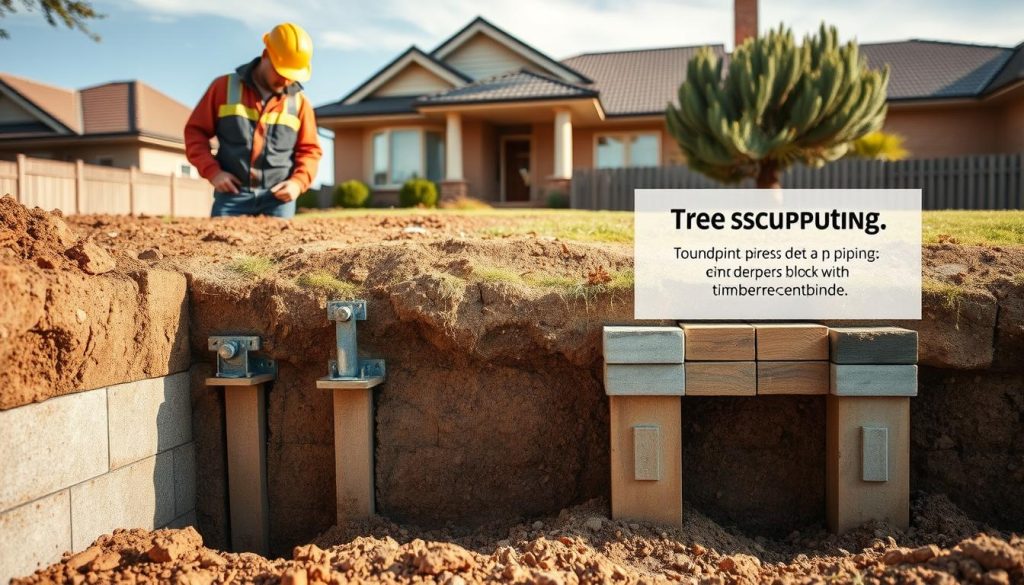
Restumping or reblocking involves replacing damaged stumps with new ones to restore level and long-term stability. Timber, concrete or steel options are common.
Underpinning: adding support to strengthen existing footings
Underpinning adds additional support beneath existing foundation elements to control movement and carry extra loads. Methods include mass concrete pads, screw piling, driven mini-piles and resin injection to stabilise soil and fill voids.


- Quick note: our VBA‑registered team assesses the site, recommends the right method, and issues compliance reports.
- Typical process times vary, but we outline the steps up front so you know what to expect.
Choosing the right solution for your property and soil conditions
Spotting early signs of movement helps us pick a targeted fix for your property and soil type.
Typical signs of foundation trouble include uneven or bouncy floors, new or widening wall cracks, and doors or windows that stick.
When restumping is the right call
For a house built on raised posts, restumping or reblocking is the usual solution when supports are decayed or termite‑damaged.
We assess whether localised repair will restore stability or if full replacement is needed to protect the home’s integrity.
When underpinning is used
If the issue comes from slab or strip footing movement, underpinning used to strengthen the existing foundation is the right approach.
It is also the standard choice when you plan heavy renovations or to add a storey and need extra support for foundations.
Modern options for reactive soil
Screw piling gives deep support where near‑surface ground is soft or reactive. Resin injection fills voids and stiffens soil with minimal disruption and time on site.
- We start with an assessment and levels survey.
- A structural engineer designs any necessary foundation repair.
- A qualified contractor manages permits, safety and compliance.
| Problem | Typical sign | Recommended solution | Timeframe |
|---|---|---|---|
| Decayed posts | Uneven floors, sagging verandah | Restumping / reblocking | Days to weeks |
| Strip footing movement | Long wall cracks, doors sticking | Underpinning with screw piles | Weeks |
| Voids under slab | Localised settlement, cracking | Resin injection to fill voids | Hours to days |
| Renovation load | Planned extra storey or heavy fitout | Engineer‑designed strengthening | Project dependent |
We guide you calmly through causes, recommended work and expected outcomes. For a clear comparison of options and our engineering approach, see our tool on restumping and underpinning choices.
underpinning vs restumping melbourne
Our team begins every job with a calm, practical assessment to define the right foundation solution for your property.

Our calm, engineering-led process: assessment, structural reports and VBA-compliant repairs
We start with a thorough site assessment and levels check. This defines whether the house needs reblocking or strengthening work beneath footings.
We coordinate structural engineering design and certification. That ensures the repair meets VBA and council requirements.
- Detailed survey and soil checks to choose the best method.
- Engineer‑signed reports for compliance and council approval.
- Minimal disruption and clear timelines during the repair.
Why choose Underpinning Melbourne: 20+ years’ experience, registered, insured and council-compliant
We are VBA Registered, insured and experienced. Our contractor teams hold the right tickets and safety systems.
We replace damaged stumps with new ones when a house needs reblocking. For slab or strip footing problems, we specify concrete pads, screw piling or resin injection to stabilise soil and restore stability.
Free assessments and fixed-price quotes — Call Chris on 1300 970 930 or email chris@underpinning-melbourne.com.au
Free assessment and a fixed-price quote. We never upsell. We protect structural integrity and keep your property safe and compliant.
For a quick estimate, try our cost calculator. It helps you plan time and budget for the right solution.
Conclusion
A clear decision on foundation repair starts with a simple site check and engineer‑led advice. We help you choose between restumping and strengthening work based on how your house built foundation performs today and your future plans.
If you spot damaged stumps, uneven floors or widening cracks, act early to protect structural integrity and stability. We match concrete, steel, screw piling or resin to the ground and structure for durable support.
Our engineering‑led contractor team issues compliant reports and explains time, cost and scope. For no‑obligation guidance, contact our foundation experts.
Call Chris: 1300 970 930 or Email Chris: chris@underpinning-melbourne.com.au.