

Expect typical jobs from about $5,000 to $35,000+ for many residential jobs, and larger projects can rise well beyond that. We provide free, no‑obligation structural assessments and fixed‑price quotes so you can decide with confidence.
We are Underpinning Melbourne, Structural Preservation Specialists. Our mission is to save your house from foundation failure with a calm, engineering‑focused approach.
We prioritise safety, structural integrity and VBA‑compliant certification. With 20+ years’ experience, fully VBA registered and insured, we never upsell unnecessary work.
This short guide explains why prices vary and what influences final figures. We cover methods like resin injection, mass concrete, screw piles and mini‑piles. You will learn typical timelines, likely repairs after stabilisation, and how insurance usually treats soil movement versus extreme events.
Key Takeaways
- Typical residential ranges start near $5,000 and commonly sit around $9,000 for small jobs.
- Method, extent of movement and soil type drive final prices.
- We coordinate engineering reports and provide VBA‑compliant certification.
- Resin is fast; screw piles and mass concrete may take days to weeks.
- Book a free assessment and receive a transparent fixed‑price quote.
What this Buyer’s Guide covers for Melbourne homeowners
Homeowners and investors will find practical, engineering-led advice here on foundation work.
We explain what underpinning is, when you need it and the safety outcomes to expect from a VBA‑compliant solution. We speak plainly so you can make calm, confident decisions.
This guide covers available methods, typical timelines and the services included in a comprehensive quote. It shows which factors influence final figures, such as site access, soil type and the size of affected areas.
- Inspection first: how an engineering inspection defines scope and limits risk.
- Inclusions and exclusions to watch for in quotes.
- How to read engineering and geotechnical inputs with confidence.
- Insurance realities for subsidence and event-based damage.
| Topic | Why it matters | What we deliver | What you should check |
|---|---|---|---|
| Inspection | Defines scope and risk | Engineer report and clear schedule | Propping needs and timeline |
| Methods | Matches solution to soil and access | Resin, screw piles, mass concrete options | Disruption and long‑term performance |
| Costs | Driven by extent and safety controls | Fixed‑price quote with inclusions | Permits, reinstatement and extras |
At the end you’ll know next steps to secure a free assessment and a fixed‑price plan for your house with minimal disruption.
Underpinning Melbourne: our mission and engineering-first approach
Protecting your property begins with clear engineering and honest advice. Our role is to preserve homes through planned, council‑compliant work. We favour proven methods over quick fixes.
Safety, structural integrity and VBA‑compliant certification
We design every job to meet VBA and council rules. A structural engineer and geotechnical testing define the scope when ground conditions need clarity.
Safety guides our approach. We use staged work, propping and documented procedures to protect occupants and workers.
Free assessments, fixed-price quotes and honest, no‑upsell advice
Our free assessment team explains findings in plain language. You receive a fixed‑price quote that matches an agreed scope.
- We coordinate reports and testing so you get one clear plan.
- Registered contractors manage access and minimise disruption.
- We will tell you if your home does not need underpinning and why.
- Handover includes certification and records for insurers or buyers.
With 20+ years’ experience, our services blend technical knowledge and practical expertise. We prioritise long‑term stability over sales tactics.
underpinning cost melbourne: current price ranges at a glance
Here are the practical price ranges for small to large foundation stabilisation jobs. We summarise typical totals so you can budget and compare quotes with confidence.
Typical totals: from minor stabilisation to extensive remediation
Minor localised stabilisation often starts near $5,000–$10,000 where movement is limited and access is simple.
Moderate remediation with broader foundation influence typically sits in the $10,000–$25,000 bracket for many suburban projects.
Extensive remediation — multiple elevations, variable soil or poor access — can exceed $25,000–$35,000+. Larger buildings in Victoria sometimes reach $20,000–$55,000.
How Melbourne compares within Australia
On average, national guides cite figures around $9,000 for common jobs. Melbourne prices broadly align with these averages. Method and site conditions drive most differences.
- Mass concrete and beam-and-base methods increase both time and costs because of excavation and sequencing.
- Resin solutions can finish faster and reduce labour and reinstatement service costs where soils suit.
- Quotes should itemise ground, access and safety provisions to limit surprises.
| Project scale | Indicative range | Typical drivers |
|---|---|---|
| Minor stabilisation | $5k–$10k | Simple access, localised damage |
| Moderate remediation | $10k–$25k | Broader foundation work, varied soil |
| Extensive remediation | $25k–$55k+ | Multiple elevations, hard access, large buildings |
Note: Insurance may cover event-driven foundation damage such as floods or earthquakes. However, shrink/swell clay movement and tree roots are commonly excluded. A clear inspection and scope definition will keep projects on budget and on time.
What drives the cost of underpinning in Victoria
Several clear factors determine how much work will be needed and how long it will take. We assess the building, the ground and the extent of damage to form a reliable plan.
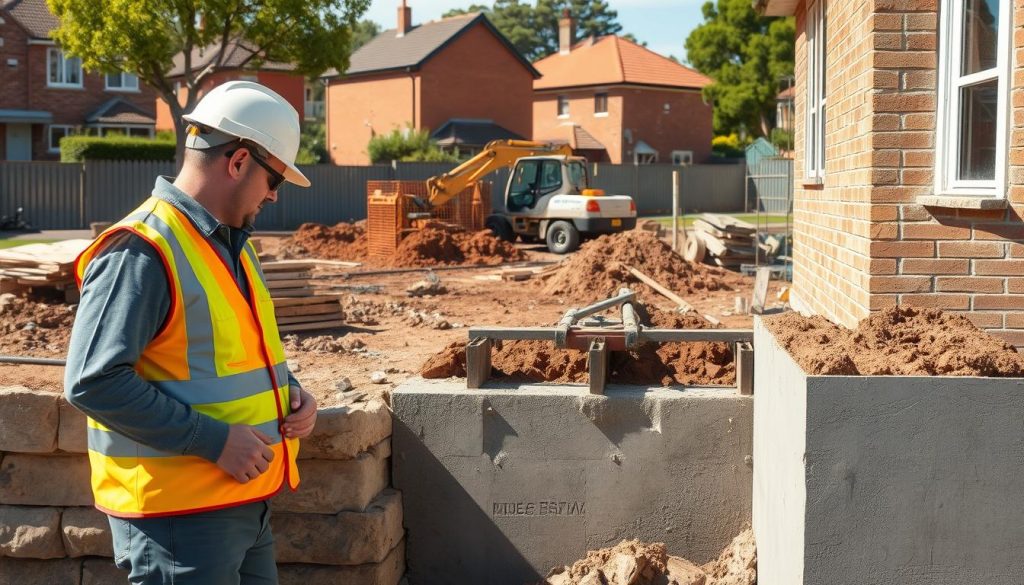

Extent of foundation damage and building size
The area affected and the depth of movement largely set the project scope. A small, localised fix is quicker and needs fewer materials.
Larger buildings or multi‑level movement increase labour, sequencing and time on site. That raises overall costs and staging needs.
Soil type, moisture and ground conditions
Reactive clay, local fill and variable strata change the engineering approach. These soil types often need more treatment points or deeper engagement.
Depth to competent ground and voids can add testing and contingency. Good geotechnical input reduces surprises.
Access, safety measures and project duration
Tight setbacks, internal‑only access or heritage limits require specialised methods. These slow crews and increase price.
Shoring, propping and service isolation protect occupants and workers. They are essential and reflected in the programme and costs.
Permits, engineering reports and council compliance
Engineering reports and permits ensure compliance and protect you. We coordinate testing, drawings and council notifications as part of the work scope.
Accurate scoping up front avoids variations and gives a clearer fixed‑price path to completion.
- Extent of movement defines treatment area and materials.
- Foundation type (slab, strip or deep) changes detailing and checks.
- Good staging and access planning reduce disruption and time.
| Driver | Typical impact | Why it matters | What we deliver |
|---|---|---|---|
| Extent of damage | Low → high | Determines materials and labour | Scoped schedule and fixed quote |
| Soil and ground type | Reactive clay / fill | Affects method and number of treatment points | Geotech report and tailored solution |
| Access & safety | Simple → restricted | Drives specialised methods and time | Safe staging, propping and program |
| Compliance | Required | Protects asset and council approval | Engineering drawings and permits |
Method-by-method costs: concrete, screw piles, and resin
Diverse site conditions call for different underpinning methods. We outline the typical pricing bands and the process for each so you can compare options clearly.
Mass concrete underpinning
Mass concrete uses staged excavation beneath footings and controlled pours at set bays.
Expect pricing around $1,000–$3,000 per metre or $150–$300 per m2 depending on depth and access.
Beam and base (stiffened concrete)
Beam and base redistributes loads with stiffened beams to stronger bearing points.
Typical ranges sit near $1,500–$3,500 per metre or $180–$350 per m2. It suits sites where soil layers are predictable.
Screw piling and mini‑piles
Screw piles are fast. Steel piles advance to competent strata. Costs vary by pile count and depth.
Expect screw pile area guides of $250–$500 per m2 and mini‑piles from $10,000–$20,000 per pile when depth matters.
Resin injection (chemical)
Resin fills voids, strengthens ground and can lift footings with minimal excavation.
Often the fastest option. Prices commonly fall between $200–$300 per m2 and injections can cure in minutes.
- Process and time: resin is quickest; concrete works need more site time.
- Selection depends on: foundation type, soil, access and extent of movement.
- Our approach: method-neutral advice and transparent pricing so you only pay for necessary work.
| Method | Typical range | When we recommend |
|---|---|---|
| Mass concrete | $1,000–$3,000/m | Shallow good access, extensive footings |
| Beam & base | $1,500–$3,500/m | Redistribute loads where soils are consistent |
| Screw/mini‑piles | $250–$500/m2 or $10k–$20k/pile | Deep strata or restricted access |
| Resin injection | $200–$300/m2 | Non‑invasive stabilisation and lifting |
Line‑item extras to budget for beyond the underpinning itself
Knowing likely add-ons helps you compare fixed-price quotes with confidence. You should budget for more than the main structural work. Small items can become significant once a site is opened.
Structural engineering reports and geotechnical soil testing
Engineering assessment fees commonly range from $500–$3,000. Geotechnical testing often sits between $1,000–$3,000.
We coordinate these reports so the design matches your site and the quote is accurate.
Utilities, replastering, painting and flooring reinstatement
Allow for service isolations and minor utility repairs ($500–$2,000). Site prep and reinstatement usually run $1,000–$5,000.
Finishing repairs — plaster, paint and skirtings — commonly total $1,000–$5,000. Flooring reinstatement can range from $2,000–$8,000.
- Separate structural services from finishing repairs in your quote.
- Expect restumping or foundation replacement only in rare cases ($8k–$40k ranges).
- We itemise work so you see what the quote covers and what is optional.
- Clear communication prevents budget surprises and speeds a tidy handover to normal living.
| Item | Typical range | Why it matters |
|---|---|---|
| Engineering report | $500–$3,000 | Defines safe, compliant design |
| Soil testing | $1,000–$3,000 | Guides method selection for the site |
| Reinstatement (finishes) | $1,000–$8,000 | Makes the building ready to live in |
Restumping and reblocking costs in Melbourne homes
Restumping often fixes uneven floors without major excavation beneath the main footings. It targets failing stumps under suspended floors and can stop recurring movement and cracks.
When stumps, not footings, are the issue
Uneven floors, door binding and repeating wall cracks often point to old stumps failing rather than deeper foundations. We inspect subfloor ventilation, moisture drivers and timber decay before recommending work.
Material choices: timber, concrete and galvanised steel
Material affects durability and price. Timber is economical but less durable. Concrete is stable and commonly reused. Galvanised steel gives the longest life and lowest maintenance.
- Typical totals: average restumping ranges from $5,000–$20,000; per‑stump figures commonly $500–$700 depending on material and reuse of holes.
- Costs vary with soil conditions, access under the building and whether finishing repairs are needed.
- Where both stumps and footings contribute, we stage restumping with concrete underpinning to protect the whole structure.
- Our experienced contractors deliver insured, registered services and a fixed‑price scope matched to building type.
| Factor | Impact | Why it matters |
|---|---|---|
| Number of stumps | Directly increases price | More work and materials |
| Access | Simple → restricted | Affects time and disruption |
| Reuse of holes | Yes → No | Saves excavation and reduces cost |
Honest advice: we explain options, sequencing and finishing work clearly. For a quick estimate and to compare methods, try our restump and underpin calculator.
Timeframes: how long underpinning work typically takes
Clear schedules and staged inspections keep projects calm and predictable. We plan each job so you know the likely time on site and the sequence of work.
Resin injection is usually the fastest option. On a typical house the program can finish in a single day. Individual injections often cure in about 15 minutes.
Traditional excavation methods need more time. Mass concrete and beam-and-base require staged digs and pour cycles. These projects can take days to weeks depending on access and bays.
What can lengthen the programme
- Restricted access, adverse weather and safety staging.
- Additional inspections and hold points to verify levels.
- Complex ground conditions that need slower, measured adjustments.
We monitor ground response in real time to avoid over‑correction and protect finishes. Our schedules include inspection points, clear daily updates and coordination on room or driveway access.
At quote stage we give an indicative timeline and refine it after engineering confirmation. This process keeps disruption minimal and your home liveable where possible.
Insurance realities for foundation repair in Australia
Insurance responses vary. Event-driven loss from floods or earthquakes may trigger cover for structural works. By contrast, gradual subsidence from soil shrinkage or tree roots is commonly excluded.
Underpinning and similar preventative works are often treated as a maintenance item. That means insurers may decline a claim even when the work restores safety.
How to approach your insurer
- Gather photos, dates and a clear scope to show the extent of foundation damage.
- Ask specific questions about exclusions, excesses and the claim process.
- Use registered contractors who provide documentation insurers accept.
- We can coordinate engineering reports to support any dispute about causes or the need for work.
| Likely covered | Likely excluded | Practical tip |
|---|---|---|
| Event-based damage (flood, quake) | Soil shrinkage, tree root subsidence | Obtain photos and an engineer report before works |
| Direct impact to building structure | Preventative underpinning seen as maintenance | Ask your insurer for written reasons if declined |
| Emergency stabilisation after event | Gradual movement under normal conditions | Request clarity on what parts of a quote they will consider |
If your policy won’t cover works, we help prioritise repairs by risk and prepare a clear fixed‑price quote. That makes it easier to plan finances, temporary accommodation and any reinstatement. We are available to answer your questions and to liaise with contractors and valuers so you can make an informed decision about safety and next steps.
How to choose the right underpinning method for your house
Choosing the right repair path begins with clear engineering diagnosis and a measured plan. Start with a site inspection that identifies cause, ground behaviour and the exact areas affected.
Matching method to soil, damage pattern and access
Match the method to soil reactivity, moisture drivers and the type of foundation movement.
Where access is tight, low‑impact options can work if the geotech report supports them. For heavy loads or complex footings, piles or concrete fixes may be essential.
Balancing upfront cost, disruption and long‑term performance
We recommend a process that prioritises measurable outcomes over guesswork. Balance immediate costs and reinstatement needs against durable performance and certificateable results.
- Begin with an engineering diagnosis that defines cause and extent.
- Match method to soil, moisture drivers and whether lift or stabilisation is required.
- Prefer low‑impact resin for localised voids or slab deflection where suitable.
- Choose concrete or piles for heavy loads or complex footing types.
- Confirm contractor expertise and a process with hold points and targets.
- Ask how the design manages future ground and drainage changes.
| Factor | When it favours low‑impact methods | When heavier works are needed | What we deliver |
|---|---|---|---|
| Soil behaviour | Stable, limited voids | Reactive clay or deep poor strata | Geotech‑led recommendation |
| Damage pattern | Localised slab deflection | Widespread footing settlement | Targeted repair plan |
| Access | Easy internal or side access | Tight setbacks but heavy loads | Method suited to site |
| Performance needs | Stabilise and certify quickly | Long‑term load transfer required | Durable, certified solution |
Our aim: clear, method‑neutral advice based on engineering expertise and practical experience. You get a predictable process, a timeline and certification that protects your home.
Why choose Underpinning Melbourne for cost‑effective, compliant work
Reliable work starts with clear engineering, transparent pricing and careful crews. We combine technical knowledge with practical site care to protect your building and your peace of mind.
VBA registered, insured and council‑compliant processes
We are fully VBA registered and insured. Our team follows council rules and best‑practice engineering for every job.
This ensures safety and a certificated result you can show to insurers and buyers.
Minimal disruption, transparent quotes and no unnecessary upsells
We deliver fixed, transparent quotes aligned to engineered scopes. That reduces surprises and keeps programs predictable.
Our contractors work cleanly, stage tasks to protect finishes and give clear day‑by‑day schedules.
Core services and coordinated reporting
Our services include concrete underpinning, restumping, resin injection, screw piling, wall crack repairs and structural engineering reports.
| Service | Why it matters | We deliver |
|---|---|---|
| Concrete underpinning | Durable load transfer | Engineered design and staged pours |
| Resin injection & screw piling | Low‑impact stabilisation | Fast work with minimal reinstatement |
| Restumping & repairs | Floor levelling and finish reinstatement | Timely, certified repairs |
- We coordinate structural and geotechnical reports for clear scopes.
- Free assessments and fixed quotes help you plan with confidence.
- Our 20+ years’ experience reduces risk and shortens timeframes.
- We provide honest advice, including when no structural work is required.
Choose a method‑neutral team that focuses on the right solution, not the most expensive one. Our engineering expertise and practical experience protect your foundation and your investment.
Get a fixed‑price quote: free structural assessment and next steps
Begin with a simple inspection so we can scope work, confirm causes and plan a safe schedule. We offer a free structural assessment and a transparent quote you can act on.

Book a site inspection or email photos for a rapid estimate
Prefer to start by email? Send photos and a short description of the issue for a quick initial quote. If needed, we arrange a site inspection to confirm ground behaviour and access.
Call Chris: 1300 970 930 | chris@underpinning-melbourne.com.au
Call or email Chris to lock in a time that suits your household. We answer questions promptly and outline likely time frames and expected costs.
Engineering report coordination and clear work schedules
We coordinate engineering reports, geotech testing and council paperwork. That ensures the quoted service matches the certified design and council requirements.
- Book a free structural assessment and receive a fixed‑price plan for your house.
- Send photos for a rapid estimate before the inspection.
- We schedule a site inspection to confirm scope and access.
- We provide a clear schedule showing stages, safety steps and expected time on site.
- From inspection to final handover, documentation suits councils, valuers and insurers.
| Step | What we do | What you get |
|---|---|---|
| Initial contact | Phone or email; photos review | Rapid estimate and next steps |
| Site inspection | Full assessment by experienced team | Scoped quote and program |
| Engineering coordination | Reports and testing arranged | Certified design and permit‑ready docs |
| Work schedule | Staged program with safety checks | Fixed price, dates and handover records |
Conclusion
Start with facts: a proper diagnosis makes repairs faster, safer and more predictable.
, A clear, engineered scope protects your foundation and your home. We explain options in plain language and match methods to ground conditions. Resin often reduces time and disruption. Mass concrete or piles remain essential for deeper issues.
Underpinning cost varies with the extent of movement, soil and access. That is why an inspection matters. You gain our knowledge and engineering expertise before you commit.
Book a free assessment to get a fixed‑price plan and certificated work for council and insurer needs. Call Chris on 1300 970 930 or email chris@underpinning-melbourne.com.au with your questions. We will walk you through the best path to foundation repair and lasting peace of mind.