

We explain what an underpinning warranty in Victoria covers and how to protect your investment today.
Our Melbourne team helps homeowners understand coverage for foundation repair work. We combine engineering know‑how with practical solutions to keep your house safe.
Cracks, sticking doors and uneven floors often signal movement. Causes include soil moisture change, tree roots, plumbing leaks or poor footing design.
We offer free structural assessments, fixed‑price quotes and coordinated engineering reports. Our company is VBA‑registered and fully insured, with 20+ years’ experience.
Expect clear documentation: what the warranty covers, durations for product and workmanship, and the compliance checks you need. We never upsell unnecessary work and we prioritise minimal disruption.
Call Chris: 1300 970 930 or Email Chris: chris@underpinning-melbourne.com.au for an expert assessment and quote.
Key Takeaways
- Learn what a typical warranty covers for foundation repairs and product versus workmanship limits.
- Keep engineering reports, council approvals and receipts to protect your claim.
- Choose a VBA‑registered company with proven experience and clear fixed‑price quotes.
- Maintain moisture and drainage to preserve long‑term performance of the work.
- Contact us for a free assessment, transparent quote and coordinated engineering report.
What does an underpinning warranty cover in Victoria?
Understanding the split between product cover and the contractor’s workmanship is vital for long-term stability.
Workmanship vs product
Workmanship warranty vs product warranty: what’s the difference?
Workmanship covers the quality of the work carried out on your foundation and footings. Product cover applies to the materials or systems installed.
Industry practice in Victoria often separates these two. Typical workmanship terms run for around ten years. Some resin products carry longer product cover to support ongoing stability and guard against subsidence.
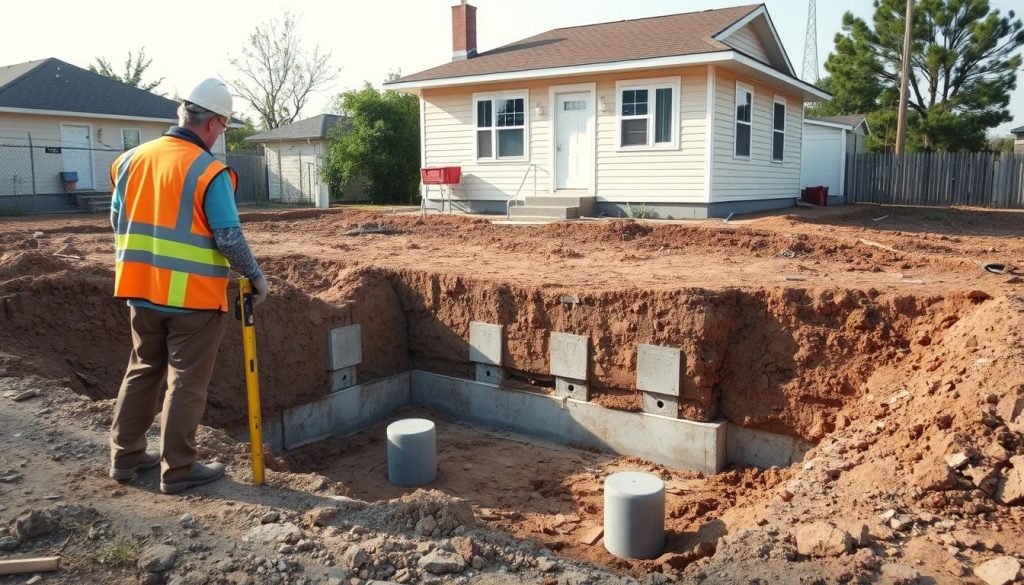

Typical warranty durations and industry benchmarks
Most workmanship guarantees on underpinning tasks extend to about 10 years. Product terms vary by system and manufacturer.
Transferability and proof of cover
Warranties are commonly transferable when you sell the property. Keep the signed contract, certificate of compliance and engineering reports to prove cover.
VBA-compliant certification, council approvals and your cover
We are VBA registered and insured. We coordinate structural engineering reports and council‑compliant methods. This strengthens your claim and ensures the work meets building rules.
| Aspect | Typical term | Notes |
|---|---|---|
| Workmanship | ~10 years | Protects quality of site work and installation |
| Product | Varies | Some resin systems offer extended manufacturer cover |
| Transferability | Often yes | Requires full documentation at sale |
| Conditions | Specified | May require addressing drainage or plumbing issues |
We document the process from assessment to completion. Speak to our expert team for a clear scope, fixed‑price quote and honest assessment of cost and methods.
underpinning warranty victoria — eligibility, conditions and exclusions
Your property’s long‑term protection begins with simple steps to manage water, trees and ground movement.
Your responsibilities: drainage, plumbing leaks and site moisture control
You must keep gutters, downpipes and stormwater clear. Fix leaking sewer or stormwater lines promptly.
These tasks stop rapid soil change and reduce subsidence risk.
Soil movement, trees and ground conditions that can affect cover
Tree roots can extract moisture and shift ground near footings. Poorly compacted fill or nearby excavation also causes problems.
We assess soil, load paths and surrounding building work to identify triggers that may affect cover.

What documentation you should keep
Record everything. Keep engineering designs, pre‑ and post‑level readings, dated photos, inspection notes and completion certificates.
Note doors, window function and any cracks in walls before and after the project.
When to claim and how assessments are carried out
Claim as soon as you see new movement or recurring issues. Early assessment preserves conditions and lowers cost.
Our process includes on‑site assessment, level surveys and cause analysis focused on soil, water and load paths.
- Eligibility: Address drainage and plumbing before work.
- Exclusions: Damage from new excavations, unmanaged leaks or extreme events.
- Maintenance: Regular gutter and irrigation checks protect the home.
We provide calm, honest guidance, free no‑obligation assessments and coordinated engineering reports. Call Chris: 1300 970 930 or Email Chris: chris@underpinning-melbourne.com.au for clear advice and fixed‑price services from a team with practical experience.
How our certified methods protect your home and your warranty
We use proven structural methods to protect your home and preserve its long‑term stability. Our team selects the right approach for your soil, load and access conditions. We aim to stop movement and restore level quickly.
Concrete underpinning and footing stabilisation
Concrete work provides robust bearing where depth is moderate. We detail footings, staging and testing so the house gains lasting support.
Restumping and reblocking
Restumping relevels floors and improves doors and windows. Reblocking addresses local loss of support across timber homes.
Resin injection, screw piling and targeted repairs
Resin injection lifts slabs and improves ground with minimal disruption. The material is inert and cures fast for same‑day use.
Screw piles reach competent strata in reactive soil to control subsidence. We follow with wall crack repairs as needed and validated fixes.
- We select methods to maximise stability and protect your warranty.
- Every job includes engineering reports and a fixed‑price quote.
- Our team is VBA‑registered and insured for complete compliance.
For an immediate estimate, try our underpinning cost calculator. We coordinate reports and support your property file for sale or refinance.
Clear signs you may need foundation repair today
Small changes like sticking doors can be the earliest indicators of deeper foundation issues.
Watch for obvious cracks in brickwork, render and plaster. Fresh or widening cracks near corners, openings and lintels are important signs.
Cracks in brickwork, render and plaster; sticking doors and windows
Note any new movement. Sticking doors and windows, separated frames or hardware that misaligns usually mean the structure has shifted.
Keep dated photos and notes. Early records speed diagnosis and reduce the scale of repairs.
Uneven or sloping floors, gaps at frames and out-of-level slabs
Check floors with a ball test or a level. Sloping floors, gaps at skirtings, or a visible step at slab joints suggest settlement or subsidence.
These issues often stem from soil moisture change, plumbing leaks or nearby building work. Early assessment stops problems getting worse and typically lowers repair costs.
- Watch for: fresh cracks, sticking doors, uneven floors and gaps at frames.
- Common solutions include concrete underpinning, resin injection and targeted slab repairs.
- We explain the process, provide a fixed‑price quote and schedule work with minimal disruption.
- Book a free site inspection with our team to protect your house and property.

| Sign | What it suggests | Recommended action |
|---|---|---|
| Cracks in walls or brickwork | Localised movement or lintel stress | Document, assess cause, plan repairs |
| Sticking doors/windows | Frame distortion from movement | Level survey and targeted stabilisation |
| Uneven/sloping floors | Settlement beneath slab or stumps | Ball/level test, engineering diagnosis, repair |
Call Chris: 1300 970 930 or Email Chris for calm, expert guidance and a free assessment. For bookings use our contact page.
Conclusion
We restore safe, lasting support to homes with engineered underpinning solutions. Our team diagnoses soil and ground issues, then selects resin, concrete or piling methods to suit the site.
Long‑term stability depends on fixing moisture, leaks and tree influence at their source. We document each job so your foundations performance is clear for sale or refinance.
We are VBA registered and insured. Call Chris: 1300 970 930 or Email Chris: chris@underpinning-melbourne.com.au. Get a free assessment, a transparent fixed‑price quote and coordinated engineering reports today.
For more detail on our process and support, visit our company page. Act early to control cost and reduce future repairs.